

Hippo-focused books are a smaller shelf than you might expect for such a recognizable animal. Still, the books that exist cover a surprisingly wide range, from a conservationist’s memoir to a true story of an unlikely animal friendship, classic children’s fiction, and a picture book about animal poop.
Whether you’re looking for a thoughtful read about real hippos, a book for a young wildlife enthusiast, or a funny story to read aloud, these eight recommendations offer something different. I’ve included both fiction and nonfiction, with suggestions for different ages and interests.
Quick Picks: The Best Books About Hippos
| If you want… | Read this |
|---|---|
| A conservationist’s memoir about hippos | A Hippo Love Story |
| More wildlife stories from the same conservationist | Hippos, a Mongoose and Me |
| A true animal-friendship story for kids | Owen & Mzee |
| Classic, gentle stories about friendship | George and Martha |
| Gross-but-educational animal nonfiction | What Do They Do With All That Poo? |
| A funny rhyming read-aloud | That’s Not a Hippopotamus! |
| An illustrated introduction to real hippos | Hippos Are Huge! |
| A short nonfiction book for beginning readers | Hippos by Maya Myers |
For Adults: A Hippo Love Story by Karen Paolillo
If you’re looking for a serious nonfiction book devoted to hippos, start here.
Karen Paolillo is a wildlife conservationist who has spent decades working with hippos in Zimbabwe. Her memoir, A Hippo Love Story, describes how she and her husband became involved in protecting hippos along the Turgwe River, including an intensive feeding effort during the severe drought of 1992. According to accounts of her work, thirteen hippos survived that crisis.
The book follows Paolillo’s experiences living alongside these animals and working to protect them through drought, habitat pressure, and other threats. It’s a personal account of what hippo conservation looks like on the ground, rather than a general guide to the species.
What makes the book especially interesting is the perspective. Hippos are often discussed in terms of their size, strength, and danger to people. Paolillo writes from the perspective of someone who has spent years studying and protecting them, offering a more personal view of their lives and the challenges involved in their conservation.
- Best for: Adult readers interested in wildlife, conservation, animal behavior, and memoirs based on real experiences.
Find it on Amazon: A Hippo Love Story by Karen Paolillo

For Adults: Hippos, a Mongoose and Me by Karen Paolillo
If A Hippo Love Story leaves you wanting to read more about Karen Paolillo’s life among African wildlife, this is a natural next choice.
Hippos, a Mongoose and Me is a collection of 21 stories about wildlife rescue and survival in Africa. Paolillo draws on her experiences working with animals in the wild, continuing the conservation theme of her earlier book while broadening the focus beyond hippos alone.
That makes it a slightly different recommendation. While A Hippo Love Story is the stronger starting point for readers specifically interested in hippos, this book offers a wider look at the animals and experiences surrounding a life dedicated to wildlife welfare.
It’s worth including because books written by people with extensive, firsthand experience of hippos are relatively uncommon. Readers who enjoy personal conservation stories may appreciate having a second title by the same author to explore.
- Best for: Adults who enjoy wildlife memoirs, animal rescue stories, and accounts of conservation work in Africa.
Find it on Amazon: Hippos, a Mongoose and Me by Karen Paolillo
For Young Readers: Owen & Mzee: The True Story of a Remarkable Friendship
The story of Owen and Mzee is one of the best-known real-life animal friendship stories involving a hippo.
Owen was a young hippopotamus separated from his family during the Indian Ocean tsunami in December 2004. Rescued in Kenya, he later formed an unusual bond with Mzee, an Aldabra giant tortoise. Their relationship attracted international attention and became the subject of this illustrated nonfiction book by Isabella Hatkoff, Craig Hatkoff, and Dr. Paula Kahumbu, with photographs by Peter Greste.
The book tells the story in an accessible way, combining photographs with a narrative that helps young readers understand what happened to Owen and how he adapted to his new circumstances. It also offers a natural opportunity to talk about animal behavior, resilience, and the effects of disasters on wildlife.
The book is often recommended for children around ages 4–8, although reading ability and interest will vary. Younger children may enjoy it as a read-aloud, while early independent readers can explore the photographs and story with an adult’s help.
- Best for: Children who love true animal stories, parents looking for nonfiction to read together, and young readers interested in wildlife.
Find it on Amazon: Owen & Mzee: The True Story of a Remarkable Friendship
For Preschoolers: George and Martha by James Marshall
Not every hippo book needs to teach children about real wildlife. Sometimes, a good story is enough.
James Marshall’s George and Martha series follows two hippo friends through short, humorous stories about friendship, honesty, misunderstandings, and everyday social situations. First published in the 1970s, the books have remained popular with generations of young readers.
The stories are simple without being dull. George and Martha make mistakes, occasionally behave selfishly, and have to work through the small problems that come with being friends. Marshall’s humor also gives the books appeal for adults reading aloud.
Unlike the nonfiction titles in this list, these stories aren’t intended to explain hippo biology or behavior in the wild. The characters are anthropomorphic animals, and the focus is on relationships and everyday life.
- Best for: Preschoolers and early readers, especially ages 3–7, and families looking for short stories to read together.
Find it on Amazon: George and Martha by James Marshall
For Curious Kids: What Do They Do With All That Poo? by Jane Kurtz
If the child you’re buying for loves gross facts, this book could be a much better fit than a conventional animal story.
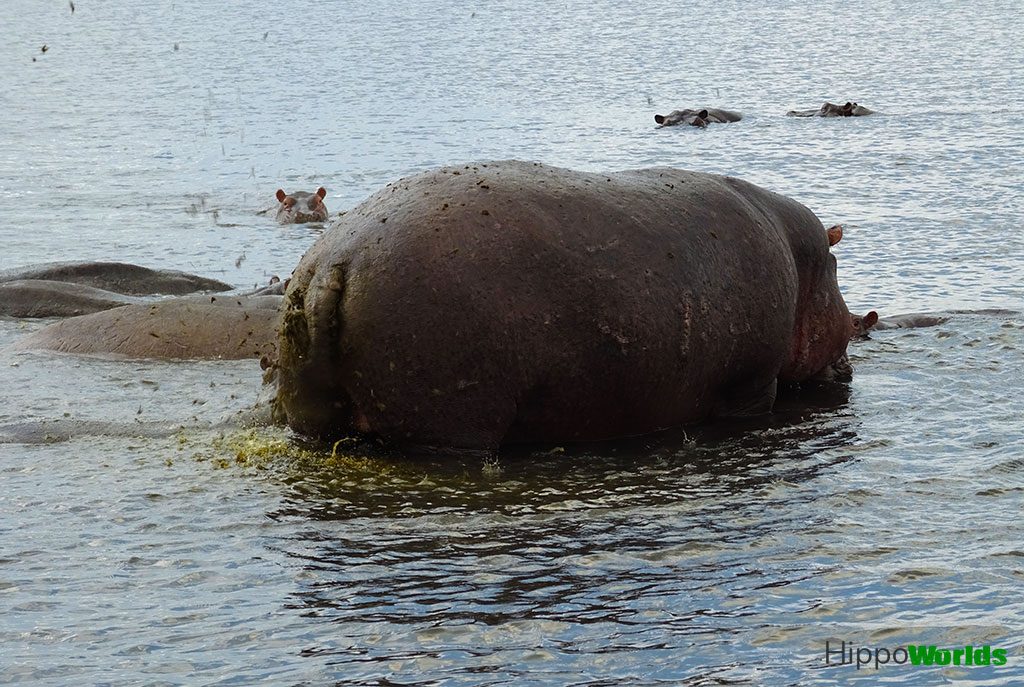
Written by Jane Kurtz and illustrated by Allison Black, What Do They Do With All That Poo? explores the droppings of different zoo animals, including what they look like and what they can tell us about animal diets and biology. Hippos are part of the wider animal-focused subject, rather than the sole focus of the book.
The subject may sound like a novelty, but it can be a useful way to introduce children to real biology and ecology. Animal droppings reveal information about what animals eat, while the way waste moves through an ecosystem can have wider environmental consequences.
For readers who want to explore the hippo connection further, our guide to hippo dung and the ecosystem looks at the role hippo waste plays in river environments.
- Best for: Curious children around ages 3–8 who enjoy unusual science facts, animal-themed humor, and nonfiction picture books.
Find it on Amazon: What Do They Do With All That Poo? by Jane Kurtz
For a Funny Read-Aloud: That’s Not a Hippopotamus! by Juliette MacIver
This award-winning picture book follows a school trip to the zoo that turns into a chaotic search for a missing hippopotamus. The teacher, zookeeper, and children all join the hunt, but the increasingly noisy search doesn’t necessarily bring them closer to finding the animal.
Written by Juliette MacIver and illustrated by Sarah Davis, the book uses lively rhymes, wordplay, and energetic illustrations to tell its story. There’s plenty happening in the pictures, too, giving children another layer of detail to discover each time they read it.
The book won the Picture Book Award at the 2017 New Zealand Book Awards for Children and Young Adults. It’s a good choice for families who enjoy books that are fun to read aloud, with rhythm and repetition that children can join in with.
Although African wildlife provides the setting, this is a fictional story rather than a nonfiction guide to hippos. Its appeal is the humor, the search, and the increasingly chaotic events.
- Best for: Children around ages 3–7, especially those who enjoy rhyming stories, silly situations, and detailed illustrations.
Find it on Amazon: That’s Not a Hippopotamus! by Juliette MacIver
For Young Wildlife Fans: Hippos Are Huge! by Jonathan London
If you’re looking for a picture book that focuses specifically on real hippos, Hippos Are Huge! is one of the strongest options on this list.
Written by Jonathan London and illustrated by Matthew Trueman, the book introduces children to the size, physical features, and behavior of hippopotamuses. It explores what makes these animals remarkable, from their powerful jaws and teeth to their lives in and around water.
The illustrations and accessible language make the subject approachable for young readers without turning the book into a dry list of facts. It can also be a good starting point for conversations about why hippos need space, how they behave, and why observing them in the wild requires care.
The publisher lists the book for ages 5–8. It’s a useful middle ground between a simple fictional picture book and a more structured early reader about animal science.
- Best for: Children around ages 5–8 who want to learn about real hippos and enjoy illustrated nonfiction.
Find it on Amazon: Hippos Are Huge! by Jonathan London

For Beginning Readers: Hippos by Maya Myers (National Geographic Kids Readers, Level 1)
For a child who is starting to read independently, Hippos from the National Geographic Kids Readers series offers a more structured introduction to the species.
Written by Maya Myers, this short nonfiction reader uses National Geographic photography and accessible text to introduce young readers to hippo anatomy, behavior, and life in the wild. It includes facts about their large teeth, young hippos, swimming, and other features that make the species fascinating.
The book is designed for new readers, with straightforward language and an activity to reinforce what they’ve learned. The publisher lists it for ages 4–6, making it a good option for children who are beginning to move beyond being read to and want to explore a topic for themselves.
Unlike Hippos Are Huge!, which has the feel of a picture book, this title belongs to a leveled reading series. That makes it particularly useful if your main goal is to encourage independent reading while keeping the subject engaging.
- Best for: Beginning readers around ages 4–6 who prefer real photographs and short, fact-based text.
Find it on Amazon: Hippos by Maya Myers, National Geographic Kids Readers Level 1
Frequently Asked Questions
What is the best book about hippos for adults?
A Hippo Love Story by Karen Paolillo is the strongest starting point for adults who want a book specifically about hippos. It combines a personal memoir with firsthand experiences of hippo conservation in Zimbabwe. Readers who enjoy the author’s perspective can continue with Hippos, a Mongoose and Me.
What is a good hippo book for young children?
Owen & Mzee is a strong choice for children who enjoy true animal stories. For a fictional read-aloud, George and Martha and That’s Not a Hippopotamus! offer humor and engaging characters.
Which book is best for children who want facts about hippos?
Hippos Are Huge! introduces real hippo behavior through an illustrated picture-book format. For children who are beginning to read independently, Hippos from National Geographic Kids Readers offers shorter, fact-based text and photographs.
Are there any funny books about hippos?
Yes. George and Martha uses humor to explore friendship, while That’s Not a Hippopotamus! turns a zoo trip into a lively rhyming adventure. For children who enjoy gross science facts, What Do They Do With All That Poo? takes a more unusual approach to animal nonfiction.
Are there books about hippo conservation?
A Hippo Love Story is the most directly focused on hippo conservation in this list. Hippos, a Mongoose and Me also explores wildlife rescue and survival through Karen Paolillo’s experiences. For younger readers, Owen & Mzee offers a true animal story that can lead to conversations about wildlife and resilience.
Read More
Explore these related guides to learn more about hippos and their behavior.
Learn how baby hippos are born, grow, and stay close to their mothers.
Find hippo-themed gifts, toys, books, and other ideas for hippo lovers.
Hippo Conservarion – How to save the hippos
Learn about the threats hippos face in the wild and the conservation efforts helping protect them.
Explore the habitats hippos depend on and discover where they live across Africa.
I’ve been writing and running HippoWorlds’ content since 2019. I lived in Angola and was lucky enough to see hippos in the wild in Botswana and South Africa — I’m not a scientist, but a curious enthusiast dedicated to making this site a serious reference on the species.