
Last Updated on October 30, 2026 by Jorge Bastos
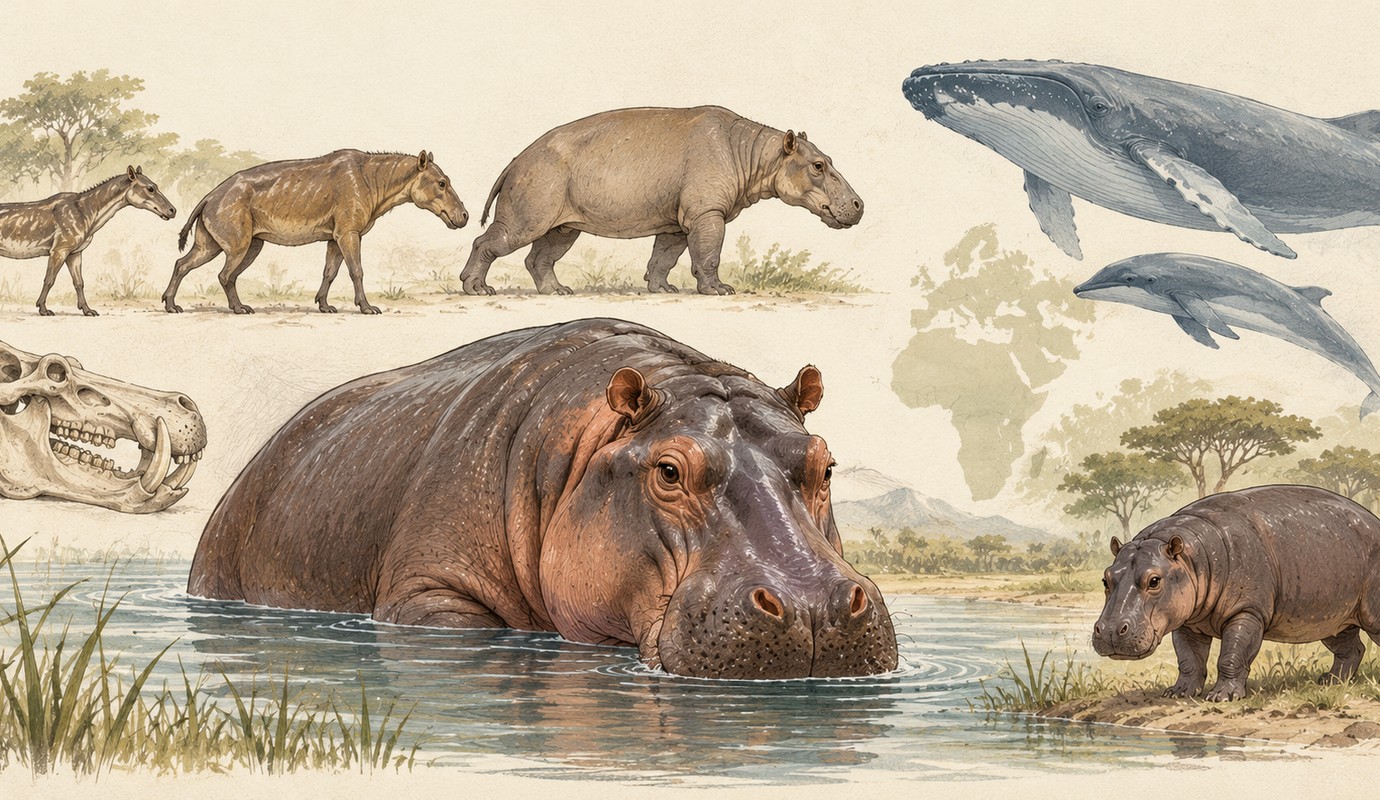
Hippos are some of the most unusual mammals alive today. They spend much of their lives in water, have enormous bodies and surprisingly close relatives that look nothing like them. In fact, their closest living relatives are whales and dolphins.
But hippos did not always look or live the way they do today. Their evolutionary history stretches back millions of years and includes a much greater diversity of species than the two hippos that survive today.
So, where did hippos come from? How did they become semi-aquatic animals? And what happened to all the ancient hippos that once lived across Africa, Europe, and Asia?
Let’s take a look at the evolution of hippos, from their distant ancestors to the animals we know today.
What Did Hippos Evolve From?
The hippopotamus belongs to the order Artiodactyla, a group of mammals that includes animals such as pigs, deer, camels, cattle, and giraffes. However, its closest living relatives are not pigs or other familiar land mammals. They are cetaceans: whales, dolphins, and porpoises.
Hippos and cetaceans belong to a group known as Cetancodonta. This means that hippos are more closely related to whales than to any other living land mammal.
Their evolutionary paths separated around 53–61 million years ago, during the Paleocene or early Eocene. This does not mean that modern whales evolved from hippos, or that hippos evolved from whales. Rather, both groups descended from a much older common ancestor.
The exact identity of that ancestor is still uncertain. Fossil evidence suggests that the hippopotamus lineage may have emerged from a group of extinct mammals called anthracotheres. These were a diverse group of hoofed mammals that lived from the Eocene to the Pliocene.
Some anthracotheres looked rather hippo-like, with heavy bodies and adaptations that may have been useful in wet environments. However, they were not all direct ancestors of modern hippos. The precise evolutionary relationships between these ancient mammals are still being studied.
A review of the fossil evidence published in Biological Reviews explains how discoveries of ancient hippos and their relatives have helped scientists understand this complicated relationship. You can read more in Boisserie and colleagues’ review of hippopotamid evolution.

When Did the First Hippos Appear?
Although the hippo and whale lineages separated more than 50 million years ago, the first known members of the family Hippopotamidae appeared much later.
The oldest known hippopotamids date back to the Early Miocene, approximately 21 million years ago. Fossils discovered in Uganda helped researchers identify some of these early members of the family and push its known fossil record further back.
These early hippos were not necessarily very similar to the animals we see today. The fossil record reveals a surprisingly diverse group, with differences in body size, teeth, and anatomy.
For much of their early history, hippopotamids remained in Africa. Their first known expansion beyond the continent took place much later, around the Late Miocene, approximately 6 million years ago.
This distinction is important: the ancestors of hippos go much further back than the first fossils confidently identified as members of the hippopotamus family.
Research published in PNAS in 2010 describes the discovery of some of the earliest known hippopotamids and explains how these fossils changed scientists’ understanding of the group’s origins. Read the study on Early Miocene hippopotamids.

How Did Hippos Become Semi-Aquatic?
One of the most interesting parts of hippopotamus evolution is how these animals became so closely connected to water.
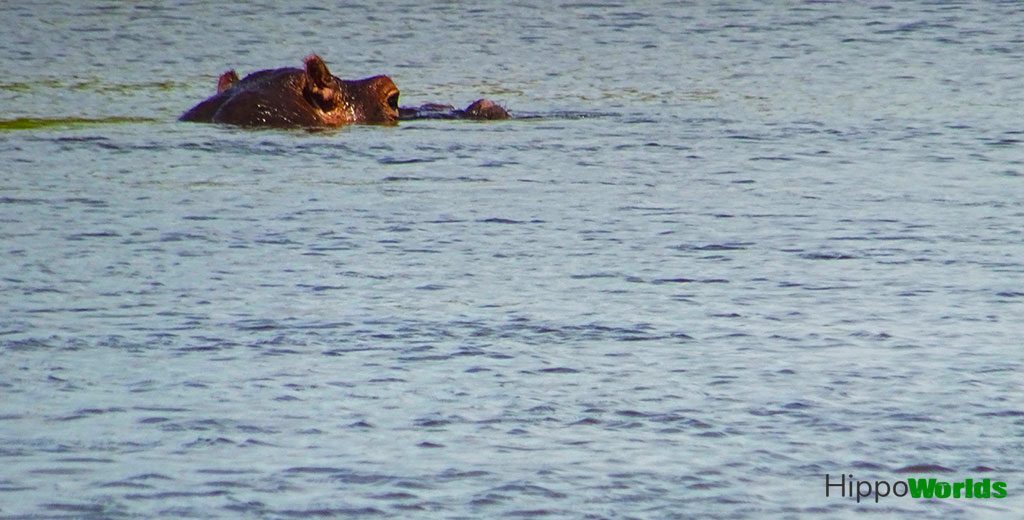
Modern hippos spend much of the day in rivers and lakes. Their eyes, ears, and nostrils are positioned high on their heads, allowing them to keep most of their bodies underwater while still seeing, hearing, and breathing.
They can also close their nostrils and ears when submerged. Their heavy skeleton helps them move along the bottom of rivers and lakes rather than swim in the way many other mammals do.
But these adaptations did not appear all at once.
The transition towards a semi-aquatic lifestyle took place over a long evolutionary period, and different extinct hippopotamid groups developed aquatic adaptations in different ways. Fossils show that some of these characteristics appeared in ancient relatives before the modern hippo body plan was fully established.
A particularly interesting study published in 2023 examined the ear region of hippos and their extinct relatives. The shape of the inner ear can provide clues about how an animal moved and adapted to life in water. The research helps reconstruct the gradual emergence of semi-aquatic habits in the hippopotamus family.
You can read the study, Evolution of semiaquatic habits in hippos and their extinct relatives.
Today, the modern hippo’s body is exceptionally well adapted to this lifestyle. If you want to understand how these features work, take a look at our guide to hippo anatomy and the adaptations that keep them alive.
The Evolution and Diversity of Ancient Hippos
Today, there are only two living species of hippos. But their family was once much more diverse.
Ancient hippopotamids spread across Africa and, eventually, into parts of Europe and Asia. Some were large animals, while others were considerably smaller. Their teeth, skulls, and body proportions also varied, reflecting different diets and ways of life.
Several extinct genera are known from the fossil record, and scientists continue to revise their classification as new discoveries are made. The names Hippopotamus, Hexaprotodon, and Archaeopotamus appear in discussions of this ancient diversity, although the classification of some fossil species remains debated.
If you want to explore this lost diversity in more detail, read our article about extinct hippopotamus species.
Hippos Once Lived in Europe
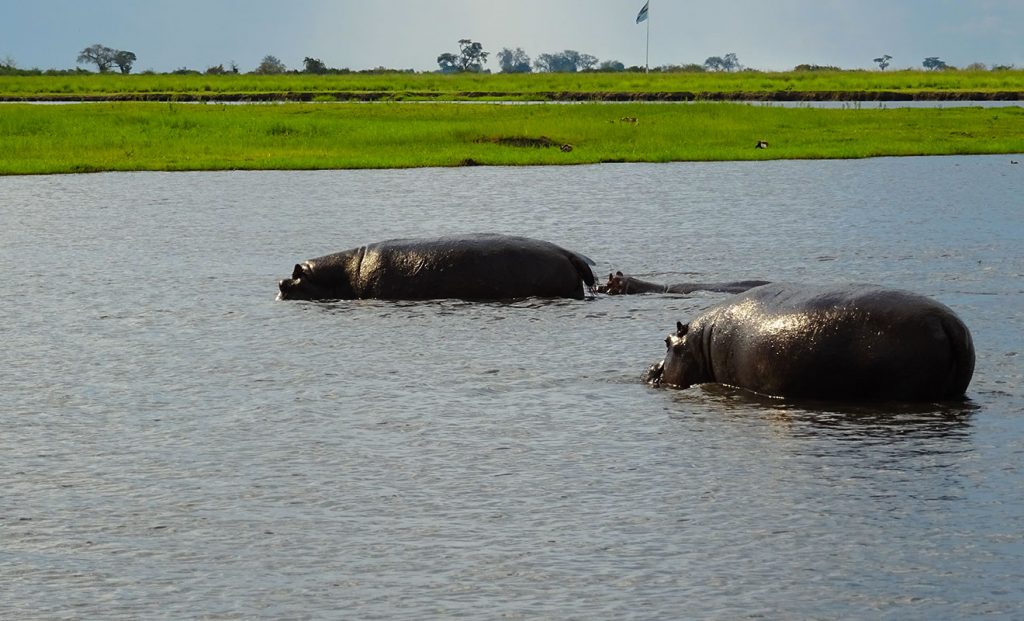
It may be surprising, but hippos once lived in Europe. Fossils show that members of the genus Hippopotamus inhabited parts of the continent during the Pleistocene, when the climate and landscapes were very different from today.
One of the best-known species was Hippopotamus antiquus, an extinct hippo that lived in Europe and was generally larger than the modern common hippo.
Hippos also lived on the Iberian Peninsula. Fossil discoveries in Spain and Portugal provide evidence of their presence in the region during the Quaternary. A 2024 review of the Iberian fossil record brought together these discoveries and examined when different hippo populations reached the peninsula and when they disappeared.
This is a particularly interesting part of the story: hippos were not restricted to the warm African landscapes we associate with them today.
You can read the full research in An Updated Review of the Quaternary Hippopotamus Fossil Records from the Iberian Peninsula.

The Surprisingly Small Island Hippos
Not all ancient hippos were giants. Some evolved into much smaller animals after becoming isolated on islands.
Fossils from islands such as Cyprus, Crete, Malta, Sicily, and Madagascar reveal several examples of dwarf hippos. These animals were much smaller than their mainland relatives, with some island species weighing only a fraction of the weight of a modern common hippo.
This is an example of island dwarfism. When large animals become isolated on islands, limited food resources and the absence of some predators can favor smaller body sizes over many generations.
Cyprus, for example, was once home to the small hippo Phanourios minor. Other dwarf hippos lived on Crete and Madagascar.
These island species are a reminder that hippo evolution did not follow a single path towards ever-larger animals. Different populations adapted to very different environments, sometimes producing animals that looked quite unlike the hippos alive today.
How Did Modern Hippos Evolve?
Despite their impressive evolutionary history, only two species of hippos survive today:
- The common hippopotamus (Hippopotamus amphibius), the large, semi-aquatic species found in sub-Saharan Africa.
- The pygmy hippopotamus (Choeropsis liberiensis), a much smaller and more elusive species that lives in the forests and wetlands of West Africa.
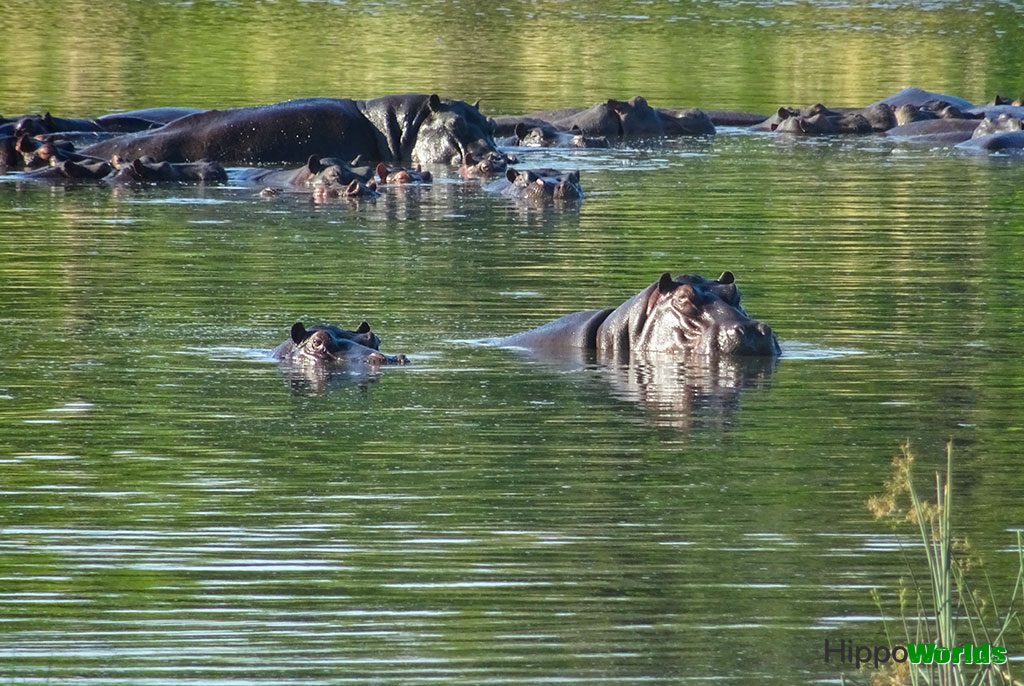
The two species share a common ancestor, but their evolutionary paths eventually produced very different animals. The common hippo is highly adapted to life in rivers and lakes, while the pygmy hippo spends much more time moving through forest habitats.
Exactly when these two lineages separated is still being investigated. Molecular studies have produced different estimates, partly because the fossil record of early hippos is incomplete.
A 2023 study using molecular data suggested a divergence during the Pliocene or Early Pleistocene. The researchers also discussed how different evolutionary scenarios could explain the differences between the two living species.
You can read more in the study on the divergence of common and pygmy hippos.
Although they look very different, both species are the last survivors of a much larger and more varied family. You can compare them in our guide to the different species of hippos.
How Did Hippos Become So Large?
Modern common hippos are among the largest land mammals on Earth. Adults can weigh more than 3,000 kg, although their size varies considerably.
It is tempting to imagine that hippos simply became larger and larger throughout evolution. But the fossil record tells a more complicated story.
Ancient hippopotamids varied greatly in size. Some were smaller than modern hippos, while others were large-bodied animals. There was no single, steady increase in size across the entire family.
The evolution of body size is influenced by several factors, including food availability, climate, habitat, competition, and the presence of predators. On islands, isolation could also lead to much smaller hippos, as we have seen.
So, there is no single explanation for why modern common hippos became so large. Their size is part of a much longer evolutionary history shaped by changing environments and different ways of life.

Frequently Asked Questions About Hippopotamus Evolution
How long have hippos existed?
The hippopotamus family, Hippopotamidae, has a fossil record dating back approximately 21 million years, to the Early Miocene. However, the evolutionary lineage connecting hippos to their closest living relatives goes back much further.
What animal did hippos evolve from?
Hippos did not evolve from any living animal. Their ancestors belonged to an ancient group of hoofed mammals, and fossil evidence suggests that the extinct anthracotheres may be closely related to the origin of the hippopotamus family. The precise relationships are still being studied.
Are hippos related to whales?
Yes. Whales, dolphins, and porpoises are the closest living relatives of hippos. Both groups share a common ancestor that lived more than 50 million years ago.
Were there hippos outside Africa?
Yes. Fossils show that ancient hippos lived in parts of Europe and Asia, as well as Africa. Some species even lived on Mediterranean islands and Madagascar.
Were there dwarf hippos?
Yes. Several extinct dwarf hippo species lived on islands, including Cyprus, Crete, and Madagascar. Their small size is generally explained by island evolution, where isolation and limited resources can favor smaller bodies.
How many hippo species are alive today?
There are two living species: the common hippopotamus (Hippopotamus amphibius) and the pygmy hippopotamus (Choeropsis liberiensis).
The Long Evolutionary Journey of Hippos
The modern hippo may look like a familiar African giant, but its evolutionary history is much more surprising. Its ancestors belonged to a diverse group of mammals that gradually developed a close relationship with water, spread across several continents, and evolved into animals of very different sizes.
Most of that diversity has disappeared. Today, only the common hippo and the pygmy hippo remain, representing the last branches of a much larger evolutionary story.
Understanding how hippos evolved also helps explain why these unusual mammals are so distinctive — and why protecting the two surviving species matters.
Read More
Explore these related guides to learn more about hippos and their behavior.
Meet the two hippo species still alive today and discover what makes them different.
Discover the fascinating diversity of ancient hippos, from giant species to tiny island hippos.
Explore the remarkable physical adaptations that help hippos survive in and around water.
Find out where hippos live today and how their range has changed throughout history.

I’ve been writing and running HippoWorlds’ content since 2019. I lived in Angola and was lucky enough to see hippos in the wild in Botswana and South Africa — I’m not a scientist, but a curious enthusiast dedicated to making this site a serious reference on the species.