

Last Updated on September 21, 2026 by Jorge Bastos
The common hippopotamus (Hippopotamus amphibius) is the third-largest land mammal on Earth and one of the most recognisable animals on the African continent — a barrel-bodied, semi-aquatic giant that spends most of its life submerged in rivers and lakes, only to become one of the fastest and most dangerous animals around at night. This is the complete profile: everything the species is, how it lives, and where to go for more depth on any single topic.
Quick Facts
| Feature | Detail |
|---|---|
| Scientific name | Hippopotamus amphibius |
| Family | Hippopotamidae |
| Weight (male) | ~1,546 kg average, up to ~3,200 kg |
| Weight (female) | ~1,385 kg average, up to ~2,344 kg |
| Length | 3–5 m |
| Height (shoulder) | 1.5 m |
| Lifespan | 35–40 years wild; 40–50+ in captivity |
| Diet | Herbivore — grass |
| Social structure | Pods of 10–30 |
| Top speed | ~30 km/h |
| Gestation | ~8 months |
| Range | ~38 sub-Saharan African countries |
| Conservation status | Vulnerable (IUCN) |
| Wild population | 115,000–130,000 |
| Closest living relatives | Whales and dolphins |
Physical Characteristics
The common hippo’s body is built almost entirely around its semi-aquatic lifestyle: a massive, barrel-shaped torso, short but powerful legs, and eyes, ears, and nostrils positioned high on the skull so it can see, hear, and breathe while the rest of its body stays submerged. Its skin is thick — up to 5 cm on the sides and back — but hairless and surprisingly vulnerable to sun and dehydration without regular time in water.
The hippo’s most famous physical trait may be its natural skin secretion, popularly nicknamed “blood sweat” — a reddish fluid that functions as a sunscreen, antibiotic, and moisturiser all at once. Our full guide to hippo blood sweat covers the chemistry behind it. For a complete breakdown of the hippo’s build — including its digitigrade feet, its 150–180 degree jaw gape, and its unusually dense bones — see our hippopotamus anatomy guide.
Its teeth are equally distinctive: canines that can reach 50 cm and grow continuously throughout its life, functioning purely as weapons rather than eating tools. The hippo teeth guide and hippo bite force guide cover this in depth, including the roughly 1,800 PSI bite that makes the hippo’s jaw one of the most dangerous natural weapons of any land mammal.

Diet and Feeding
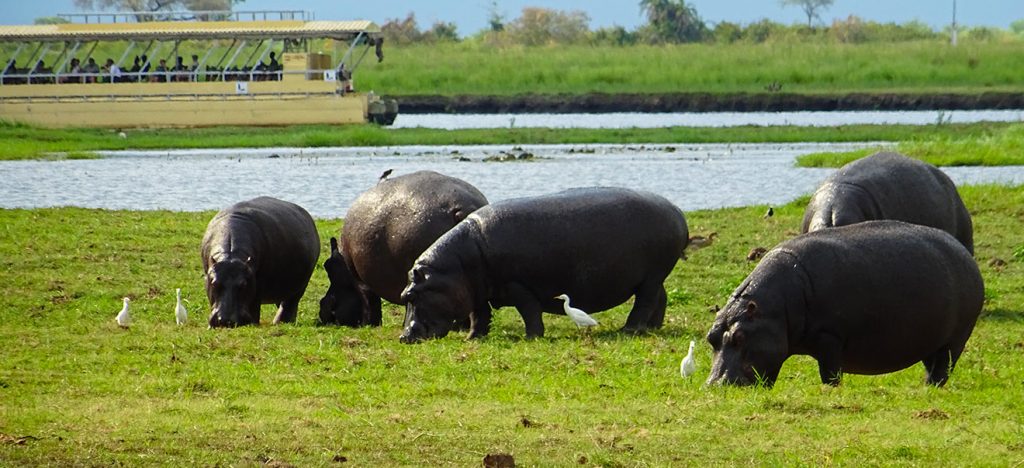
Common hippos are herbivores, grazing almost entirely on short grasses during nightly foraging trips that typically last five to six hours. An adult consumes somewhere in the range of 35 to 50 kg of grass in a single night — a relatively modest amount for an animal of its size, made possible by its highly energy-efficient, mostly stationary daytime routine in water.
Hippos leave the water after sunset and can travel several kilometres over land in search of grazing areas, following well-worn paths back and forth between water and pasture. Our hippopotamus feeding guide covers foraging behaviour, digestion, and the surprising ecological knock-on effects of hippo dung in full — including why hippo dung matters so much to river ecosystems.
Behaviour and Social Structure
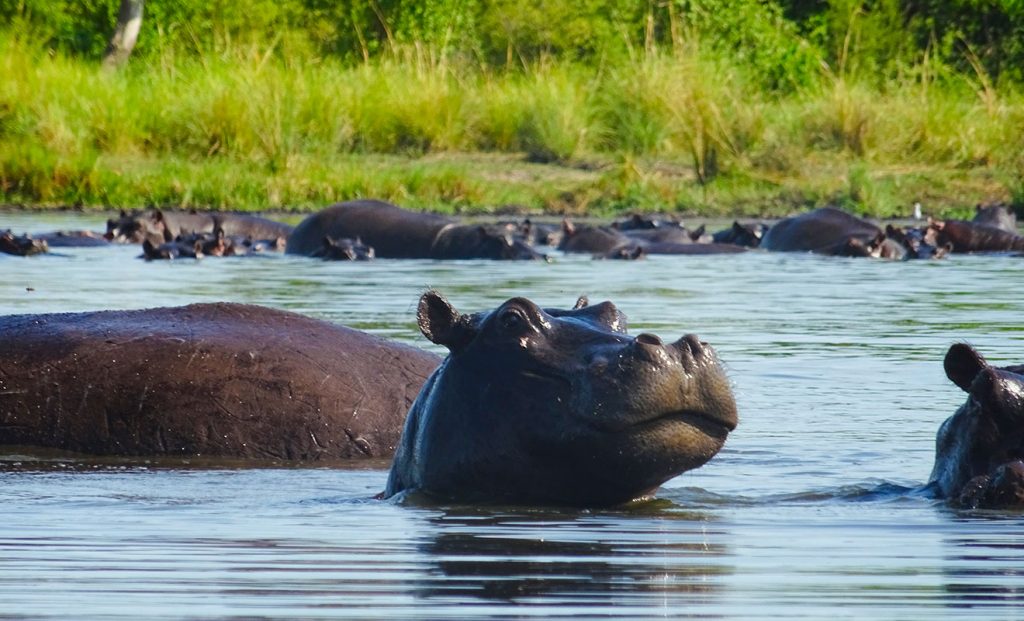
Common hippos are genuinely social animals, living in groups called pods (also called bloats or herds) that typically number 10 to 30 individuals, though aggregations of over 100 have been recorded where water and food are abundant. Pods are structured around a dominant male who controls a stretch of water and defends it — sometimes violently — against rival males.
Hippos are also among the most territorial and aggressive large animals in Africa, a combination that makes them responsible for an estimated several hundred human deaths per year, more than most large predators. Our hippopotamus social structure guide and hippopotamus aggression guide cover pod dynamics, dominance battles, and what actually triggers hippo attacks in detail. For the specific dynamics between males and females, see our male vs female hippo comparison.
Despite their aggression toward other species — and each other — adult hippos have very few natural predators. Our guide to hippo predators explains exactly what can, and can’t, threaten a healthy adult hippo.
Reproduction
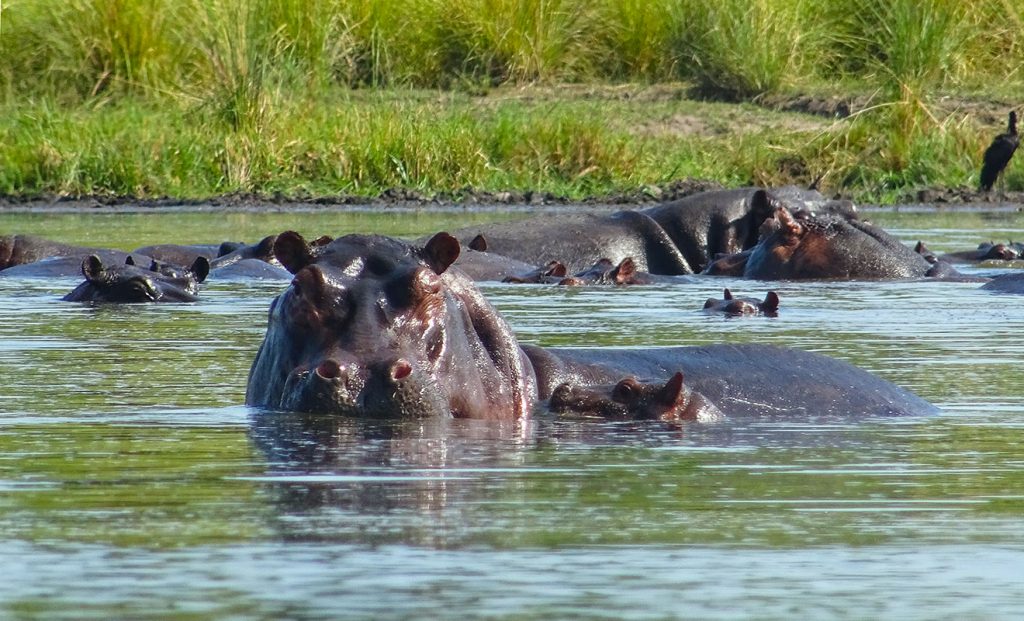
Female hippos give birth to a single calf after a gestation period of roughly eight months, most often on land or in shallow water. Newborn calves weigh between 25 and 55 kg and are cared for intensively by their mothers for several years, including nursing that continues for six to eight months. Our hippopotamus reproduction guide and dedicated baby hippo guide cover mating, birth, and calf development in full detail.

Habitat and Range
Common hippos are found across roughly 38 countries in sub-Saharan Africa, wherever permanent freshwater — rivers, lakes, and wetlands — exists alongside suitable grazing land nearby. The largest populations are concentrated in East and Southern Africa, particularly Zambia, Uganda, Tanzania, and Botswana. Our complete hippopotamus habitat guide covers the species’ range, strongholds, and the unusual invasive population now established in Colombia, descended from animals imported by Pablo Escobar.
How Fast Can a Hippo Move?
Despite their bulk, hippos can run at up to 30 km/h on land over short distances — faster than most humans can sprint — and move through water at around 8 km/h by walking and bounding along the riverbed rather than swimming in the conventional sense. Our guides on how fast hippos can run and whether hippos can actually swim cover the mechanics behind both.
Conservation Status
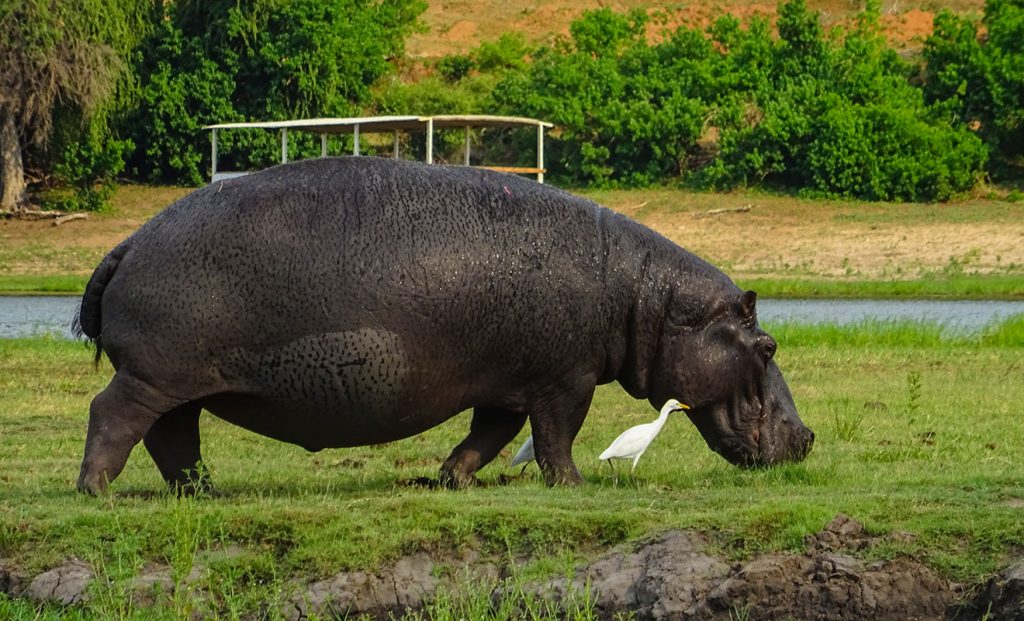
The common hippopotamus is classified as Vulnerable by the IUCN, with a global wild population estimated at 115,000 to 130,000 — a number that is declining in several regions even as it remains broadly stable at a continental level. The main threats are poaching for meat and ivory teeth, habitat loss from dam construction and agricultural expansion, and human-wildlife conflict as farming increasingly encroaches on hippo habitat. Our hippopotamus conservation guide and are hippos endangered? cover the full picture, including how the common hippo’s situation compares to the considerably more urgent status of its smaller relative.

Common Hippo vs Pygmy Hippo
The common hippopotamus is one of only two living hippo species. The other, the pygmy hippopotamus (Choeropsis liberiensis), is a genuinely separate species — smaller, solitary, forest-dwelling, and classified as Endangered with fewer than 3,000 individuals remaining. Our complete pygmy hippo guide and types of hippos overview cover both living species, plus the dozen or so extinct hippo species known from the fossil record.
Frequently Asked Questions
- What is a common hippopotamus? The common hippopotamus (Hippopotamus amphibius) is a large semi-aquatic mammal native to sub-Saharan Africa, and the third-largest land mammal on Earth. It is one of two living hippo species, alongside the smaller pygmy hippopotamus.
- How big is a common hippo? Adult males average around 1,546 kg and can exceed 3,200 kg in exceptional cases; adult females average around 1,385 kg. They typically measure 3 to 5 metres long and stand about 1.5 metres at the shoulder.
- What do common hippos eat? Common hippos are herbivores, grazing almost entirely on short grasses during nightly foraging trips of five to six hours, typically consuming 35 to 50 kg of grass per night.
- Are common hippos dangerous? Yes — they are considered one of Africa’s most dangerous large animals, responsible for an estimated several hundred human deaths per year due to territorial aggression and unpredictable behaviour, particularly near water.
- Is the common hippo endangered? The common hippopotamus is classified as Vulnerable, not Endangered, by the IUCN. Its close relative, the pygmy hippopotamus, holds the more serious Endangered classification.
- What is the common hippo’s closest living relative? Whales and dolphins. Despite physical resemblance to pigs, DNA evidence confirms hippos are most closely related to cetaceans, having diverged from a shared ancestor roughly 55 million years ago.
This page is a complete overview of the common hippopotamus. For deeper detail on any topic, follow the links throughout — from anatomy and diet to reproduction, conservation, and how it compares to other animals.

I’ve been writing and running HippoWorlds’ content since 2019. I lived in Angola and was lucky enough to see hippos in the wild in Botswana and South Africa — I’m not a scientist, but a curious enthusiast dedicated to making this site a serious reference on the species.