

Last Updated on August 30, 2026 by Jorge Bastos
Hippos are often said to kill around 500 people a year in Africa, more than any other large land mammal on the continent. The exact number is uncertain — estimates range from around 500 to as many as 3,000 — but there’s little doubt that hippos can be surprisingly dangerous. And that’s what makes them so interesting: they’re not predators, and they’re not naturally aggressive. So why do they kill so many people?
Why Hippos Are Aggressive
Hippo aggression is almost never about food or hunting. Hippos are herbivores — they eat grass. Their aggression is driven by three things:
- Territory — Hippos are intensely territorial in water. A dominant male controls a stretch of river or lakeshore and will charge anything that enters it uninvited, human or animal.
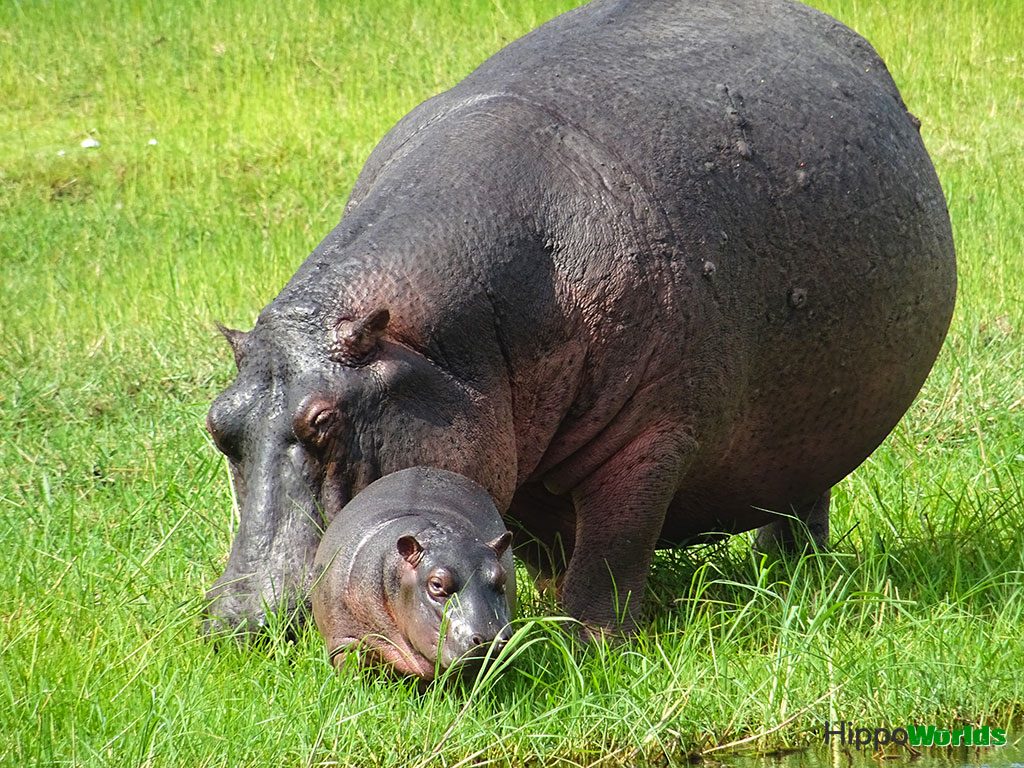
- Protection of young — A female hippopotamus with a calf is among the most dangerous animals in Africa. The maternal drive to protect offspring overrides virtually every other consideration, and a mother who perceives a threat to her calf will charge without hesitation or warning.
- Threat response — Hippos that feel cornered, startled, or blocked from reaching water will charge. This is a defensive response, not predatory behaviour — but the distinction offers little practical comfort to anyone in the path of a 2,000 kg animal moving at 30 km/h.
The Warning Signals
Hippos rarely attack without some form of warning. Recognising these signals is the most important practical knowledge for anyone near hippo habitat.
- The yawn — The wide-open mouth display that exposes the full length of the canine teeth is not actually a yawn. It is a deliberate threat display, communicating aggression and warning others to back away. The larger and more sustained the gape, the more serious the threat.
- Head swinging — A hippo swinging its head from side to side is in an escalating state of agitation. Combined with the yawn display, it indicates an imminent charge is possible.
- Mock charges — A hippo that charges and stops short is issuing a final warning. Many hippo charges toward boats or people are mock charges that stop at the water’s edge or at a short distance on land. The difficulty is that there is no reliable way to distinguish a mock charge from a real one in the moment.
- Vocalisations — Deep grunts, honks, and bellows signal territorial agitation, particularly between males. A loud wheeze-honk from a hippo in the water is often the first indication that a boat has entered territory the animal considers its own.
The sequence — yawn → head swing → mock charge → real charge — gives observers a window to retreat. The critical mistake is misreading a mock charge as the end of the encounter when it may be a prelude to a real one.

Types of Hippopotamus Aggression
Territorial Aggression in Water
This is the most consistent and predictable form of hippo aggression. The dominant male of a pod controls a defined stretch of water and treats any unauthorised entry — by another hippo, a boat, a human swimmer — as a direct threat to his territory.
Boats are among the most common targets of territorial hippo charges, particularly small wooden fishing vessels that hippos may perceive as rival animals or obstacles. A direct charge from an adult bull can capsize a boat instantly. Many of the 500 annual hippo-related human deaths occur this way — fishermen operating in or near hippo territory whose boats are struck or overturned.
Maternal Aggression
A female hippo with a newborn or young calf is in a state of continuous heightened alertness. The calf mortality rate is high — predators including Nile crocodiles, lions, and hyenas all target hippo calves — and the mother’s aggression reflects millions of years of evolutionary pressure to prevent exactly this.
The danger this creates for humans is that female hippos with calves will charge from distances that seem far beyond a “safe” range. A female who spots a human between herself and her calf — or between herself and water — may charge without any of the warning signals that precede territorial or competitive aggression.
Intraspecific Aggression: Male vs Male
The most physically dramatic form of hippo aggression occurs between rival males competing for territorial dominance. These confrontations involve two animals opening their jaws to the full 150-degree gape, clashing their canine teeth together, and inflicting wounds that can be catastrophic.
Male hippos that survive to old age carry extensive scarring across the face, neck, and flanks — a physical record of years of territorial combat. The canine teeth used in these fights can reach 50 cm in length and are continuously self-sharpened through use. A direct bite from a dominant male on a rival’s neck or flank can cause wounds severe enough to be fatal.
We cover the anatomy of these weapons in detail in our hippo teeth and bite force guide.
Aggression Toward Humans
Hippo attacks on humans fall into several categories:
- Riverbank and shallow water attacks — Humans who wade, swim, or work near hippo territory are at risk of charge from animals that perceive them as intruders. This is the most common form of fatal hippo-human interaction.
- Boat attacks — Territorial charges against vessels are well documented across central and eastern Africa. A hippo that has attacked and capsized a boat may follow up by attacking people in the water.
- Pathway encounters — Hippos that graze on agricultural land at night use established routes between water and pasture. A human who encounters a hippo on one of these paths — particularly one that puts themselves between the hippo and its water — is in serious danger.
For a complete analysis of hippo-related fatalities and how to stay safe near hippos, see our guide on how dangerous hippos are to humans.
Water vs Land: The Critical Difference
One of the most important and counterintuitive facts about hippo behaviour is how dramatically their aggression changes between water and land.
In water, territorial aggression is at maximum. The dominant male enforces his territory actively, and any perceived intrusion provokes a strong response. This is where the majority of hippo attacks on humans occur.
On land, the same animals behave very differently. Hippos graze peacefully at night on the same floodplains as other hippos from different pods. Males that would never tolerate each other in their shared river may graze within sight of each other without conflict. The land is effectively neutral territory, and hippos conserve the energy that territorial enforcement would cost.
The practical implication: a hippo grazing on land at night may seem calm and approachable. It is not. The specific rules change between land and water, but a hippo that feels cornered, startled, or blocked from its water will respond aggressively regardless of location — and it can run at up to 30 km/h on flat ground.

Frequently Asked Questions
- Why are hippos so aggressive? Hippo aggression is driven by territorial behaviour in water, maternal protection of calves, and defensive responses to perceived threats. It is not predatory — hippos are herbivores and have no interest in attacking for food. The aggression reflects an animal that has evolved in a competitive environment where territorial control determines access to survival resources.
- Are hippos the most dangerous animal in Africa? By annual human fatality count, hippos are consistently ranked among the most dangerous large animals in Africa, killing an estimated 500 people per year. Mosquitoes kill far more through disease transmission, but among large wildlife, hippos rank alongside Nile crocodiles as the most consistently lethal.
- Are female or male hippos more aggressive? Both can be extremely dangerous, but for different reasons. Dominant males are more consistently aggressive in a territorial context. Females with calves are arguably the most unpredictably dangerous — they will charge at distances and speeds that catch most people off guard.
- What should you do if a hippo charges? Get out of the water immediately if possible. On land, run toward cover, find a solid obstacle between yourself and the animal, or run uphill — hippos are significantly less effective on inclines. Never position yourself between a hippo and water. If a charge is a bluff, the hippo will stop; if it isn’t, maintaining a clear escape route is your best option.
- Do hippos attack other animals? Yes — particularly crocodiles and rival hippos. Hippos have been documented killing Nile crocodiles that enter their territory or threaten calves. Male-versus-male combat results in serious injuries and occasional deaths. Most other animals, including lions, learn to avoid adult hippos entirely.
Explore more on Hippoworlds: how dangerous are hippos to humans · hippo teeth and bite force · hippopotamus social structure · do hippos have predators · how fast can hippos run

I’ve been writing and running HippoWorlds’ content since 2019. I lived in Angola and was lucky enough to see hippos in the wild in Botswana and South Africa — I’m not a scientist, but a curious enthusiast dedicated to making this site a serious reference on the species.