
Last Updated on August 30, 2026 by Jorge Bastos
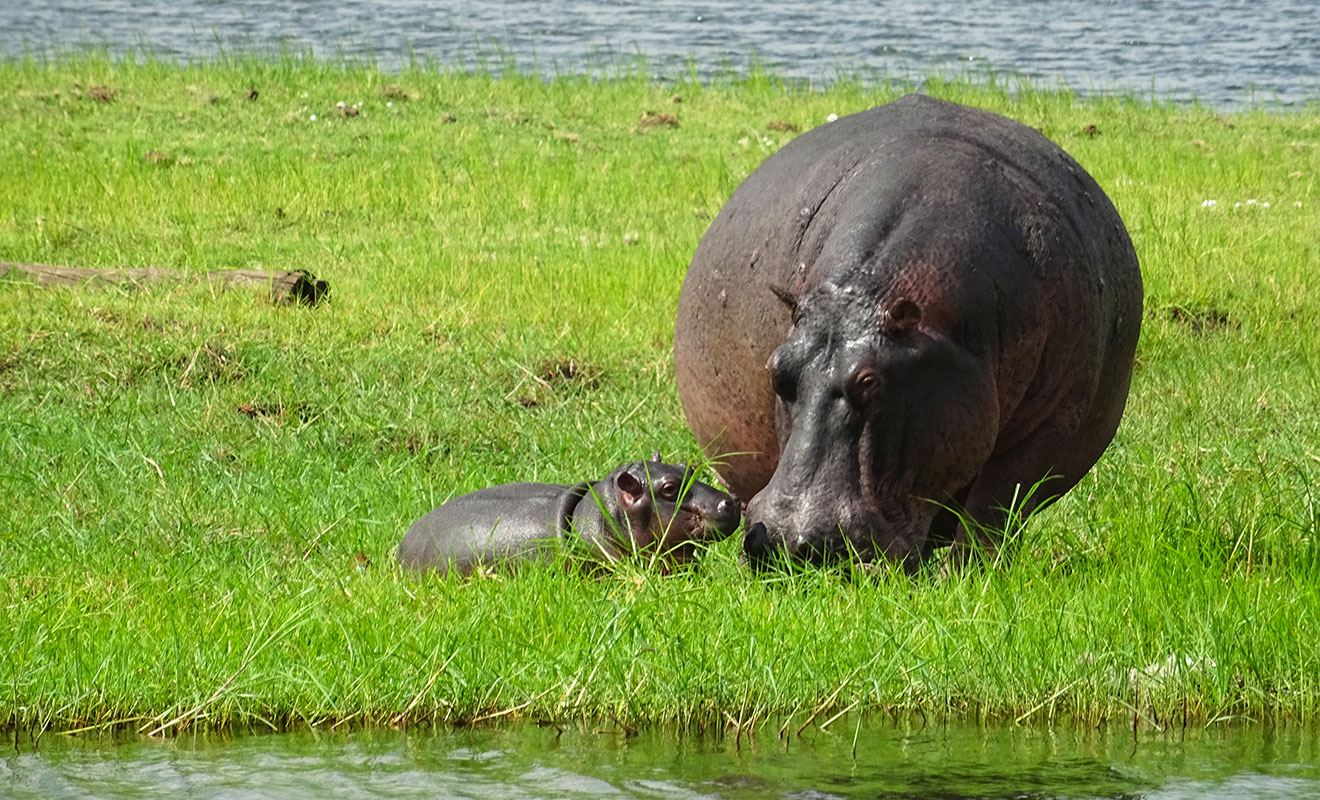
Baby hippos are among the most captivating animals on the planet. Despite being born into one of Africa’s most dangerous species, hippo calves enter the world completely dependent on their mothers — yet surprisingly well-developed from their very first moments. Here is everything you need to know about baby hippos, from birth weight and feeding habits to growth stages and survival threats.
What Is a Baby Hippo Called?
A baby hippopotamus is called a calf. The term follows the same pattern used for other large mammals such as elephants and whales.
Other hippo-specific terms worth knowing:
- Bull — an adult male hippopotamus
- Cow — an adult female hippopotamus
- Pod, herd, or bloat — a group of hippos
A female hippo can typically give birth to one calf every two years. Twins are extraordinarily rare — fewer than 15 documented cases have been recorded in the past century.
How Are Baby Hippos Born?
Gestation Period
The common hippopotamus (Hippopotamus amphibius) has a gestation period of 227 to 240 days — roughly eight months. This is comparatively short for an animal of its size. Elephants, for comparison, carry their young for up to 22 months.
The pygmy hippopotamus (Choeropsis liberiensis) has a shorter gestation of around 188 days (about six and a half months).
Where and When Birth Happens
Common hippos give birth on land or in shallow water, with the calf emerging hind legs first. In water births, the mother must guide the newborn to the surface to take its first breath of air.
Births can occur throughout the year, but there is a peak period roughly between October and April, coinciding with the rainy season in sub-Saharan Africa when food and water are more abundant.
You can learn more about the hippo’s reproduction in our complete guide.
Isolation After Birth
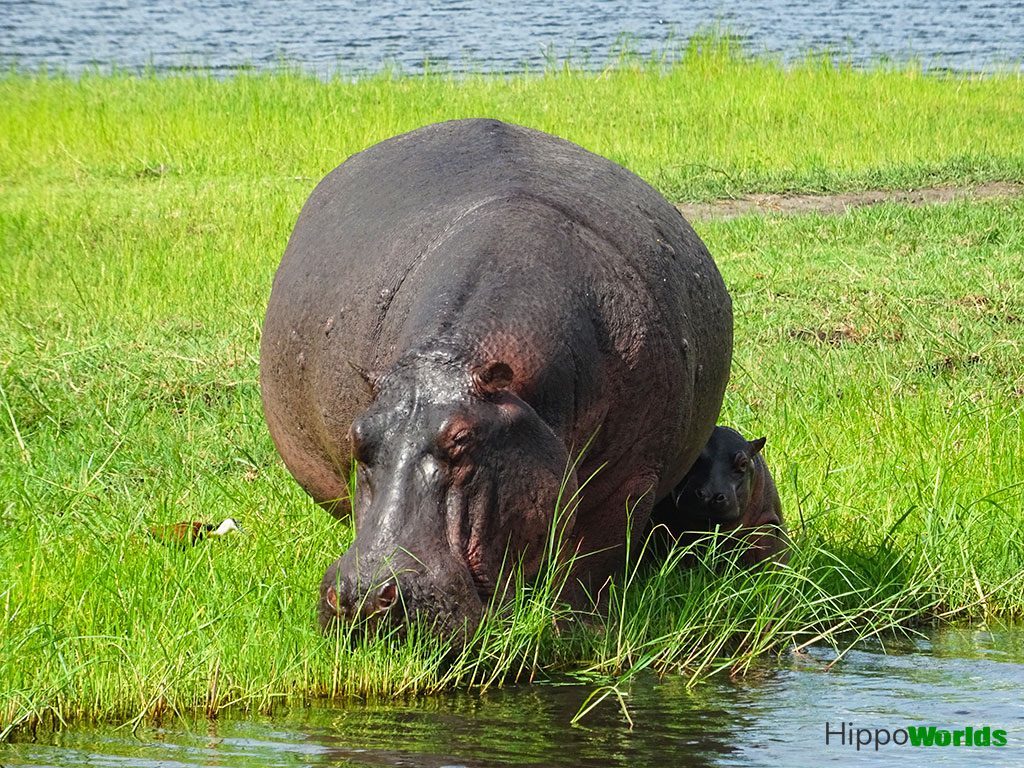
In the days immediately before and after birth, the mother separates herself from the rest of the pod. She typically remains isolated with her calf for 10 to 14 days — a critical bonding phase also called imprinting, common to many large ungulates including horses, zebras, and cattle. During this time, she rarely leaves the water, and she does not rejoin the herd until the calf has fully imprinted on her.
How Much Does a Baby Hippo Weigh?
At birth, a common hippopotamus calf weighs between 25 and 55 kg (55 to 121 lbs). Despite being the third-largest land mammal in the world, a hippo mother produces only a single, well-developed offspring.
Growth in the first year is rapid:
| Stage | Approximate Weight |
|---|---|
| At birth | 25–55 kg (55–121 lbs) |
| At 1 year | ~227 kg (500 lbs) |
| Adolescent (3–5 years) | 600–1,000 kg (1,300–2,200 lbs) |
| Adult female | 1,400–1,850 kg (3,050–4,080 lbs) |
| Adult male | 1,500–3,200 kg (3,300–7,000 lbs) |
A baby hippo can double or even triple its birth weight within the first year, powered by the high-calorie content of its mother’s milk.
Pygmy hippo calves are far smaller, arriving at just 5.7 to 6.8 kg (12 to 15 lbs) at birth.
What Do Baby Hippos Eat?
Nursing
Baby hippos are mammals, so their diet begins entirely with their mother’s milk. Nursing typically lasts six to eight months, though in periods of environmental stress — such as drought or food scarcity — the nursing period can extend considerably longer.
A Remarkable Adaptation: Nursing Underwater
One of the most extraordinary adaptations in the animal kingdom belongs to the hippo calf: the ability to nurse underwater. When a calf suckles beneath the surface, its ears automatically fold flat and its nostrils close, preventing water from entering while feeding. This reflex works even when the calf nurses on land, demonstrating how deeply the adaptation is hardwired.

Introducing Solid Food
Despite nursing, calves begin experimenting with solid food surprisingly early:
- At around 1 month: Light grazing on grasses, shoots, and reeds begins.
- At around 5 months: More substantial grazing becomes a regular part of the diet, alongside continued nursing.
By the end of the nursing period, calves have transitioned to the typical hippo herbivore diet — primarily grasses consumed during nightly grazing sessions on land.
Baby Hippos and Water
Can Baby Hippos Swim?
Hippos — including calves — cannot technically swim. Instead, they walk and bound along riverbeds and the bottom of lakes, using their weight to stay submerged. The buoyancy they show at the surface comes from momentarily pushing off the bottom and rising, not from active swimming movements.
Holding Their Breath
Newborn calves need to breathe approximately every 30 seconds. As they develop, this capacity increases steadily:
- Young calves: up to 2 minutes underwater
- Adults: up to 5 minutes or more before surfacing
Hippos can even sleep underwater. They have an involuntary reflex that causes them to rise to the surface to breathe and sink again — all without waking up. Calves develop this same reflex very early in life.
The Mother-Calf Bond
The relationship between a hippo cow and her calf is one of the most intensely protective bonds in the animal kingdom.
Mothers and calves have been widely observed grooming each other, cuddling, playing, and making mouth-to-mouth contact — a form of affection that is well documented among hippos. Calves frequently rest on their mother’s back as she wallows in the water.
Nursery Groups
Once the mother has rejoined the pod after the isolation period, calves from the same group are often left together in informal “nurseries” — clusters of young hippos watched over by one or more adult females. In these nurseries, the calves engage in play fights and mock charges that prepare them for the competitive social dynamics of adulthood.
How Long Do Calves Stay with Their Mothers?
The mother-calf bond typically lasts until the calf is between 7 and 8 years old. Female offspring often remain in the same pod as their mothers even after independence. Young males, however, are gradually pushed out by the dominant bull as they approach sexual maturity, eventually joining bachelor groups or establishing their own territory.
Threats to Baby Hippos
Despite adult hippos having virtually no natural predators, calves face significant dangers, particularly in their first year.
Natural Predators
The main predators of hippo calves are:
- Crocodiles — the most opportunistic threat in and around water
- Lions — especially when a calf is on land away from its mother
- Hyenas — capable of targeting isolated or weakened calves
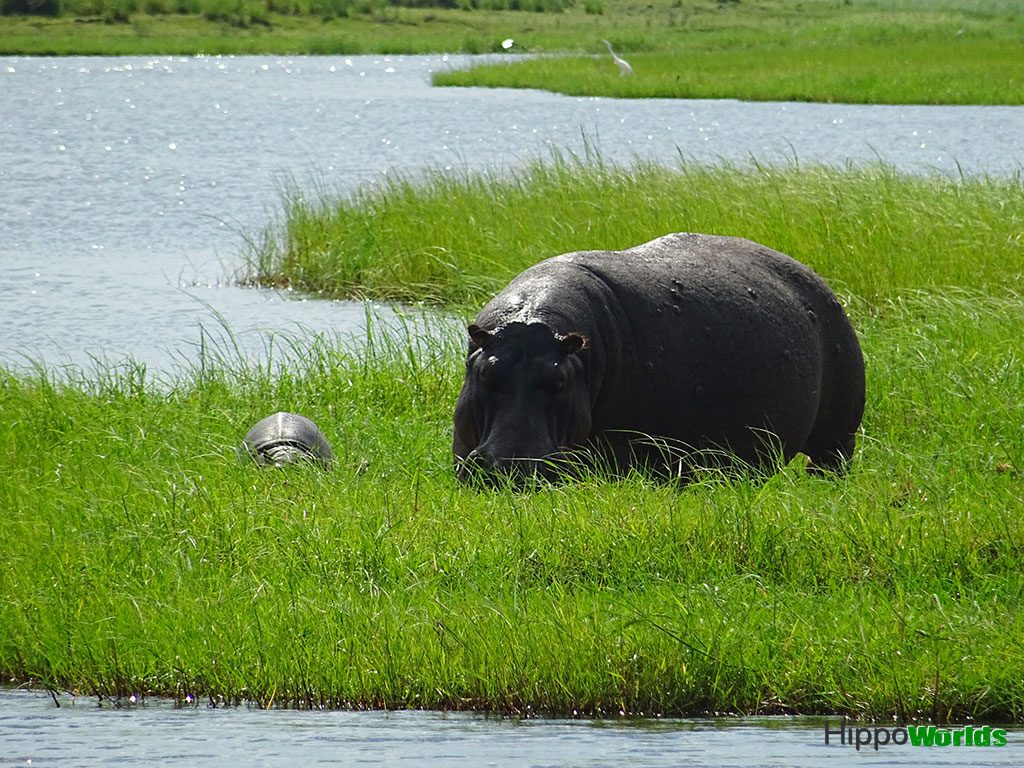
Mothers are fiercely aggressive in defense of their calves. Most documented attacks by female hippos on humans are caused by cows protecting their young or females that have recently given birth. A dominant bull will also defend the calves in his territory from external threats.
Infanticide by Dominant Bulls
One of the less obvious but significant threats to baby hippos comes from within the herd itself. Dominant bulls sometimes kill calves — particularly young males — as a strategy to eliminate future competition for breeding rights and territorial dominance. Mothers fight fiercely to protect their offspring, but do not always succeed. In cases where the mother cannot protect her calf, she may relocate with it to a different pod.
How Baby Hippos Grow: Development Milestones
| Milestone | Approximate Age |
|---|---|
| First breath (water birth) | At birth (guided by mother) |
| Can stand and walk | Within hours of birth |
| Begins nursing underwater | First days |
| Light grazing begins | ~1 month |
| Substantial grazing | ~5 months |
| Weaning | 6–8 months |
| Weighs ~500 lbs | ~1 year |
| Enters adolescence | 3–5 years |
| Female sexual maturity | 5–6 years |
| Male sexual maturity | ~7.5 years |
| First independent breeding (males) | 10–13 years (when strong enough to compete) |
Famous Baby Hippos
Fiona — Cincinnati Zoo (2017)
The most famous baby hippo in recent history, Fiona was born on 24 January 2017 at the Cincinnati Zoo, approximately six weeks premature. She weighed only 13 kg (29 lbs) at birth — well below the minimum weight expected for a viable hippo calf. Hippos born prematurely rarely survive in captivity.
The veterinary team at Cincinnati Zoo mounted a 24-hour care operation, including developing a new protocol for hand-raising a premature hippo — an effort the zoo later described in detail, noting Fiona would likely have drowned within minutes had she been born in water rather than on land, given how weak she was. Fiona beat the odds and survived.
Moo Deng — Khao Kheow Open Zoo, Thailand (2024)
Moo Deng became an internet sensation and drew international visitors to the zoo, with the Khao Kheow Open Zoo reporting a surge to around 10,000 daily visitors at the height of her fame. She also renewed global awareness about the endangered status of the pygmy hippopotamus.
Baby Hippo vs Pygmy Hippo Calf: Key Differences
| Feature | Common Hippo Calf | Pygmy Hippo Calf |
|---|---|---|
| Birth weight | 25–55 kg (55–121 lbs) | 5.7–6.8 kg (12–15 lbs) |
| Gestation | 227–240 days | ~188 days |
| Born in water or land | Mostly in water | Water or land equally |
| Adult weight (eventual) | 1,500–3,200 kg | 180–275 kg |
| Social behavior | Pod-based | Mostly solitary |
| Conservation status (adults) | Vulnerable | Endangered |
The pygmy hippo is a separate species — not a juvenile common hippo — and its calves reflect the species’ different lifestyle: smaller, more terrestrial, and with a mother that tends to be solitary rather than social.
Frequently Asked Questions About Baby Hippos
- What is a baby hippo called? A baby hippo is called a calf. Adult males are bulls, adult females are cows, and a group of hippos is called a pod, herd, or bloat.
- How much does a baby hippo weigh at birth? A common hippo calf weighs between 25 and 55 kg (55 to 121 lbs) at birth. Pygmy hippo calves are much smaller, weighing around 5.7 to 6.8 kg (12 to 15 lbs).
- Can baby hippos swim? No — hippos cannot swim, including calves. They walk along riverbeds and use the bottom to push themselves to the surface. Newborns can hold their breath for about 30 seconds; this increases to around 2 minutes as they grow.
- What do baby hippos eat? Baby hippos nurse on their mother’s milk for six to eight months. They begin light grazing at around one month old, with substantial grazing starting at around five months, while continuing to nurse.
- How long do baby hippos stay with their mothers? The mother-calf bond typically lasts between 7 and 8 years. Female offspring often remain in the same pod permanently. Males are gradually pushed out by dominant bulls as they mature.
- Are baby hippos dangerous? Hippo calves themselves are not aggressive, but approaching one in the wild is extremely dangerous. Mother hippos are among the most aggressive animals in Africa when defending their young, and will attack with no warning.
- What are the biggest threats to baby hippos? The main threats are crocodiles, lions, and hyenas. A less obvious but significant risk is infanticide by dominant bulls within the herd. Habitat loss and poaching, which threaten the species as a whole, also indirectly reduce calf survival.
Hippoworlds covers all aspects of hippopotamus biology, behaviour, and conservation. Learn more about hippo predators, what hippos eat, and where hippos live.

I’ve been writing and running HippoWorlds’ content since 2019. I lived in Angola and was lucky enough to see hippos in the wild in Botswana and South Africa — I’m not a scientist, but a curious enthusiast dedicated to making this site a serious reference on the species.