
Last Updated on September 21, 2026 by Jorge Bastos
Two of Africa’s most dangerous animals share the same rivers, the same sandbanks, and the same water holes. The hippopotamus and the Nile crocodile are each capable of killing an adult human with a single strike, and both are ranked among the deadliest large animals on the continent. Yet despite living in constant proximity, they rarely fight — and when they do, the outcome is almost never in doubt.
Here is the full comparison: size, bite force, speed, fighting style, real documented encounters, and a clear verdict on who would win.
Hippo vs Crocodile: Quick Comparison
| Feature | Hippopotamus | Nile Crocodile |
|---|---|---|
| Scientific name | Hippopotamus amphibius | Crocodylus niloticus |
| Class | Mammal | Reptile |
| Average weight | 1,500–3,200 kg (3,300–7,000 lbs) | 225–750 kg (500–1,650 lbs) |
| Maximum weight | Up to 4,500 kg (9,900 lbs) | Up to 1,000+ kg (2,200 lbs) |
| Average length | 3.5–5 m (11.5–16.5 ft) | 3.5–5 m (11.5–16.5 ft) |
| Bite force | ~1,800 PSI | 3,700–5,000 PSI |
| Canine / fang length | Up to 50 cm (20 in) | ~10 cm (4 in) |
| Number of teeth | 36 | 64–68 |
| Land speed | ~30 km/h (19 mph) | ~14–18 km/h (9–11 mph) |
| Water speed | Walks on bottom | 30–35 km/h (19–22 mph) |
| Diet | Herbivore | Carnivore (apex predator) |
| Social structure | Group (pod) | Mostly solitary |
| Human kills / year | ~500 | ~200–745 |
| IUCN status | Vulnerable | Least Concern |
Size and Weight: How Do They Compare?
The Hippo’s Size Advantage
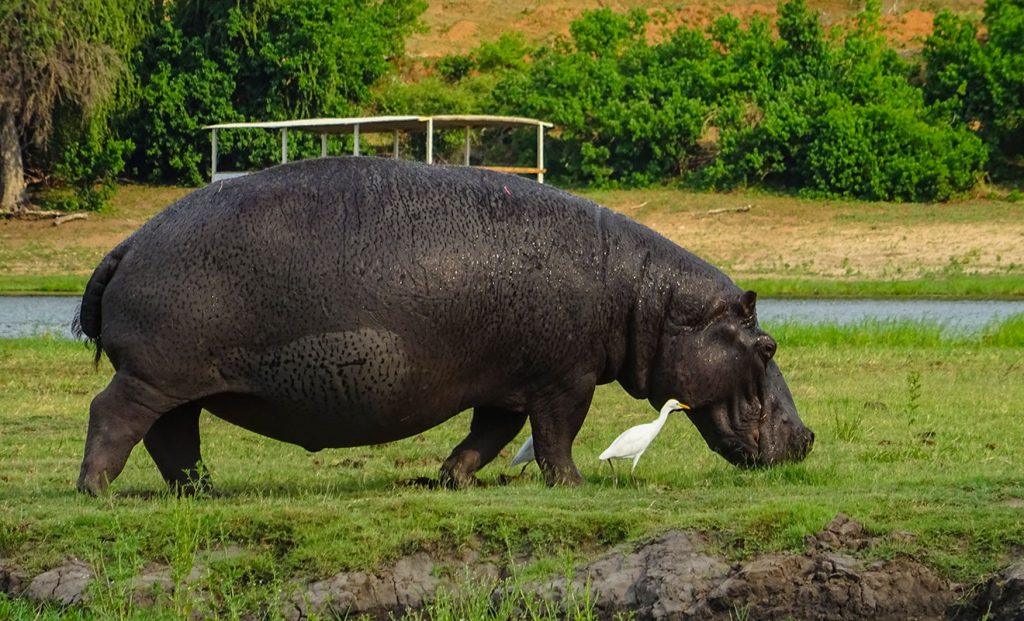
The hippopotamus is one of the largest land animals on Earth, second only to the elephant in weight. An adult male hippo typically weighs between 1,500 and 3,200 kg (3,300 to 7,000 lbs), with exceptional individuals exceeding 4,000 kg. It stands up to 1.6 m (5.2 ft) at the shoulder and reaches up to 5 m (16 ft) in length.
That mass is not fat — it is dense, muscular, and sits low to the ground on four short but powerful legs. A hippo’s body is essentially a barrel of muscle, and every part of it is built for confrontation.
The Nile Crocodile’s Size
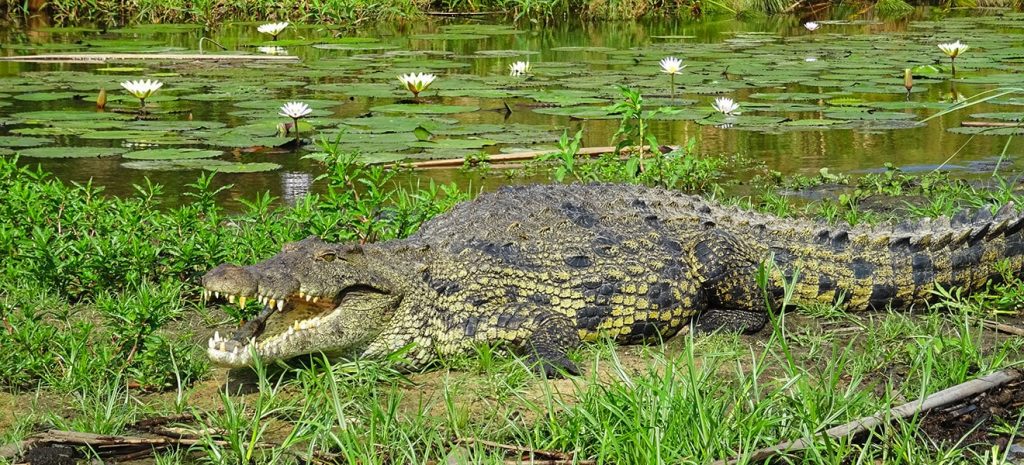
The Nile crocodile is Africa’s largest predator and the second-largest reptile in the world, after the saltwater crocodile. A typical adult male measures 3.5 to 5 m (11.5 to 16.5 ft) in length and weighs between 225 and 750 kg (500 to 1,650 lbs). Very large individuals can exceed 1,000 kg (2,200 lbs), though this is rare.
The most legendary large Nile crocodile on record is Gustave, a male from Burundi reported to exceed 6 m (20 ft) in length and weighing an estimated 900 kg (2,000 lbs). Gustave is documented as one of the few crocodiles known to have attacked adult hippos — a behaviour almost unheard of in typical individuals.
The Weight Gap
Even at its heaviest, a Nile crocodile weighs less than half of an average adult hippo — and often less than a quarter. In the most typical encounter between species, the hippo outweighs the crocodile by a factor of three to five or more. This size gap alone dictates almost everything about how these two animals interact
Bite Force and Teeth
Crocodile: The Strongest Bite on Earth
The Nile crocodile has the strongest measured bite force of any living animal, recorded at between 3,700 and 5,000 PSI depending on the study and the individual. This is approximately five times stronger than the bite of a lion. A crocodile’s jaw is built for one purpose: gripping and holding prey without releasing it. Their 64 to 68 conical teeth — up to 10 cm (4 inches) long and replaced up to 45 times over a lifetime — are designed not to slice, but to puncture and lock.
There is one crucial limitation: crocodile jaw muscles are almost entirely dedicated to closing force. The muscles responsible for opening the jaw are comparatively weak — a reason why a human can physically hold a crocodile’s mouth shut with moderate effort.
Hippo: The Bigger Weapon
The hippopotamus has a bite force of approximately 1,800 PSI — less than half that of the crocodile. However, raw bite force does not tell the whole story.
A hippo’s mouth opens to nearly 1.2 m (4 feet) wide, the largest gape of any land mammal. Its lower canine teeth reach up to 50 cm (20 inches) in length — the longest teeth of any living land animal that are not tusks in the traditional sense. These canines are not used for feeding (hippos are herbivores) but purely for fighting, and they are capable of inflicting catastrophic injuries. Multiple documented accounts confirm that a hippo’s bite can sever a crocodile’s body completely in a single closure.

Speed and Agility
On Land
Hippos can reach speeds of up to 30 km/h (19 mph) on land for short distances — faster than most people can sprint. Despite their bulk, they accelerate quickly and are highly maneuverable in close-range confrontations.
Nile crocodiles are slower on land, capable of speeds up to 14–18 km/h (9–11 mph) in short high-walk bursts. Their primary weapon on land is a sudden lunge from a stationary ambush position.
In Water
In water, the dynamic reverses sharply. A crocodile is a purpose-built aquatic predator, using its powerful tail to propel itself at 30–35 km/h (19–22 mph). It can remain motionless below the surface for extended periods and launch an explosive attack with almost no warning.
Hippos, by contrast, do not actually swim — they walk and bound along riverbeds. Their aquatic movement is powerful but slow. However, in water the hippo’s mass becomes if anything a greater advantage: a charging hippo underwater can simply overwhelm a crocodile by sheer momentum.
How Each Animal Fights
The Hippo’s Fighting Style
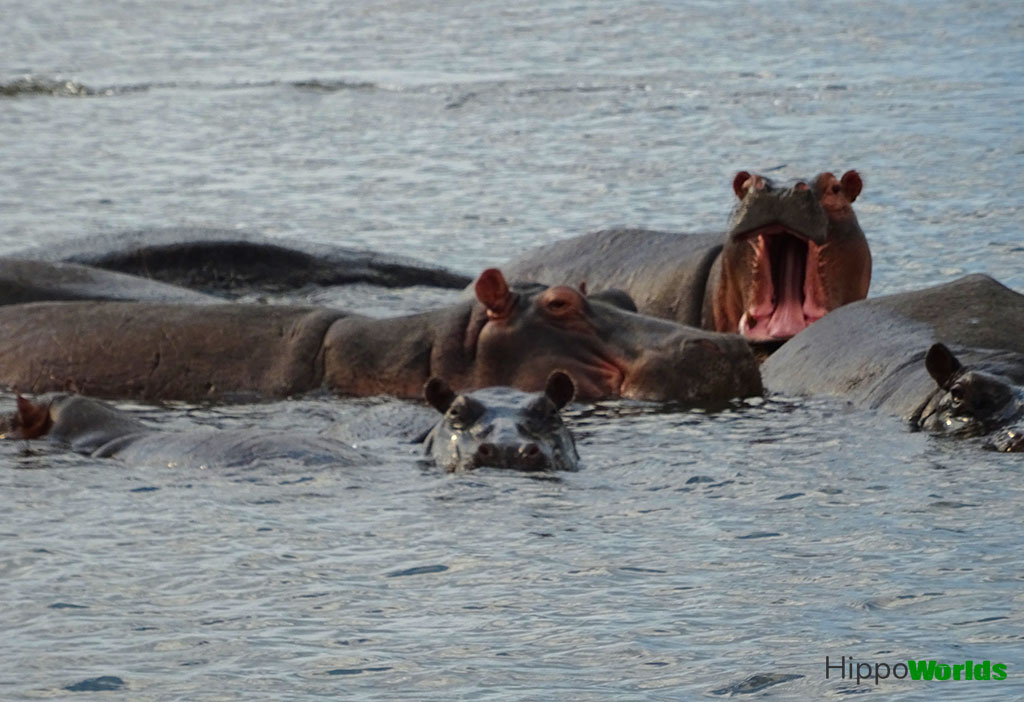
Hippos do not hunt and are not predators. Their aggression is territorial and defensive, triggered by encroachment on their water territory, threats to calves, or proximity to a female in heat. When a hippo attacks, it does so with its full body mass: charging, biting, tossing, and stomping. A hippo will open its mouth wide — the famous “yawn” — as a warning display. If the warning is ignored, it bites.
The sheer size of a hippo’s head and jaw means that even a glancing bite on a crocodile can cause fatal injuries. Multiple observers have recorded hippos picking up and shaking crocodiles the way a dog might shake a toy. A direct bite from a hippo on a crocodile’s midsection has been documented to result in the crocodile being cut in two.
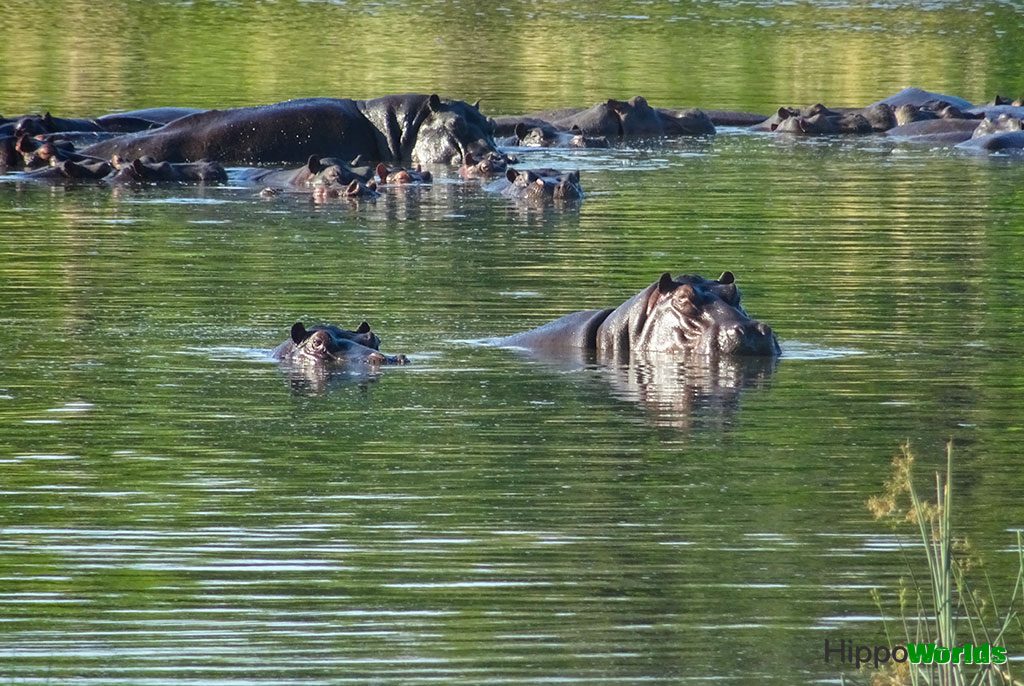
Critically, hippos are group animals. In a pod, a threatened hippo does not fight alone. A crocodile that targets a calf may suddenly find itself surrounded by multiple adults.
The Crocodile’s Fighting Style
The Nile crocodile is a precision ambush predator. Its strategy relies on concealment, patience, and a single explosive strike. It waits motionless beneath the surface, identifies a target, and launches from the water to grip the prey at speed. Once it has a grip, it drags the prey underwater and employs the death roll — spinning rapidly to disorient, drown, and dismember its target.
This strategy is devastatingly effective against wildebeest, zebra, antelope, and similar prey. Against an adult hippo, it fails at the first step: a crocodile simply does not have the jaw or the mass to grip a hippo in a way that incapacitates it, while the hippo’s response will be immediate and far more dangerous to the crocodile than the other way around.
The Reality: How Do Hippos and Crocodiles Actually Get Along?
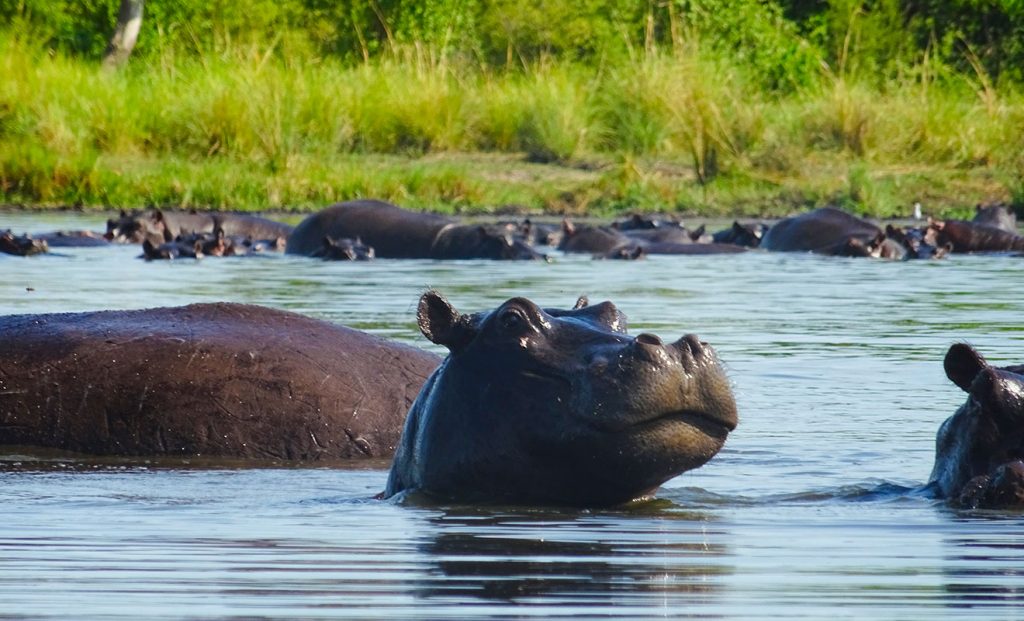
The most surprising fact about hippos and crocodiles is how peacefully they usually coexist. Across Africa, the two species share rivers, lakes, sandbanks, and pools with remarkably little conflict, given that both are capable of extreme violence.
This is not friendship — it is mutual awareness. Each species knows what the other can do, and rational self-preservation keeps most encounters non-violent. Crocodiles bask on the same sandbanks as hippos, drift past hippo pods in the same water, and in some areas live in close daily proximity for decades without serious confrontation.
Wildlife researchers describe the relationship as a “stalemate”: neither species has anything to gain from direct confrontation with the other. Crocodiles get fish, birds, and mammals. Hippos get grass. They do not compete for food, and direct conflict offers only risk with no reward.
Surprisingly, hippos have been documented stealing kills from crocodiles — approaching a crocodile’s prey and displacing the crocodile. They have also been observed mouthing the backs and tails of resting crocodiles in what appears to be exploratory rather than predatory behaviour. Researchers note that hippos sometimes suddenly attack crocodiles they have been ignoring for hours with no obvious trigger — a behaviour that remains poorly understood.
Can a Crocodile Kill a Hippo?
Under normal circumstances, no — a crocodile cannot kill a healthy adult hippo.
The weight disparity is simply too great. A crocodile’s bite, though enormously powerful, cannot achieve a grip that would incapacitate a hippo. The crocodile’s head is too narrow relative to the hippo’s body to achieve a bite that controls the animal, and the hippo’s hide — up to 5 cm (2 inches) thick — provides substantial protection.
There are, however, exceptional scenarios:
- Calf predation: Crocodiles regularly target hippo calves, which are small enough to be overwhelmed. This is one of the leading natural threats to juvenile hippos.
- Injured or sick adults: A severely weakened or isolated hippo may be vulnerable, particularly to a group of large crocodiles.
- Coordinated group attack: Group hunting behaviour has been documented in Nile crocodile populations. Multiple large crocodiles coordinating on a compromised hippo is rare but has been recorded.
- Gustave-scale individuals: The largest known Nile crocodiles, at 900 kg (2,000 lbs) or more, represent a different risk category than typical individuals. Gustave, the legendary Burundian crocodile, is documented to have attacked adult hippos — though even he is described as targeting animals that were vulnerable or isolated.
Do Hippos Kill Crocodiles?
Yes — and it is well documented.
Multiple recorded instances confirm that hippos kill crocodiles, particularly when a calf has been threatened. Czech wildlife photographer Václav Šilha photographed a hippo herd closing around and fatally attacking a crocodile that had targeted a calf. The entire group formed a defensive formation and drove the crocodile to its death.
Wildlife biologist Hugh Cott documented a 1956 encounter near Paraa, Uganda, in which he found a crocodile lying in shallow water in two pieces, freshly severed in front of the hind limbs — an injury consistent with a single hippo bite. Similar accounts have been recorded in Zambia and South Africa.
In 2026, footage from Kenya’s Maasai Mara documented a single hippo calmly displacing five Nile crocodiles from a fresh kill — walking into the group, opening its mouth in a display, and watching all five retreat without the hippo making contact.
Hippos have also been documented chasing, biting, and tossing crocodiles in what sometimes appears to be territorial enforcement rather than a specific response to a threat. The crocodile invariably retreats.
Who Would Win? The Verdict
In a direct confrontation between an adult hippo and a single adult Nile crocodile, the hippo wins. This is not a close call.
The hippo’s mass advantage — typically three to five times the weight of its opponent — combined with its enormously destructive bite and its willingness to charge make it the dominant animal in any direct encounter. The crocodile, despite its vastly superior bite force, cannot achieve a grip that would neutralize a hippo. A crocodile that provokes a hippo and cannot immediately disengage is likely to be fatally injured.
The crocodile’s advantages — ambush, speed in water, the death roll — are all predicated on the ability to grip prey and control it. None of these advantages transfer to a fight with an animal four times its size. This is why, in millions of years of cohabiting the same rivers, Nile crocodiles have learned one consistent lesson about adult hippos: avoid them.
The only meaningful exception is numerical. A pod of very large crocodiles targeting an isolated, sick, or injured hippo — particularly a juvenile — represents a genuinely dangerous scenario for the hippo. But in any standard encounter between two healthy adults, the outcome is decided by size, and size favours the hippo decisively.
Their Role in the Ecosystem
Both animals are ecologically essential to African rivers, which is one reason their coexistence matters beyond the spectacle of potential conflict.
Hippos are sometimes called “ecosystem engineers”. Their nightly grazing on land and daily defecation in water cycles enormous quantities of nutrients from the land into rivers and lakes, fertilising aquatic ecosystems and supporting fish populations that in turn feed hundreds of other species.
Nile crocodiles regulate fish populations — particularly barbel catfish, which are themselves significant predators of smaller fish. Without crocodile predation pressure, barbel catfish populations can surge in ways that disrupt entire river food chains, reducing the fish available to the 40+ bird species that depend on them.
The presence of both species in a healthy river system is, in most cases, a sign of ecological stability — not danger. Their shared management of Africa’s waterways has been functioning for millions of years.
Frequently Asked Questions
- Who would win in a fight between a hippo and a crocodile? In a direct one-on-one confrontation, an adult hippo wins almost every time. The hippo’s size advantage — typically three to five times the weight of a Nile crocodile — combined with a devastating bite means the crocodile cannot overpower it. Crocodiles are aware of this and avoid confronting adult hippos.
- Do hippos and crocodiles fight? Rarely. Despite sharing the same rivers for millions of years, hippos and crocodiles coexist with surprisingly little conflict. When conflict does occur, it is usually triggered by a crocodile targeting a hippo calf, or a hippo asserting territorial dominance.
- Do crocodiles eat hippos? Crocodiles will prey on hippo calves when the opportunity arises. They do not attack healthy adult hippos. In rare circumstances involving a vulnerable adult — sick, injured, or isolated — a group of large crocodiles has been documented coordinating an attack.
- Have hippos ever been documented killing crocodiles? Yes. Multiple documented accounts — including photographs, wildlife field reports, and video footage — confirm that hippos kill crocodiles, particularly in defense of calves. A hippo’s bite has been recorded severing a crocodile’s body in a single close.
- Which is more dangerous to humans — a hippo or a crocodile? Both are among Africa’s deadliest animals. Hippos kill an estimated 500 people per year; Nile crocodile attack estimates range from 200 to 745 annually, though reporting in remote areas is inconsistent. Hippos are considered the more dangerous to humans because they are highly territorial, unpredictable, and capable of capsizing boats. Nile crocodiles, while extremely dangerous ambush predators, tend to be more selective in their attacks.
- Who has a stronger bite — a hippo or a crocodile? The crocodile does, by a wide margin. A Nile crocodile’s bite force is measured at 3,700 to 5,000 PSI, compared to the hippo’s approximately 1,800 PSI. However, the hippo’s vastly larger canine teeth — up to 50 cm long — cause greater physical damage in a single bite despite the lower force measurement.
- What is the biggest crocodile ever found? The largest scientifically measured Nile crocodile on record was taken in Tanzania, measuring 6.45 m (21 ft) and weighing approximately 1,090 kg (2,400 lbs). The famous Gustave of Burundi, believed to measure around 6 m (20 ft), has been reported attacking adult hippos — exceptional behaviour for a crocodile.
Explore more on Hippoworlds: how dangerous are hippos to humans, what do hippos eat, hippo predators, and the largest animals in Africa.

I’ve been writing and running HippoWorlds’ content since 2019. I lived in Angola and was lucky enough to see hippos in the wild in Botswana and South Africa — I’m not a scientist, but a curious enthusiast dedicated to making this site a serious reference on the species.