
Last Updated on September 12, 2026 by Jorge Bastos
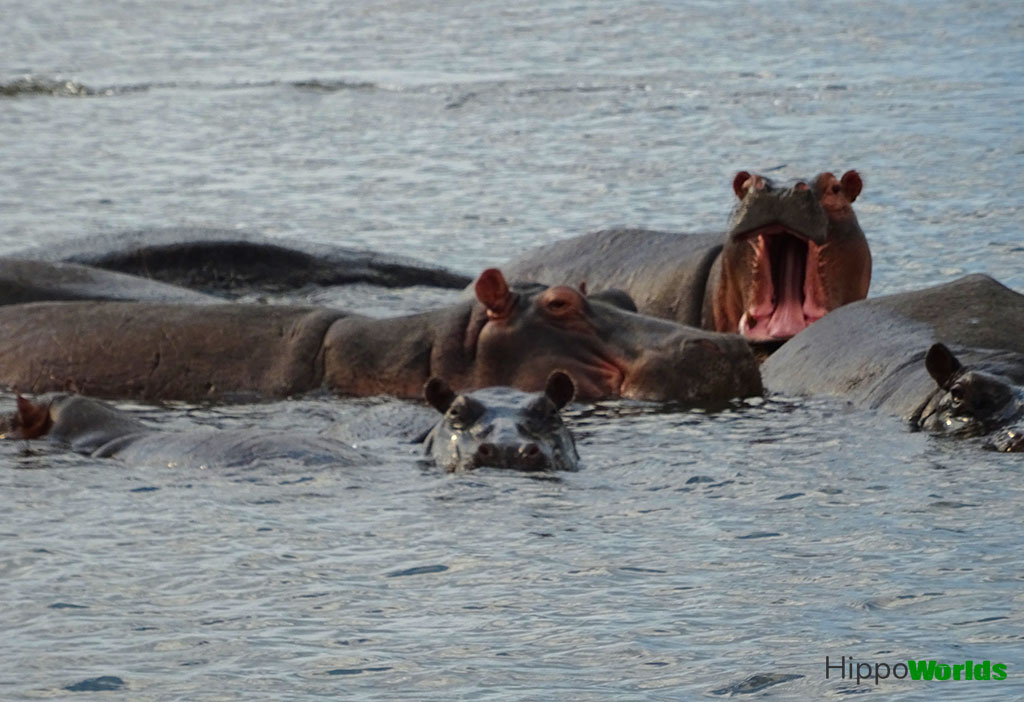
Ask most people to name Africa’s most dangerous animal and they’ll say lion, or maybe crocodile. The honest answer, by most measures, is the hippopotamus — an herbivore that eats nothing but grass and still manages to kill more people every year than nearly any other large land animal on the continent. Understanding why requires separating the real, well-documented danger from the more dramatic numbers that circulate online.

How Many People Do Hippos Kill Each Year?
The figure most widely cited is around 500 people per year, a number the fact-checking organisation Africa Check rated as broadly supported after reviewing the evidence. It’s worth being upfront about the real uncertainty behind that figure, though: Encyclopaedia Britannica cites a wider range of “500 to about 3,000,” and precise continent-wide data is genuinely difficult to gather, since many attacks happen in remote areas and go unrecorded or unreported to any central authority.
What isn’t disputed is the pattern. Among Africa’s large land animals — lions, elephants, buffalo, crocodiles — hippos are consistently near the top of the list, and by several comparative sources, at the very top.
How Hippos Compare to Other Dangerous African Animals
| Animal | Estimated human deaths/year |
|---|---|
| Mosquito (malaria) | ~500,000 |
| Snakes | 20,000–30,000 |
| Nile crocodile | ~300–1,000 |
| Hippopotamus | ~500 (range cited up to 3,000) |
| African elephant | ~500 |
| Lion | ~100–250 |
| Cape buffalo | ~200 |
Among large land animals specifically, hippos and crocodiles are generally considered the two most dangerous to humans in Africa, with figures from multiple wildlife and safety sources — including Altezza Travel — placing them consistently ahead of lions, elephants, and buffalo.

Why Are Hippos So Dangerous?
Hippos aren’t predators, and they don’t hunt humans for food — the mechanism behind hippo attacks has nothing to do with hunger. Our hippopotamus aggression guide covers the underlying behaviour in detail, but the short version is that hippo aggression is driven almost entirely by territoriality and protection of calves, both of which put humans at risk mostly by accident rather than by design.
The physical capability is real and considerable. A hippo’s bite force of roughly 1,800 PSI, delivered through a jaw that opens to 150–180 degrees and canines reaching up to 50 cm, is more than sufficient to kill a person with a single bite — details covered in full in our hippo bite force guide and hippo teeth guide. Combined with a body weighing up to 3,200 kg and a land speed of roughly 30 km/h, a charging hippo is simply not something a person can outrun or survive direct contact with.

How Hippo Attacks Actually Happen
Boat Capsizing
This is the single most common mechanism behind fatal hippo encounters. Hippos spend most of the day submerged, and a small boat or canoe can drift close to a resting or territorial hippo without anyone on board realising it’s there until the animal surfaces — sometimes directly underneath the vessel. A startled or territorial hippo can flip a canoe instantly, throwing occupants into water where the same animal, now agitated, remains close by. Many hippo-related deaths in fishing communities happen this way, through drowning or subsequent attack rather than an initial bite.
Nighttime Land Encounters
Hippos leave the water after dark to graze, sometimes travelling several kilometres inland along established paths. People walking between villages, checking on crops, or travelling at night in hippo territory can unknowingly cross paths with a grazing hippo — and because hippos are most vulnerable and defensive away from water, these encounters carry real risk, particularly if a person ends up positioned between a hippo and its route back to the river.
Mothers Defending Calves
A female hippo with a young calf is widely considered one of the most unpredictably dangerous individual animals in Africa. Unlike territorial bulls, whose aggression follows a fairly consistent pattern tied to location, a mother’s response is triggered by any perceived threat to her calf, sometimes from distances or in situations that wouldn’t provoke a non-maternal hippo. Our baby hippo guide and male vs female hippo comparison cover this dynamic in more detail.
Is a Hippo More Dangerous Than a Crocodile?
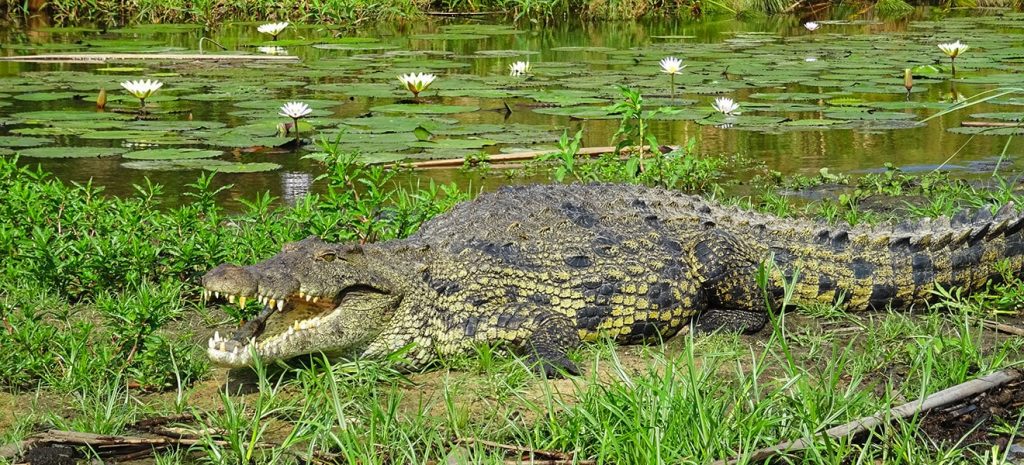
This is genuinely close, and different sources rank them in different orders — both are consistently identified as the two most dangerous large animals to humans in Africa, well ahead of lions or elephants. Nile crocodile death estimates range from roughly 300 to 1,000 per year depending on the source, overlapping substantially with hippo estimates. The mechanisms differ meaningfully, though: crocodile attacks are predatory — the animal is actively hunting — while hippo attacks are almost entirely defensive or territorial. Our hippo vs crocodile comparison covers how the two species actually interact where their ranges overlap.
How to Stay Safe Near Hippos
Never position yourself between a hippo and open water. This is the single most dangerous place to be, since a hippo’s instinct when threatened is to return to water as directly as possible.
Give hippos far more space than seems necessary, especially in or near water. Hippos can move through water at around 8 km/h and can close distance on a boat faster than most people expect.
Avoid travelling on foot near hippo territory after dark, when hippos are most active on land and least predictable.
Never approach a hippo with a calf, regardless of how far away the mother appears to be.
If a hippo charges on land, run for higher ground or solid obstacles rather than trying to outrun it in a straight line — hippos are considerably less effective on inclines and can’t manoeuvre around obstacles as easily as a person can.
Frequently Asked Questions
How many people do hippos kill each year?
The most widely cited and fact-checked figure is around 500 people per year in Africa, though some sources cite a broader range of up to 3,000. Precise continent-wide data is difficult to gather since many attacks occur in remote areas and go unrecorded.
Are hippos more dangerous than lions?
By most death-toll estimates, yes. Hippos are generally cited as killing more people annually than lions, whose estimated toll ranges from about 100 to 250 per year — less than half the commonly cited hippo figure.
Why do hippos attack humans if they’re herbivores?
Hippo attacks aren’t predatory — hippos don’t hunt humans for food. Attacks stem from territorial aggression, particularly in water, and from mothers defending calves. Most fatal encounters happen when a person unknowingly gets between a hippo and water, or startles a submerged hippo at close range.
What’s the most common way hippos kill people?
Boat capsizing is widely considered the most common mechanism, particularly among fishing communities. A hippo submerged near a small boat can surface suddenly and flip it, and people in the water afterward face both drowning risk and further attack from an agitated animal nearby.
Are hippos more dangerous than crocodiles?
The two are consistently ranked as Africa’s most dangerous large animals to humans, with overlapping death-toll estimates. Crocodile attacks are predatory in nature, while hippo attacks are almost entirely defensive or territorial.
How can I stay safe if I’m travelling near hippo territory?
Keep significant distance from water where hippos may be present, avoid walking near rivers or lakes after dark, never position yourself between a hippo and open water, and never approach a hippo with a calf under any circumstances.

I’ve been writing and running HippoWorlds’ content since 2019. I lived in Angola and was lucky enough to see hippos in the wild in Botswana and South Africa — I’m not a scientist, but a curious enthusiast dedicated to making this site a serious reference on the species.