
Last Updated on November 14, 2026 by Jorge Bastos
Two of Africa’s most dangerous animals share the same rivers, the same sandbanks, and the same water holes. The hippopotamus and the Nile crocodile are each capable of killing an adult human with a single strike, and both are ranked among the deadliest large animals on the continent. Yet despite living in constant proximity, they rarely fight — and when they do, the outcome is almost never in doubt.
Here is the full comparison: size, bite force, speed, fighting style, real documented encounters, and a clear verdict on who would win.
Hippo vs Crocodile: Quick Comparison
| Feature | Hippopotamus | Nile Crocodile |
|---|---|---|
| Scientific name | Hippopotamus amphibius | Crocodylus niloticus |
| Class | Mammal | Reptile |
| Average weight | 1,500–3,200 kg (3,300–7,000 lbs) | 225–750 kg (500–1,650 lbs) |
| Maximum weight | Up to 4,500 kg (9,900 lbs) | Up to 1,000+ kg (2,200 lbs) |
| Average length | 3.5–5 m (11.5–16.5 ft) | 3.5–5 m (11.5–16.5 ft) |
| Bite force | ~1,800 PSI | 3,700–5,000 PSI |
| Canine / fang length | Up to 50 cm (20 in) | ~10 cm (4 in) |
| Number of teeth | 36 | 64–68 |
| Land speed | ~30 km/h (19 mph) | ~14–18 km/h (9–11 mph) |
| Water speed | Walks on bottom | 30–35 km/h (19–22 mph) |
| Diet | Herbivore | Carnivore (apex predator) |
| Social structure | Group (pod) | Mostly solitary |
| Human kills / year | ~500 | ~200–745 |
| IUCN status | Vulnerable | Least Concern |
Size and Weight: How Do They Compare?
The Hippo’s Size Advantage
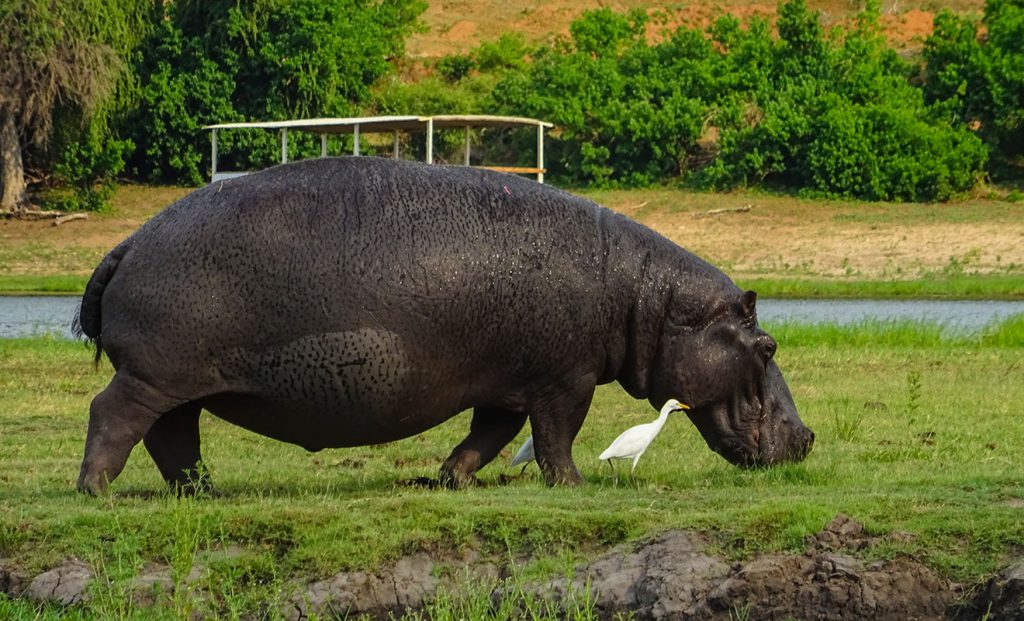
The hippopotamus is one of the largest land animals on Earth, second only to the elephant in weight. An adult male hippo typically weighs between 1,500 and 3,200 kg (3,300 to 7,000 lbs), with exceptional individuals exceeding 4,000 kg. It stands up to 1.6 m (5.2 ft) at the shoulder and reaches up to 5 m (16 ft) in length.
That mass is not fat — it is dense, muscular, and sits low to the ground on four short but powerful legs. A hippo’s body is essentially a barrel of muscle, and every part of it is built for confrontation.
The Nile Crocodile’s Size
The Nile crocodile is Africa’s largest predator and the second-largest reptile in the world, after the saltwater crocodile. A typical adult male measures 3.5 to 5 m (11.5 to 16.5 ft) in length and weighs between 225 and 750 kg (500 to 1,650 lbs). Very large individuals can exceed 1,000 kg (2,200 lbs), though this is rare.
The most legendary large Nile crocodile on record is Gustave, a male from Burundi reported to exceed 6 m (20 ft) in length and weighing an estimated 900 kg (2,000 lbs). Gustave is documented as one of the few crocodiles known to have attacked adult hippos — a behaviour almost unheard of in typical individuals.
The Weight Gap
Even at its heaviest, a Nile crocodile weighs less than half of an average adult hippo — and often less than a quarter. In the most typical encounter between species, the hippo outweighs the crocodile by a factor of three to five or more. This size gap alone dictates almost everything about how these two animals interact
Bite Force and Teeth
Crocodile: The Strongest Bite on Earth
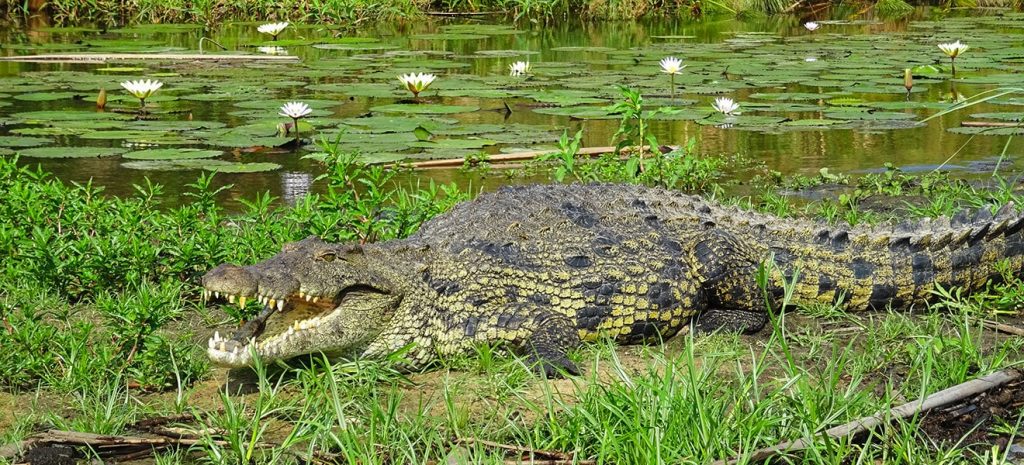
The Nile crocodile has the strongest measured bite force of any living animal, recorded at between 3,700 and 5,000 PSI depending on the study and the individual. This is approximately five times stronger than the bite of a lion. A crocodile’s jaw is built for one purpose: gripping and holding prey without releasing it. Their 64 to 68 conical teeth — up to 10 cm (4 inches) long and replaced up to 45 times over a lifetime — are designed not to slice, but to puncture and lock.
There is one crucial limitation: crocodile jaw muscles are almost entirely dedicated to closing force. The muscles responsible for opening the jaw are comparatively weak — a reason why a human can physically hold a crocodile’s mouth shut with moderate effort.
Hippo: The Bigger Weapon
The hippopotamus has a bite force of approximately 1,800 PSI — less than half that of the crocodile. However, raw bite force does not tell the whole story.
A hippo’s mouth opens to nearly 1.2 m (4 feet) wide, the largest gape of any land mammal. Its lower canine teeth reach up to 50 cm (20 inches) in length — the longest teeth of any living land animal that are not tusks in the traditional sense. These canines are not used for feeding (hippos are herbivores) but purely for fighting, and they are capable of inflicting catastrophic injuries. Multiple documented accounts confirm that a hippo’s bite can sever a crocodile’s body completely in a single closure.

Speed and Agility
On Land
Hippos can reach speeds of up to 30 km/h (19 mph) on land for short distances — faster than most people can sprint. Despite their bulk, they accelerate quickly and are highly maneuverable in close-range confrontations.
Nile crocodiles are slower on land, capable of speeds up to 14–18 km/h (9–11 mph) in short high-walk bursts. Their primary weapon on land is a sudden lunge from a stationary ambush position.
In Water
In water, the dynamic reverses sharply. A crocodile is a purpose-built aquatic predator, using its powerful tail to propel itself at 30–35 km/h (19–22 mph). It can remain motionless below the surface for extended periods and launch an explosive attack with almost no warning.
Hippos, by contrast, do not actually swim — they walk and bound along riverbeds. Their aquatic movement is powerful but slow. However, in water the hippo’s mass becomes if anything a greater advantage: a charging hippo underwater can simply overwhelm a crocodile by sheer momentum.
How Each Animal Fights
The Hippo’s Fighting Style
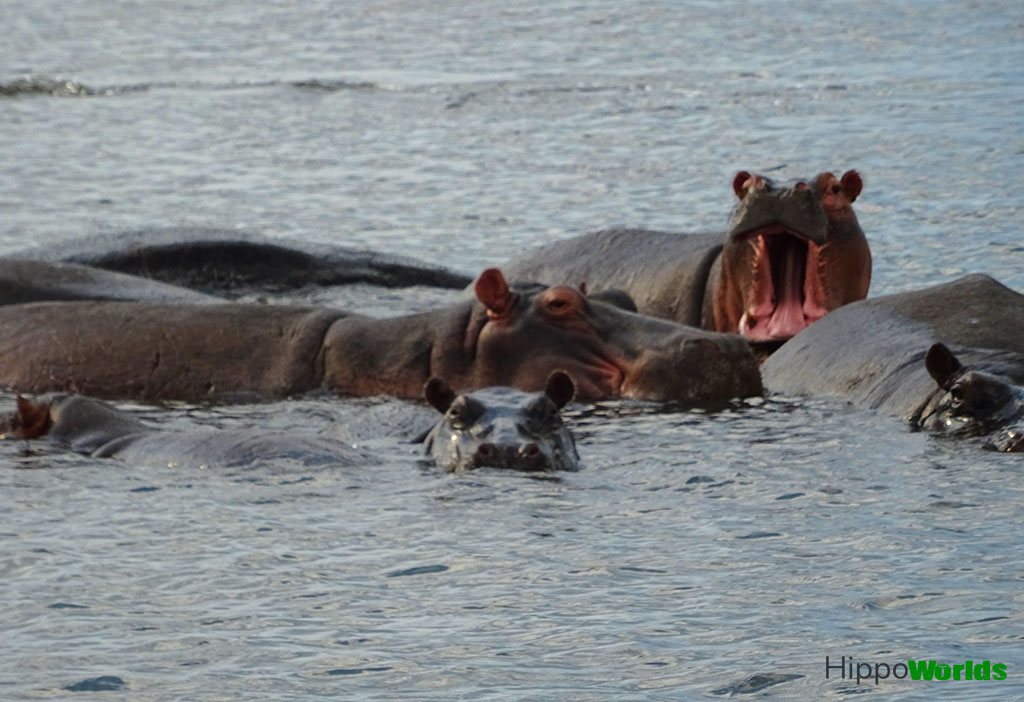
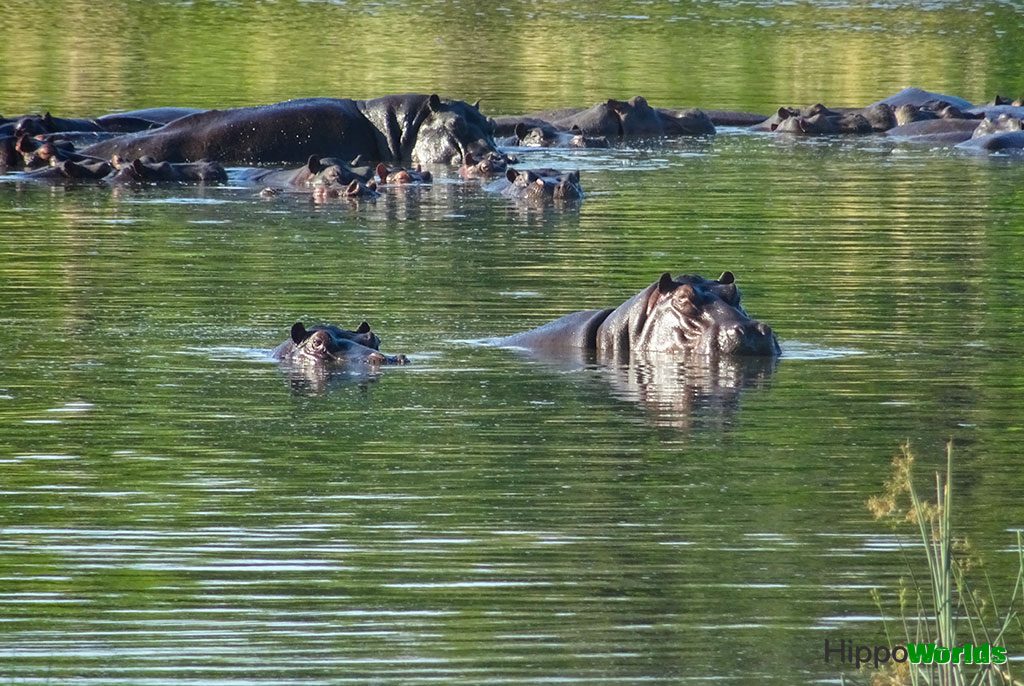
Hippos do not hunt and are not predators. Their aggression is territorial and defensive, triggered by encroachment on their water territory, threats to calves, or proximity to a female in heat. When a hippo attacks, it does so with its full body mass: charging, biting, tossing, and stomping. A hippo will open its mouth wide — the famous “yawn” — as a warning display. If the warning is ignored, it bites.
The sheer size of a hippo’s head and jaw means that even a glancing bite on a crocodile can cause fatal injuries. Multiple observers have recorded hippos picking up and shaking crocodiles the way a dog might shake a toy. A direct bite from a hippo on a crocodile’s midsection has been documented to result in the crocodile being cut in two.