

Last Updated on September 8, 2026 by Jorge Bastos
There are two living hippo species, and they are not equally at risk. One is holding on, under real pressure but with a substantial global population. The other is genuinely close to the edge, with a population smaller than many small towns. Understanding the difference matters — both for getting the facts right, and for knowing where conservation attention is most urgently needed.
Are Hippos Endangered? Quick Answer
| Species | IUCN Status | Estimated Population | Trend |
|---|---|---|---|
| Common hippopotamus | Vulnerable | 115,000–130,000 | Declining in most regions |
| Pygmy hippopotamus | Endangered | Fewer than 3,000 | Decreasing |
Neither species is currently classified as “Critically Endangered” — the step below Endangered and just above Extinct in the Wild. But “Vulnerable” and “Endangered” both represent genuine, serious conservation concern, not a clean bill of health..
The Common Hippopotamus: Vulnerable, Not Endangered
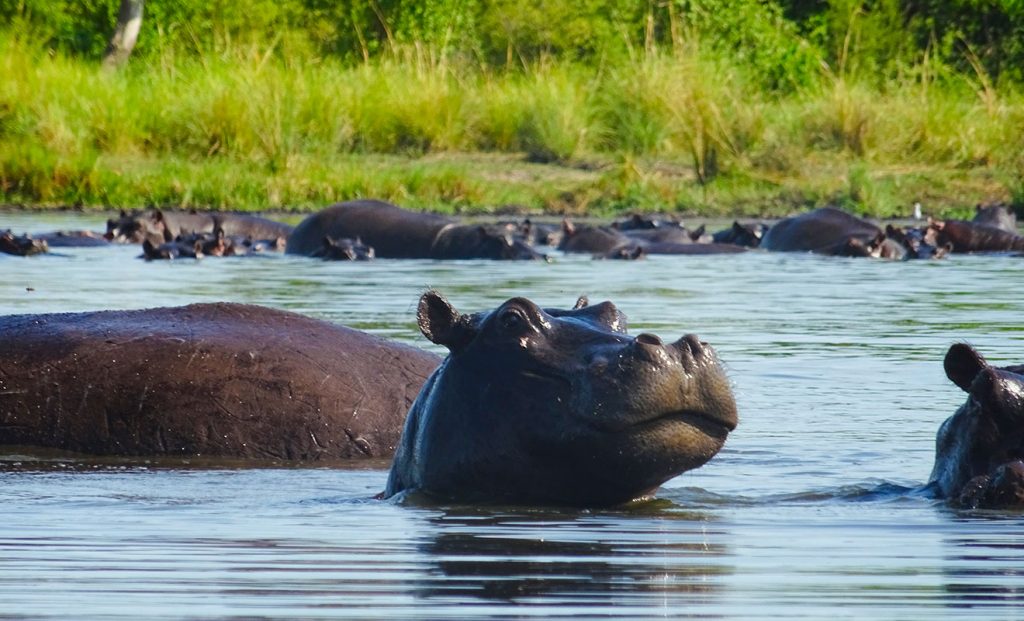
The common hippopotamus (Hippopotamus amphibius) has been classified as Vulnerable on the IUCN Red List since 2006, according to IFAW. Vulnerable sits below Endangered on the IUCN’s scale, but it’s still a formal recognition that the species faces a real risk of extinction in the wild if current pressures continue unaddressed.
The global population is estimated at 115,000 to 130,000 individuals across sub-Saharan Africa. Sources vary on the exact trend: some conservation bodies describe the population as broadly stable at the continental level, while others — including an analysis from Biology Insights — point to an estimated 7–20% decline over the past decade in many range countries, with the sharpest drops concentrated in the Democratic Republic of Congo and parts of West Africa. Both pictures can be true at once: a species can hold roughly steady overall while collapsing badly in specific regions, and that’s largely what’s happening with hippos.

The Pygmy Hippopotamus: A Much More Urgent Case
The pygmy hippopotamus (Choeropsis liberiensis) is a separate species, not a smaller version of the common hippo, and its conservation status is considerably more serious: it has been classified as Endangered since 2006, with a population that the IUCN SSC Hippo Specialist Group — the official body coordinating hippo research and protection — estimates at fewer than 3,000 individuals, and notes that even this figure “may be high,” with populations most likely continuing to decline.
Pygmy hippos survive only in fragmented forest populations across four West African countries: Liberia (the stronghold), Sierra Leone, Guinea, and Côte d’Ivoire. A related subspecies once living in Nigeria’s Niger Delta is believed to already be extinct. Our pygmy hippo guide covers the species’ biology and range in full.
Why Hippos Are Declining
Poaching for meat and ivory is the most direct threat to both species. Hippo canine teeth are made of ivory, and as international restrictions on elephant ivory have tightened, demand has shifted toward substitutes — one detailed trade analysis found export volumes of hippo teeth increased by over 530% in some markets, according to Save Animals Facing Extinction (SAFE). We cover this connection in depth in our hippo teeth guide.
Habitat loss affects both species differently but severely. Common hippos depend on permanent freshwater rivers and lakes — habitat increasingly lost to dam construction, agricultural expansion, and water diversion. Pygmy hippos depend on West African rainforest, which continues to shrink under logging, mining, and farmland expansion.
Human-wildlife conflict compounds both pressures. As habitat shrinks, hippos are pushed into closer contact with farming communities; crop-raiding by hippos leaving water to graze at night frequently results in retaliatory killing.
Regional instability has had a measurable, documented impact — hippo populations in parts of the Democratic Republic of Congo collapsed by an estimated 95% in specific protected areas during periods of civil conflict, as bushmeat hunting went largely unchecked. Our habitat guide covers this history in more detail.
What’s Being Done
Both species are listed under CITES Appendix II, meaning international trade in hippo products is regulated, though not banned outright the way elephant ivory trade is. In 2022, ten African range states proposed uplisting hippos to the stricter Appendix I — matching elephants — but the proposal was rejected, partly due to insufficient population data.
Protected areas remain the most effective tool where they are well managed and adequately funded: reserves like Zambia’s Luangwa Valley and Uganda’s Queen Elizabeth National Park continue to support dense, stable hippo populations. For the pygmy hippo specifically, coordinated captive breeding programmes across zoos in Africa, Europe, and North America — tracked through an international studbook — provide a genetic safety net alongside in-situ conservation work.
Frequently Asked Questions
- Are hippos endangered? It depends which species. The common hippopotamus is classified as Vulnerable, not Endangered — a serious but less acute status. The pygmy hippopotamus is classified as Endangered, with fewer than 3,000 individuals remaining in the wild.
- How many hippos are left in the world? There are an estimated 115,000 to 130,000 common hippos remaining across sub-Saharan Africa, and fewer than 3,000 pygmy hippos remaining in fragmented forest populations in West Africa.
- Why are hippos endangered? The main threats are poaching for meat and ivory teeth, habitat loss from dam construction and agricultural expansion, human-wildlife conflict as farming pushes closer to hippo habitat, and regional instability that has enabled unchecked bushmeat hunting in some countries.
- Is the pygmy hippo more endangered than the common hippo? Yes, significantly. The pygmy hippo’s Endangered status and population of fewer than 3,000 puts it in a much more precarious position than the common hippo’s Vulnerable status and population in the hundreds of thousands.
- What is being done to protect hippos? Both species are regulated under CITES Appendix II, and well-managed protected areas remain the most effective conservation tool. For pygmy hippos specifically, an international studbook coordinates captive breeding across zoos worldwide as a genetic safety net alongside wild conservation efforts.
Explore more on Hippoworlds: hippopotamus conservation in depth · hippo teeth and the ivory trade · pygmy hippo guide · hippopotamus habitat

I’ve been writing and running HippoWorlds’ content since 2019. I lived in Angola and was lucky enough to see hippos in the wild in Botswana and South Africa — I’m not a scientist, but a curious enthusiast dedicated to making this site a serious reference on the species.