

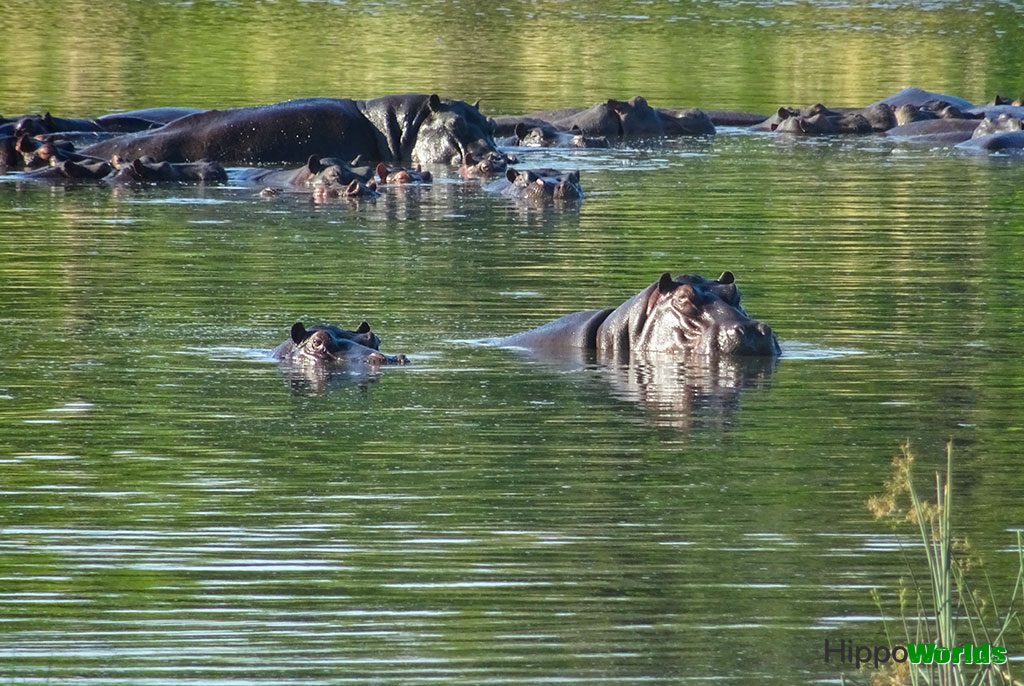
Watch a pod of hippos during the day and most of them will look, for all practical purposes, dead — barely moving, submerged to the eyes, occasionally drifting. Much of that stillness is genuine sleep. What makes it remarkable is that hippos do most of it fully underwater, breathing on a schedule their body manages entirely without them, never once surfacing to full consciousness to do it.
Hippos Sleep Mostly Underwater, During the Day
Hippos are nocturnal grazers — they leave the water after dark to feed on land and return before sunrise. That schedule flips their sleep pattern relative to most large mammals: the bulk of a hippo’s rest happens during the day, while submerged in a river, lake, or pool, not overnight the way it does for humans.
Hippos spend up to 16 hours a day in water, and a large share of that time functions as rest or sleep. Our hippopotamus habitat guide covers why that water dependency exists in the first place — it isn’t just about comfort, but about protecting skin that dries out and burns within hours if exposed to direct African sun for too long.
The Automatic Surfacing Reflex
The core mechanism behind underwater hippo sleep is an involuntary surfacing reflex — not a conscious decision, but a subconscious override that takes control of breathing entirely. As a sleeping hippo’s oxygen levels drop, the reflex triggers automatically: the animal pushes gently off the riverbed, rises just enough to break the surface, takes a breath, and sinks back down — all without ever regaining full consciousness, according to Biology Insights.
This cycle typically repeats every three to five minutes, and can continue for hours at a stretch, letting a hippo spend the better part of a day in what amounts to suspended, unconscious rest. Awake and alert, a healthy adult hippo can hold its breath for up to five minutes; asleep, the surfacing interval tends to run on the shorter end of that range, since the reflex is triggered automatically rather than by a deliberate choice to push the limit.
The system that makes this possible is broader than just the surfacing reflex itself. Diving hippos experience bradycardia — a marked slowing of the heart rate — along with constriction of blood vessels in the skin and extremities, both of which reduce the body’s oxygen consumption and stretch out how long it can go between breaths. The nostrils and ears seal shut via muscular sphincters the moment the hippo submerges, keeping water out of both while it sleeps.

What Actual Research Has Found
Formal behavioural studies of hippo sleep are rare, since observing sleep patterns in a fully submerged, three-tonne animal is logistically difficult — but the research that does exist adds some genuinely interesting detail. A study cited in peer-reviewed research on PMC/PubMed Central noted that hippos lying on the bottom of a pool for periods of up to three minutes showed patterns consistent with possible REM sleep — the sleep stage associated with dreaming in humans and many other mammals — while still fully submerged.
The same body of research recorded something else worth knowing if you’re near hippos with young: a female hippo with a calf was observed apparently able to sleep with both eyes open. Given how ferociously protective hippo mothers are, described in more detail in our baby hippo guide, a sleep state that doesn’t fully switch off visual monitoring makes a certain amount of evolutionary sense.
Not every hippo sleeps the same way, either. In the wild, hippos have been observed sleeping fully on land, fully submerged, or partially submerged with just the head above the waterline — and even a consistent lateral preference for which nostril stays above water and which stays under, a detail specific enough that it suggests genuine individual habit rather than random positioning.
Calves Sleep Differently
Young hippos don’t have the same underwater stamina as adults. A newborn calf can only hold its breath for around 30 to 40 seconds, compared to an adult’s five minutes, meaning a sleeping calf has to surface far more often. Calves are frequently seen resting on their mother’s back partially out of the water — a position that lets them breathe more easily while staying close and protected. By around four months old, a calf’s underwater endurance has improved enough that it manages surfacing largely on its own, without needing to be as physically supported by its mother.
Why This Matters: Hippos Genuinely Can’t Swim
It’s worth connecting the sleep reflex to a fact that surprises a lot of people: despite spending most of their lives in water, hippos cannot swim in the conventional sense. They walk and bound along the riverbed rather than paddling, which is exactly why the surfacing reflex works the way it does — a sleeping hippo isn’t floating up under any swimming action at all, but pushing off the bottom with its legs, rising just enough to breathe, and sinking passively back down under its own considerable weight. It’s a mechanism built specifically for an animal that lives in relatively shallow water and relies on the riverbed being within reach, not one adapted for open, deep water the way a true aquatic mammal’s would be.

Frequently Asked Questions
Do hippos really sleep underwater?
Yes. Hippos spend much of the day resting or sleeping while submerged, using an involuntary reflex that brings them to the surface to breathe every three to five minutes without ever fully waking up.
How does a hippo breathe while sleeping underwater?
An automatic surfacing reflex triggers when oxygen levels drop, causing the hippo to push off the riverbed, rise just enough to break the surface, take a breath, and sink back down — all without regaining full consciousness. This is supported by a slowed heart rate and reduced blood flow to the extremities, which stretch out how long the hippo can go between breaths.
Do hippos sleep at night or during the day?
Mostly during the day. Hippos are nocturnal grazers that leave the water to feed on land after dark and return before sunrise, which means most of their rest and sleep happens during daylight hours while submerged.
Can hippos sleep with their eyes open?
Research has recorded at least one case of a female hippo with a calf sleeping with both eyes open, likely related to the intense maternal vigilance hippo mothers show toward their young.
How long can a baby hippo hold its breath while sleeping?
A newborn calf can typically hold its breath for only about 30 to 40 seconds, far less than an adult’s five minutes, which is why calves are often seen resting partially on their mother’s back rather than fully submerged.
Explore more on Hippoworlds: baby hippo — development and calf care · hippopotamus habitat · hippo blood sweat · how fast can hippos run

I’ve been writing and running HippoWorlds’ content since 2019. I lived in Angola and was lucky enough to see hippos in the wild in Botswana and South Africa — I’m not a scientist, but a curious enthusiast dedicated to making this site a serious reference on the species.