
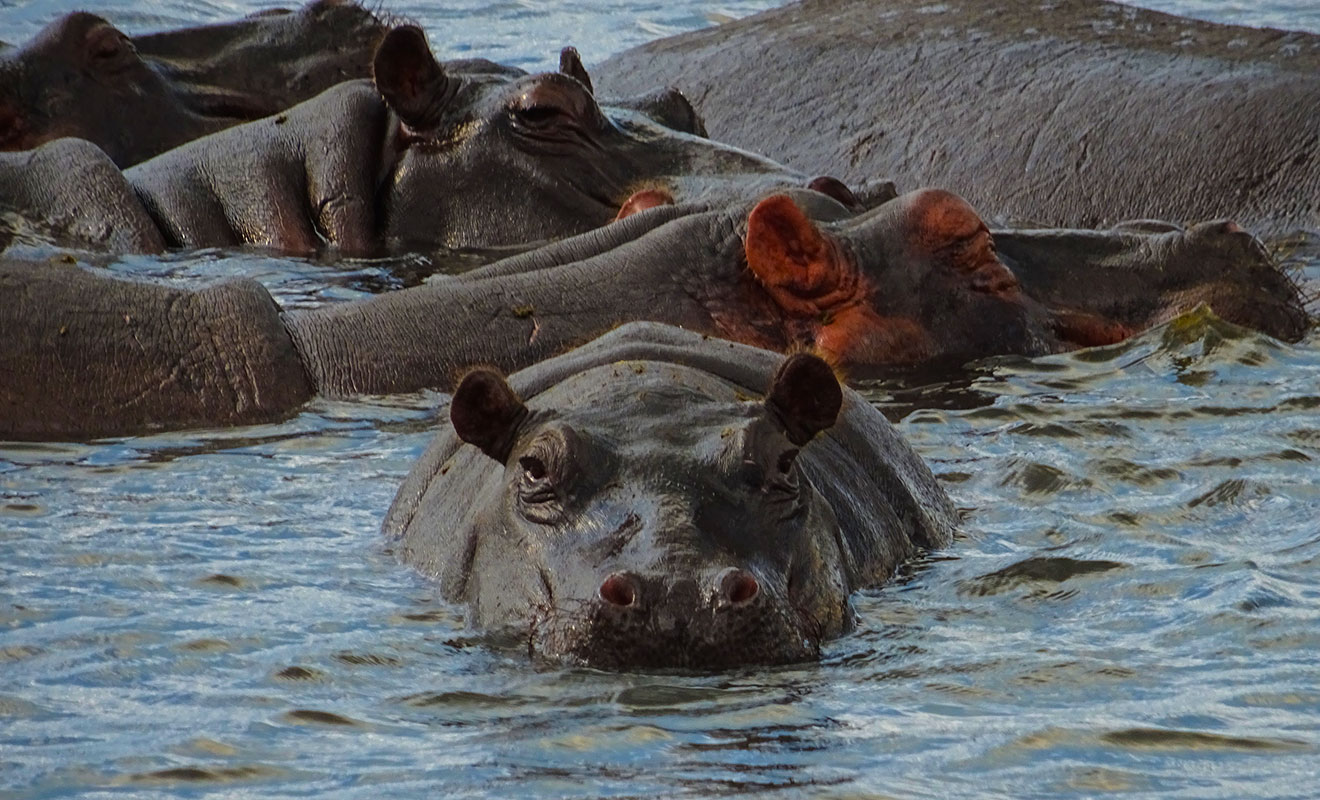
Male and female hippos look remarkably similar. Both are enormous, both have massive mouths, and both can be seriously dangerous. So how do you tell them apart?
For years, wildlife sources repeated the claim that male hippos can be up to 40% larger than females. But a study published in 2021 found something much more interesting. After examining nearly 3,000 hippos, researchers discovered that the difference in average body mass is surprisingly small. The real gap lies in their jaws and teeth.
Male hippos have jaws that are around 44% heavier and canine teeth that are 81% heavier than those of females. In other words, evolution seems to have invested more in a male hippo’s weapons than in making his entire body bigger.
And that is only the beginning. Males and females also differ in their social behavior, their reasons for fighting, and the way they raise their young.
Male vs Female Hippo: Quick Comparison
| Feature | Male hippo (bull) | Female hippo (cow) |
|---|---|---|
| Average body mass | About 5% heavier | Slightly lighter on average |
| Jaw mass | About 44% heavier | Lighter on average |
| Canine mass | About 81% heavier | Smaller on average |
| Main social role | Territorial defense and competition for mates | Raising calves and maintaining social bonds |
| Typical aggression triggers | Territorial disputes and rival males | Threats to themselves or their calves |
| Parental role | Generally little direct involvement in calf-rearing | Nurses and protects the calf |
These are general differences, not rules that apply to every individual. Age, health, social circumstances, and the presence of a calf can all influence how a hippo behaves.
The Surprise: Male Hippos Aren’t Much Bigger
If you have ever pictured a male hippo towering over a much smaller female, the research might surprise you.
A 2021 study published in Biology Letters examined 2,994 hippos and found that males were, on average, only about 5% heavier than females. That’s a modest difference for such a large mammal, especially one in which males compete so fiercely for breeding opportunities.
The study also measured differences in other parts of the body. Male hippos averaged around 2% longer and 7% taller than females, reinforcing the finding that the sexes are much more similar in overall body size than some popular accounts suggest.
So where did the claim that males are up to 40% larger come from?
Older estimates may have been influenced by smaller samples, differences in the ages of the animals being compared, or the use of particularly large males as examples of the species. These are plausible explanations, rather than a proven account of how the figure originated. The 2021 study provided a much larger dataset and a more detailed look at how hippos grow.
The important takeaway is that male hippos are generally a little bigger, but the difference is nowhere near as dramatic as the popular claim suggests.

The Real Difference: Bigger Jaws and Canines
If males aren’t dramatically bigger overall, where does the difference lie?
Their weapons.
The 2021 study found that male hippos have jaws averaging 44% more mass than female hippos. Their canine teeth are even more striking, averaging 81% more mass.
That is a considerable difference, particularly when you consider what hippos use their mouths for. Those enormous canines are not primarily for eating. Hippos feed mainly on grass, but their teeth play an important role in fighting.
Male hippos use their powerful jaws and long canines during confrontations with rivals. Fights can involve wide-open mouths, lunging, biting, and some truly nasty wounds. The teeth are capable of inflicting serious injuries, and the jaws provide the strength needed to make those weapons effective.
In large males, the lower canines can grow to around 50 cm in length, although much of the visible tooth is hidden when the mouth is closed. You can learn more about how these impressive teeth grow and function in our guide to hippo teeth.
Why would evolution favor bigger weapons rather than much bigger bodies?
A likely explanation is that a male benefits from having the tools to win fights without needing to invest as much energy in growing a substantially larger body. A bigger body is useful in a contest, but so are powerful jaws and formidable teeth. In hippos, the balance appears to favor the weapons.
The study’s findings are particularly interesting because sexual selection in many large mammals is associated with pronounced differences in body size. Hippos seem to have developed a different strategy.

How Male and Female Hippos Behave
Physical differences are only part of the story. Male and female hippos also tend to behave differently, especially when it comes to territory, mating, and raising calves.
Male Hippos: Territorial and Combative
Adult male hippos are known as bulls. Much of their social behavior revolves around competition with other males and access to females.
A dominant bull may defend a stretch of river or lake where hippos gather to rest in the water. Other males can live within the same general area, but their position in the social hierarchy and their access to females depend partly on the dominant male and the circumstances.
Territorial disputes can be brutal. Bulls face each other with their mouths open, display their enormous teeth, and may attack if neither backs down. The injuries can be severe, which helps explain why male hippos have such heavily developed jaws and canines.
Males can begin competing for dominance at around seven years of age, although reaching that age does not automatically make a hippo a territorial bull. Size, maturity, and the presence of established rivals all matter.
A male’s position is not guaranteed for life, either. Younger or stronger rivals may challenge an established bull, and the outcome can change who controls a territory.
This is one reason male hippos are so fascinating. Their impressive size and teeth aren’t just features of their appearance. They are closely connected to the way these animals compete and reproduce.
You can read more about their confrontations and territorial behavior in our guide to hippopotamus aggression.
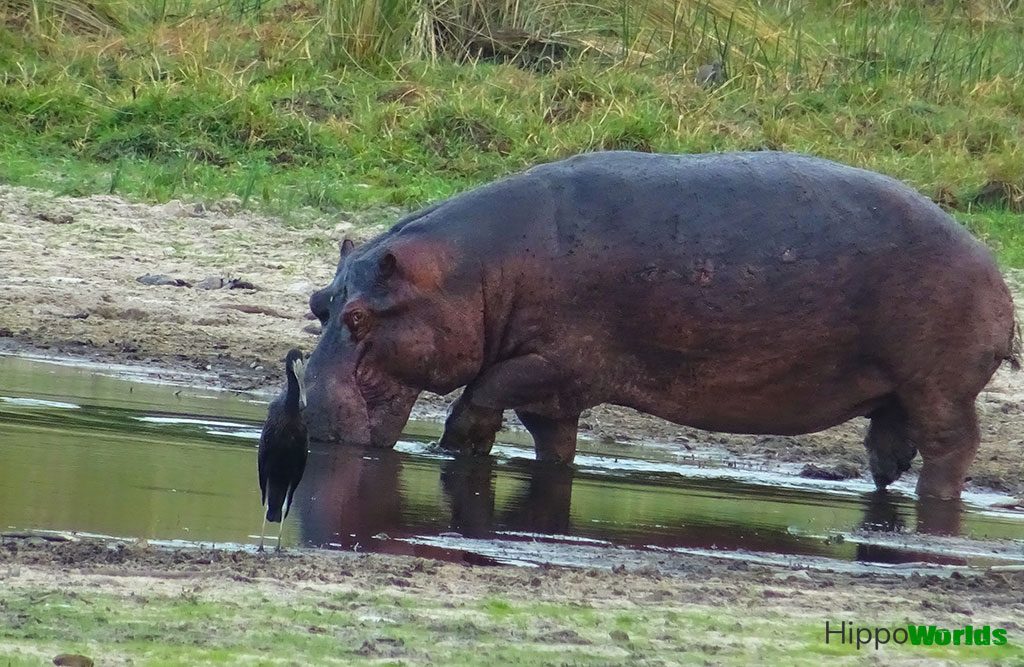
Female Hippos: Mothers and Social Animals
Female hippos are known as cows. Although they generally don’t compete for territory in the same way males do, they play an important role in the social life of a hippo group.
Females give birth to a single calf after a gestation of around eight months. The calf depends on its mother for milk and protection, and the bond between them is particularly important during the early stages of life.
Hippo mothers can be fiercely protective. A female with a young calf may react aggressively if she perceives a threat, using her powerful jaws to defend herself and her offspring.
That doesn’t mean females are naturally gentle when they aren’t mothers. Female hippos can also be aggressive in other situations, especially when they feel threatened or are involved in disputes with other animals.
The difference is that a mother’s behavior often has an additional priority: keeping her calf safe.
Young hippos stay close to their mothers, and the females provide most of the direct parental care. Males generally do not play the same hands-on role in raising calves.
If you want to learn more about how hippos mate, give birth, and raise their young, take a look at our guides to hippopotamus reproduction and baby hippos.

Which Is More Dangerous, Male or Female Hippos?
Both can be dangerous, but their behavior often depends on the situation.
Male hippos can be particularly aggressive when defending a territory or confronting another male. They may also react aggressively when their space is invaded, especially in water where they spend much of their time.
Females can be extremely dangerous when protecting a calf. A mother may attack an animal or person she perceives as a threat, and the consequences can be severe given her size and strength.
So which sex is more dangerous?
There isn’t a simple answer. The risk depends on the individual hippo, the circumstances, and how close a person gets. A territorial male can be dangerous, but so can a female protecting her young. Neither should be approached or treated as safe.
Hippos are responsible for serious injuries and human deaths in parts of Africa. Their size, speed over short distances, and powerful jaws make them animals that deserve plenty of space. Our guide to how dangerous hippos are to humans explains the risks in more detail.

Frequently Asked Questions
Are male hippos bigger than female hippos?
Yes, but only slightly on average. A 2021 study found that males were about 5% heavier than females, much less than the difference of up to 40% sometimes reported in popular wildlife sources.
How much bigger are male hippo teeth?
Male hippos have canine teeth averaging 81% more mass than those of females. Their jaws are also around 44% heavier, reflecting the importance of these weapons in fights between males.
Can you tell a male and female hippo apart by looking at them?
Not always. Their body sizes overlap considerably, so size alone is unreliable. Differences in jaw and canine development can help, but these aren’t always easy to judge from a distance. Behavior and context may offer clues, although neither provides a guaranteed way to identify the sex.
Are female hippos aggressive?
Yes. Female hippos can be aggressive when threatened, and mothers may be particularly defensive around young calves. They are not necessarily less dangerous than males.
At what age do male hippos start competing for dominance?
Males may begin competing for dominance at around seven years old. However, age alone does not determine whether a male can establish a territory or successfully challenge another bull.
Do male hippos help raise their young?
Generally, males do not provide the same direct parental care as females. Mothers nurse and protect their calves, while males are more involved in territorial competition and reproduction.
Explore more on Hippoworlds: Hippo Teeth · Hippopotamus Aggression · Hippopotamus Reproduction · Baby Hippos

I’ve been writing and running HippoWorlds’ content since 2019. I lived in Angola and was lucky enough to see hippos in the wild in Botswana and South Africa — I’m not a scientist, but a curious enthusiast dedicated to making this site a serious reference on the species.