

Last Updated on September 21, 2026 by Jorge Bastos
It’s one of the more genuinely surprising facts about an animal most people assume is a natural swimmer: the hippopotamus, which spends up to 16 hours a day in water, cannot swim in any conventional sense. No paddling, no floating, no strokes. What looks like swimming from a distance is actually something else entirely — and understanding it explains a lot about how hippos move, sleep, and survive.
Can Hippos Swim? Quick Answer
No. Hippos don’t swim the way most aquatic or semi-aquatic animals do. Instead, they walk or bound along the bottom of the river, lake, or pool they’re in, pushing off the bed with their powerful legs to move forward or rise to the surface. Their bodies are too dense to float easily, and their limbs simply aren’t shaped for a paddling motion.

Why Hippos Can’t Swim
The reason comes down to basic body composition. Hippos have unusually dense, heavy bones and bodies relative to their size — a trait that actually works in their favour underwater, since it means they naturally sink rather than bob at the surface, according to San Diego Zoo Wildlife Alliance. Their bones are described by researchers as osteosclerotic — denser than typical mammal bone, functioning as a kind of natural ballast, according to National Geographic. Most aquatic mammals rely on buoyant fat reserves or air-trapping fur to stay afloat; hippos have neither in any meaningful way. What little body fat they carry isn’t distributed for flotation, and their skin and hide add weight rather than lift.
Their limbs compound the issue. A hippo’s legs are built for walking — short, powerful, and better suited to pushing off a solid surface than to the sculling or paddling motion that lets other animals propel themselves through open water. Our hippopotamus anatomy guide covers this leg structure in more detail, including the digitigrade stance (walking on the toes) that gives hippos their surprising speed on land.
So How Do They Move Through Water?
Instead of swimming, hippos rely on a technique closer to walking or bounding along the riverbed. In shallower water, they simply walk, much as they would on land. In deeper water, they push off the bottom with their hind legs, gliding a short distance before touching down again — a kind of slow-motion bounce that lets them cover ground, rise to breathe, and sink back down without any true swimming stroke involved.
This method works because hippos rarely need to cross genuinely deep, open water. Rivers, lakes, and pools within their territory typically have a bottom within reach, which is exactly what the whole system depends on. Using this technique, hippos can move at up to 8 km/h (5 mph) underwater — modest compared to their 30 km/h land speed, but fast enough to close distance on a person or boat quicker than most people expect.

Do Hippos Float?
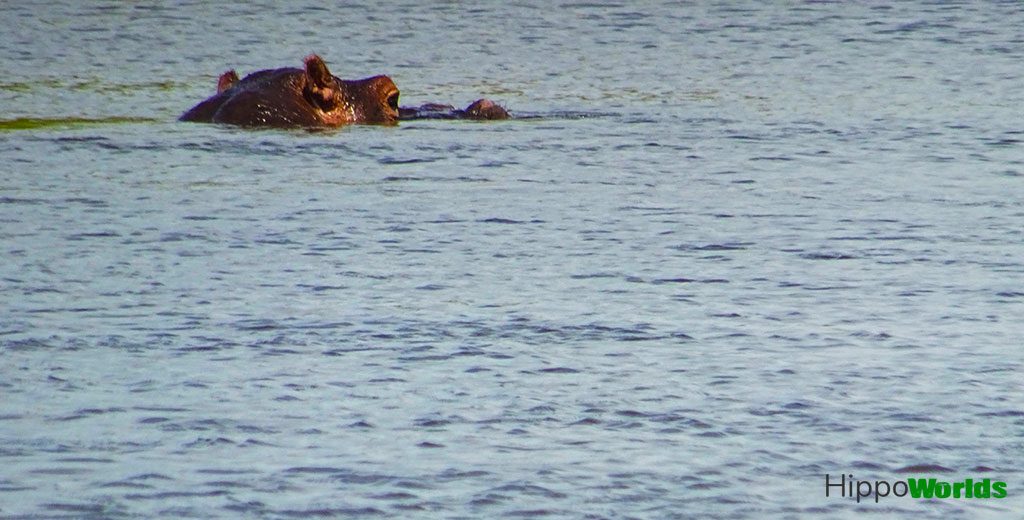
Not naturally. Left still in water, a hippo’s dense body sinks rather than bobbing at the surface — which is precisely why the bottom-walking technique exists in the first place. What can look like floating from a distance is usually a hippo standing in shallow water with most of its body submerged, or briefly gliding upward mid-bound to breathe before sinking back down.
How Long Can Hippos Hold Their Breath?
An adult hippo can typically hold its breath for three to five minutes before needing to resurface. This isn’t always a conscious decision — hippos have an involuntary surfacing reflex that brings them up to breathe automatically, even while fully asleep, without ever waking. Our guide to how hippos sleep covers this remarkable mechanism in full, including research suggesting hippos may experience something resembling REM sleep while fully submerged.
The nostrils and ears seal shut automatically the moment a hippo submerges, thanks to muscular flaps that keep water out — the same reflex that allows newborn calves to nurse underwater without inhaling water.
Can Baby Hippos Swim?
No — calves face the same fundamental limitation as adults, and then some. A newborn hippo calf can typically hold its breath for only 30 to 40 seconds, far shorter than an adult’s several minutes, meaning it needs to surface far more frequently. This is one reason calves are so often seen resting partially on their mother’s back in the water — a position that makes breathing easier while keeping them close and protected. Our baby hippo guide covers calf development, including how underwater nursing actually works, in more detail.
Can Hippos Drown?
It’s uncommon, but not impossible — particularly for very young, sick, or exhausted individuals. The same automatic surfacing reflex that lets a sleeping hippo breathe without waking can fail under certain conditions: extreme exhaustion, injury, or being trapped in an area without accessible shallow ground to push off from. Overcrowded dry-season pools, where dozens of hippos compete for shrinking water during drought, are one documented situation where weaker individuals are at higher risk.
Frequently Asked Questions
Can hippos swim?
No. Hippos can’t swim in the conventional sense — no paddling or floating stroke. Instead, they walk and bound along the riverbed, using their leg strength to move and rise to the surface to breathe.
Why can’t hippos swim if they live in water?
Hippos have unusually dense bones and bodies that cause them to sink rather than float, and their legs are built for walking rather than the paddling motion needed to swim. They compensate by living in water shallow enough to walk along the bottom.
How fast can hippos move underwater?
Hippos can move at up to 8 km/h (5 mph) underwater by bounding along the riverbed — considerably slower than their roughly 30 km/h top speed on land, but fast enough to close distance on a person or boat quickly.
How long can a hippo hold its breath?
An adult hippo can typically hold its breath for three to five minutes. An automatic surfacing reflex brings a hippo up to breathe even while asleep, without it ever fully waking.
Can baby hippos swim?
No, and even less effectively than adults — a newborn calf can typically hold its breath for only about 30 to 40 seconds, meaning it needs to surface far more often and is frequently seen resting on its mother’s back in the water.
Do hippos float?
Not naturally. Their dense bodies cause them to sink rather than float at the surface, which is exactly why they rely on walking and bounding along the riverbed instead of swimming.
Explore more on Hippoworlds: hippopotamus anatomy · how do hippos sleep · baby hippo · how fast can hippos run

I’ve been writing and running HippoWorlds’ content since 2019. I lived in Angola and was lucky enough to see hippos in the wild in Botswana and South Africa — I’m not a scientist, but a curious enthusiast dedicated to making this site a serious reference on the species.