
Last Updated on September 21, 2026 by Jorge Bastos
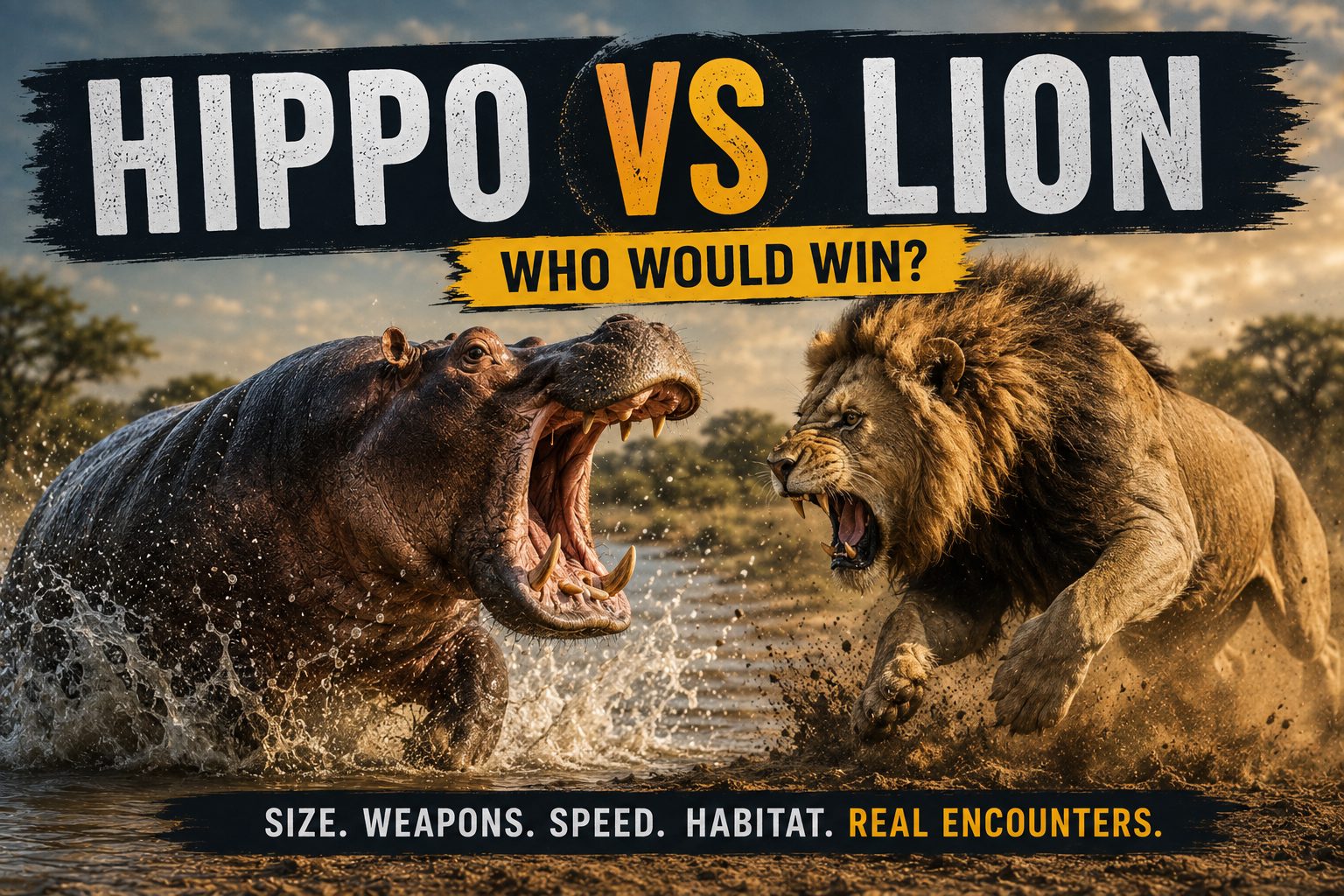
Of the four great comparison matchups in this series — hippo vs crocodile, hippo vs elephant, hippo vs rhino, hippo vs lion — this is the most one-sided. The hippopotamus outweighs an adult male lion by a factor of ten to twenty. One-on-one, this is not a contest. The hippo wins with a single bite.
But that is not the interesting question. The interesting question is why a pride of lions — one of the most effective cooperative hunting units in the animal kingdom, capable of bringing down buffalo, giraffe, and young elephants — almost never attempts to hunt a hippo. And what happens on the rare occasions when they do.
Hippo vs Lion: Quick Comparison
| Feature | Hippopotamus | African Lion (male) |
|---|---|---|
| Scientific name | Hippopotamus amphibius | Panthera leo |
| Average weight | 1,500–3,200 kg (3,300–7,000 lbs) | 150–200 kg (330–440 lbs) |
| Maximum weight | ~4,500 kg (9,900 lbs) | ~250 kg (550 lbs) |
| Weight ratio | — | Hippo is 10–20× heavier |
| Height at shoulder | 1.5–1.6 m (5–5.2 ft) | ~1.2 m (4 ft) |
| Length | Up to 5 m (16.4 ft) | ~2.5–3.0 m (body + tail) |
| Bite force | ~1,800 PSI | 650–1,000 PSI |
| Primary weapons | Canines up to 50 cm, body mass | Claws, canines (7 cm), suffocation bite |
| Skin thickness | ~5 cm (2 in) | ~0.5 cm (thin, furred) |
| Speed | ~30 km/h (19 mph) | 56–80 km/h (35–50 mph) |
| Hunting style | Territorial and defensive | Cooperative ambush predator |
| Social structure | Pod of 5–30 | Pride of 3–20+ |
| Human kills per year | ~500 | ~22 |
| Conservation status | Vulnerable | Vulnerable |
| Wild population | ~115,000–130,000 | ~20,000–25,000 |
The Size Gap: This Is Not a Close Match
Every other comparison in this series involves animals in a broadly similar weight class. The crocodile is lighter than the hippo but not absurdly so. The white rhino is roughly comparable in mass. The elephant is heavier, but the hippo is at least in the same conversation.
The lion is not in the same conversation.
An adult male African lion (Panthera leo) weighs between 150 and 200 kg. An adult bull hippo weighs between 1,500 and 3,200 kg. The hippo is, at minimum, seven times heavier — and in the most extreme cases, more than twenty times heavier than the lion facing it. The size relationship is closer to a large dog versus a person than to two comparable large animals.
This is not a situation where size creates a meaningful advantage. At this scale of disparity, size ends the fight before weapons become relevant. A single charge from a hippo running at 30 km/h — carrying between 1,500 and 3,000 kg — delivers an impact that no 180 kg animal can survive contact with. A single bite at 1,800 PSI is immediately fatal or catastrophically injuring to anything the size of a lion.
For a single lion facing a single adult hippo, there is no scenario that ends well for the lion.
What Lions Bring to a Confrontation
Acknowledging the one-sided nature of the matchup does not mean the lion is without genuine capabilities. The African lion is the apex predator of the African savanna and one of the most effective hunters on the planet. Understanding what it brings to any confrontation is important context for the more interesting question — the pride.
Speed
Lions are substantially faster than hippos. An adult lion can sprint at up to 80 km/h (50 mph) in short bursts — the final acceleration of an attacking charge. Their typical sustained pursuit speed of 50–56 km/h is still well above the hippo’s 30 km/h maximum. In any situation where a lion needs to disengage from a hippo, it has the speed to do so.
This speed advantage matters in exactly one way in this matchup: escape. A lion facing a charging hippo cannot win by running at it, but it can survive by running away from it. The speed gap means a lion that makes the correct decision — retreat — can survive a hippo encounter that a slower animal could not.
Claws and Precision
An adult lion carries retractable claws up to 7 cm long and a bite force of 650 to 1,000 PSI delivered through canine teeth approximately 7 cm in length. These tools are precision instruments designed to kill animals of 100 to 400 kg — the lion’s typical prey range. They are effective against the throat of a zebra, the nape of a wildebeest, and the flank of a young buffalo.
Against a hippo, they are largely irrelevant. A lion’s claws do not penetrate 5 cm of hippo hide in any meaningful way — field observations of lions attempting to attack hippos consistently show claw marks that cause surface abrasions rather than deep tissue damage. A lion’s bite, at up to 1,000 PSI, is similarly unable to achieve the throat grip that constitutes its kill mechanism against the throat of an animal that is, proportionally, much wider and more muscular than any prey it was evolved to hunt.
Cooperative Intelligence
This is the lion’s most genuinely formidable capability — and the only factor that makes a pride-vs-hippo scenario worth examining seriously.
Lions are the most socially cooperative of all wild felids. A pride hunts as a coordinated unit, using flanking movements, distraction techniques, and simultaneous attacks from multiple angles. They have successfully brought down adult Cape buffalo (up to 900 kg), young giraffes (up to 800 kg), and in rare documented cases, young elephants. Their cooperative hunting intelligence is not to be dismissed.
The question is whether that intelligence can overcome the specific problems that a hippo presents.
The Problem: Why Lion Weapons Do Not Work on Hippos
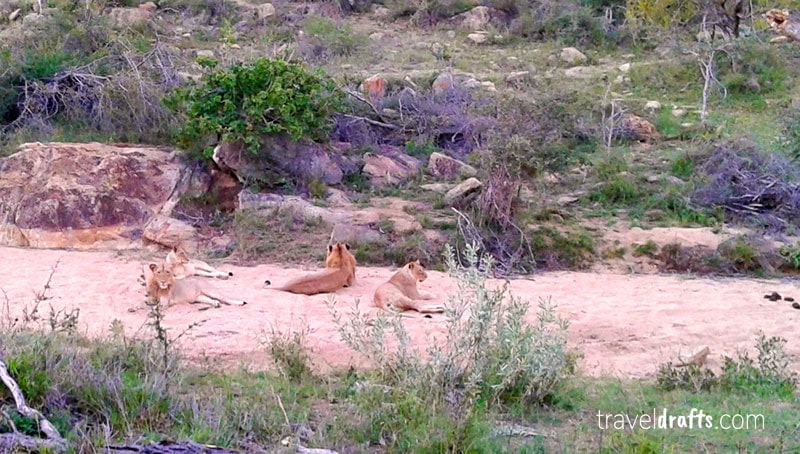
The lion’s kill mechanism depends on achieving one of two outcomes: a suffocating grip on the throat, or a sustained attack that causes blood loss severe enough to incapacitate the prey. Both of these outcomes require the lion to maintain contact with the target for an extended period.
Against a hippo, maintaining contact is the problem.
A hippo that has a lion on its back, or in contact with any part of its body, does not stand still. It charges. It rolls. It opens its mouth. Any lion maintaining contact with a hippo’s body risks being caught by the hippo’s head sweep, its jaw, or its weight. A single contact from a hippo jaw at 1,800 PSI — against a 180 kg lion — is immediately fatal or causes injuries from which the lion will not recover.
The asymmetry is extreme: the hippo needs to land one effective response to kill a lion. The lion needs to land hundreds of ineffective strikes over an extended period to have any chance of incapacitating the hippo through blood loss. For this exchange to work out in the lions’ favour, every lion in the group needs to attack, maintain pressure, absorb the hippo’s counterattacks without suffering fatal contact, and continue until the hippo weakens.
In practice, when lions attempt this, the hippo typically charges the group. Lions scatter. The charge is over. The lions reassemble, approach again, and the cycle repeats. Most documented attempts end with the hippo retreating to water — where it is immediately invulnerable — or the lions abandoning the effort entirely.
What Actually Happens: Real Encounters in the Wild
Lions Almost Never Attack Adult Hippos
The most important fact about real-world hippo-lion encounters is the rarity of aggression. Lions share habitat with hippos across the African savanna and riverine environments — they encounter hippos at the same water sources, on the same riverbanks, and in the same grasslands where hippos graze at night. The typical outcome of these encounters is: the lion moves away.
This avoidance is not timidity. Lions do not avoid hippos the way small prey animals avoid predators. They avoid hippos the way experienced hunters avoid unprofitable risks. The cost-benefit calculation does not work: a hippo carcass would feed a pride for days, but the probability of successfully killing one is low and the probability of losing a pride member in the attempt is high. Every lion that dies trying to kill a hippo is a net loss to the pride’s collective hunting capability.
When Prides Do Attack
Documented pride attacks on adult hippos — most commonly recorded in Kruger National Park in South Africa, the Luangwa Valley in Zambia, and the Okavango Delta in Botswana — follow a consistent pattern.
The attack typically happens at night, when lions have a significant sensory advantage over most prey. A large hippo is identified that is isolated from water — most commonly one that has strayed further from the river than usual during its nightly grazing. Multiple lions, typically five or more, attempt a coordinated approach.
What follows is usually hours of harassment rather than a decisive assault. Lions bite and claw at the hippo’s legs, flanks, and rear. The hippo charges individual lions, which scatter. The pride reassembles. The process repeats. The hippo sustains surface wounds; individual lions are knocked or thrown by the hippo’s charges. Eventually, one of two things happens: the hippo reaches water and the attack ends immediately, or the hippo weakens from blood loss sufficiently for the lions to bring it down — a process that can take several hours and leaves multiple lions injured.
Observed outcomes in well-documented multi-lion attacks on adult hippos are mixed. Several recorded attacks end with the hippo escaping to water despite having sustained significant wounds. Several end with the hippo being killed — but with at minimum one lion seriously injured in the process, and frequently more.
The Calf: The Realistic Target
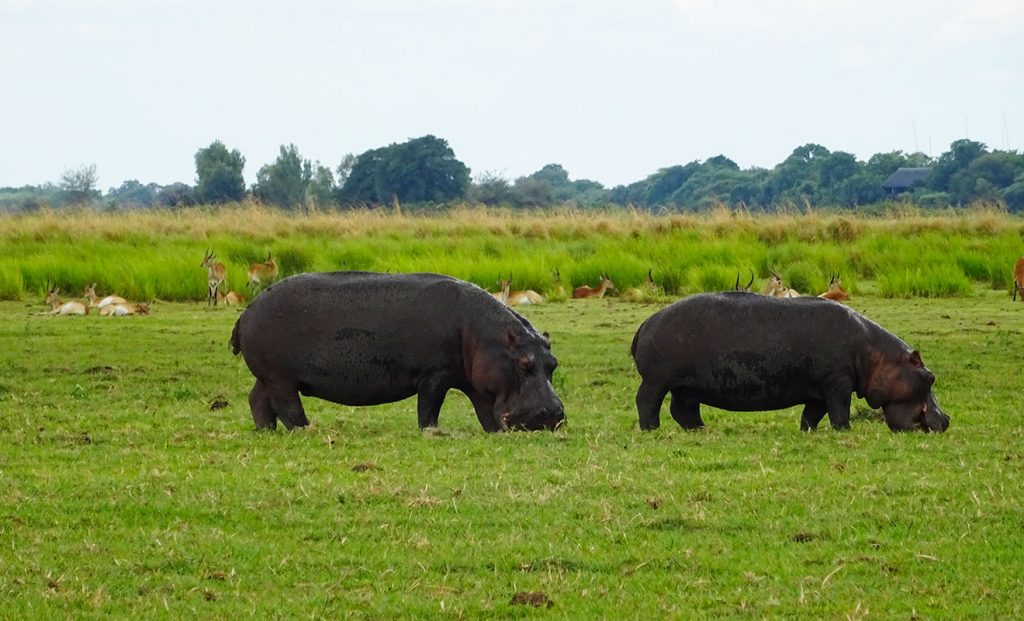
Lions know what is worth attacking. Adult hippos are not a sustainable prey target. Hippo calves, however, are an entirely different proposition.
A hippo calf in its first year weighs between 25 and 200 kg — well within the prey size that lions handle routinely. A calf that has been separated from its mother, or that strays from the pod during night grazing, is vulnerable. Lion predation on hippo calves is the most common form of lion-hippo interaction that ends with the lion successfully making a kill.
The challenge is the mother. A hippo cow defending her calf is one of the most aggressive and dangerous animals in Africa. Field accounts of lion attacks on calves frequently end with the cow intervening and injuring or killing one or more of the attacking lions. The calf’s protection by pod members — including non-related adults — makes even juvenile hippos a significant risk.
The Stranded Lion: When the Tables Turn
Several documented and filmed incidents show the reverse of what most people expect — lions in danger from hippos, rather than the other way around.
A widely shared video from 2019 shows a young male lion — a nomadic sub-adult exploring unfamiliar territory — stranded on a rock in a river, surrounded by several highly agitated hippos. The lion, unable to reach the bank without crossing through hippo-occupied water, remained on the rock for an extended period while hippos circled beneath and around him, repeatedly submerging and surfacing near the rock. The lion eventually reached the bank when the hippos temporarily moved off. The incident required no physical contact to illustrate how completely the dynamic reverses in water.
This scenario — a lion finding itself in or immediately adjacent to water occupied by hippos — represents one of the most dangerous situations a lion can experience in the wild.
Water: Absolute Hippo Dominance
In or near water, the matchup is not merely one-sided — it is total.
A lion in water loses virtually all of its tactical advantages. Its speed becomes irrelevant; it cannot outswim a hippo and cannot sprint on the riverbed. Its suffocation kill technique requires positioning its body above and over the prey’s head — impossible when both animals are submerged. Its claws, already ineffective against hippo hide, are entirely without traction in water.
The hippo, by contrast, is in its native environment. It can submerge, approach from below, and deliver its jaw strike from any angle. It can use its body weight to hold a lion underwater. It can move at 8 km/h along the riverbed while the lion struggles to keep its head above the surface. There is no defensive capability a lion possesses that has any relevance in deep water against an animal twenty times its size.
A lion that enters hippo-occupied water, for any reason, is in immediate mortal danger.

Who Would Win? The Clear Verdict
One-on-one, on land: Hippo wins. Not narrowly, not with difficulty — the hippo wins decisively. A single charge from a 2,000 kg animal running at 30 km/h, or a single bite at 1,800 PSI from canines 50 cm long, is immediately fatal or catastrophically injuring to a 180 kg lion. The lion has no weapon that can incapacitate the hippo before the hippo incapacitates the lion. The lion’s only viable response to a one-on-one encounter with an adult hippo on land is to retreat, using its superior speed to disengage.
A pride of lions on land: Genuinely possible, but costly and rare. A large pride — eight or more lions — attacking a single adult hippo in a sustained, coordinated night assault has produced confirmed kills in documented field observations. The cost is typically at least one seriously injured lion and several hours of sustained effort. The result is inconsistent: most documented attempts fail when the hippo reaches water.
In or near water: Not a fight. The hippo wins immediately, unconditionally, and without meaningful competition.
Against a hippo calf: Realistic lion prey, subject to the near-universal complication of an extremely aggressive cow that is willing to fight lions directly to protect it.
The verdict across all scenarios: the hippo is not prey for lions under normal circumstances. The occasional documented kill of an adult hippo by a large pride represents an extreme exception, driven by starvation or drought conditions where the risk-reward calculation shifts for the lions. Under ordinary conditions, lions know what adult hippos are — and they leave them alone.
Conservation: Two Vulnerable Species
The comparison between hippos and lions takes on a different tone when their conservation status is considered side by side.
Lions
The African lion was once found across Africa, southern Europe, and from the Middle East to India. Today, fewer than 20,000 to 25,000 remain in the wild, restricted almost entirely to protected areas in sub-Saharan Africa and a single isolated population of Asiatic lions in India’s Gir Forest. That represents a decline of more than 90% from estimated populations in the 1950s, when perhaps 200,000 lions roamed Africa.
Lions are classified as Vulnerable on the IUCN Red List. The primary threats are habitat loss, prey depletion from bushmeat hunting, retaliatory killing by livestock farmers, and trophy hunting in some regions. Lions kill approximately 22 people per year in Africa — a number that, combined with livestock predation, drives significant human-lion conflict in range areas.
Hippos
The common hippo’s population of approximately 115,000 to 130,000 individuals is larger in absolute terms than the lion’s, but both species are declining and both are classified as Vulnerable. The hippo’s threats — habitat loss, water source degradation, and poaching — are in some ways more insidious than the lion’s because they are less visible. Hippos do not have the iconic status that drives conservation funding for lions.
The convergence is notable: both species, despite being among the most recognisable African megafauna, are losing ground to the same forces of human expansion. The plains where lions hunt and the rivers where hippos graze are both shrinking.
Frequently Asked Questions
- Who would win in a fight between a hippo and a lion? A single hippo wins against a single lion without meaningful contest. The hippo outweighs a lion by ten to twenty times and can kill a lion with a single bite or impact. Even a pride of lions attacking a single adult hippo usually fails, and when it succeeds it typically takes several hours and costs the pride multiple seriously injured members.
- Do lions ever hunt hippos? Rarely, and almost exclusively in extreme circumstances — typically during severe drought or food scarcity, when the usual prey base has diminished. When prides do attempt to hunt adult hippos, the majority of documented attempts fail. Lions more commonly target hippo calves that have become separated from their mothers or pods.
- Can a pride of lions kill a hippo? Yes, in documented cases — but it is costly, inconsistent, and uncommon. Large prides of eight or more lions have killed adult hippos in sustained night attacks in Kruger National Park and the Luangwa Valley. The process typically takes several hours and results in at least one seriously injured lion. Most similar attempts fail when the hippo reaches water.
- Are lions afraid of hippos? In practical behavioural terms, yes — lions consistently avoid adult hippos at shared water sources and do not initiate confrontations under ordinary circumstances. This avoidance reflects the lion’s evolved risk assessment rather than a specific fear response, but the outcome is the same: adult hippos are not hunted by lions unless conditions are exceptional.
- What happens if a lion ends up in the water with a hippo? The lion is in immediate mortal danger. All of the lion’s tactical advantages — speed, agility, claws, suffocation bite — are neutralised in deep water. The hippo can approach from below, use its full body weight, and deliver its jaw from any angle. Lions that end up in hippo-occupied water typically attempt to escape as quickly as possible.
- Which is more dangerous to humans — a hippo or a lion? Hippos kill significantly more people. Estimates place hippo-related human deaths at approximately 500 per year in Africa, primarily from boat capsizing, territorial charges, and attacks on people who approach too closely on land. Lions kill approximately 22 people per year. Hippos are considered the more dangerous of the two species to humans encountered in the wild.
- How many lions are left in the wild? Approximately 20,000 to 25,000 African lions remain in the wild, down from an estimated 200,000 in the 1950s. They are classified as Vulnerable on the IUCN Red List and are absent from the vast majority of their historical range. The Asiatic lion subspecies survives only in India’s Gir Forest, with a population of approximately 700 individuals.
Explore more on Hippoworlds:

I’ve been writing and running HippoWorlds’ content since 2019. I lived in Angola and was lucky enough to see hippos in the wild in Botswana and South Africa — I’m not a scientist, but a curious enthusiast dedicated to making this site a serious reference on the species.