

Hippos can live for decades, but they don’t all get the same amount of time. A common hippo typically lives for around 40 to 50 years, while pygmy hippos have a similar but slightly different lifespan. A few individuals have even made it into their sixties.
Two common hippos, Bertha and Lu, both reached the remarkable age of 65. Bertha lived at Manila Zoo in the Philippines, while Lu spent most of his life in Florida.
But how long do hippos usually live? Does living in a zoo make a difference? And what does a hippo’s life look like from birth to old age?
How Long Do Hippos Live?
A common hippo typically lives for around 40 to 50 years, although estimates vary between sources and populations. According to the IUCN SSC Hippo Specialist Group, the exact lifespan of wild hippos isn’t known, but most are thought to die by around 40 to 45 years old.
Pygmy hippos have a different lifespan. According to Taronga Zoo, they can live for around 30 to 55 years in zoos, although their lifespan in the wild is likely to be shorter.
| Hippo | Typical lifespan | Exceptional longevity |
|---|---|---|
| Common hippo | Around 40 to 50 years | Bertha and Lu both reached 65 |
| Pygmy hippo | Around 30 to 55 years in zoos | Some individuals can reach their fifties |
These figures are estimates, not fixed limits. Individual animals can live shorter or longer lives, and scientists have more reliable age records for hippos in zoos than for those living in the wild.
How Long Do Hippos Live in the Wild?
Wild common hippos can live for several decades. However, researchers cannot give an exact average with the same confidence as they can for some zoo populations.
The IUCN SSC Hippo Specialist Group explains that the longevity of wild hippos is not known precisely. Most are thought to die by around 40 to 45 years old.
The difficulty is that researchers cannot follow every hippo from birth to death. Many live in rivers, lakes and wetlands where monitoring individuals throughout their lives is challenging. Even when a hippo is observed for years, its exact age may be unknown if it was already an adult when researchers first encountered it.
Life in the wild also comes with plenty of risks. Hippos need dependable water and nearby grassland, and they can be injured in fights with other hippos. Young calves are particularly vulnerable, while drought, habitat loss and human activity can put pressure on entire populations.
A hippo that reaches old age in the wild has managed to survive a lot more than simply the passing years.
For more on where hippos live and what they need to survive, read our guide to hippopotamus habitat.
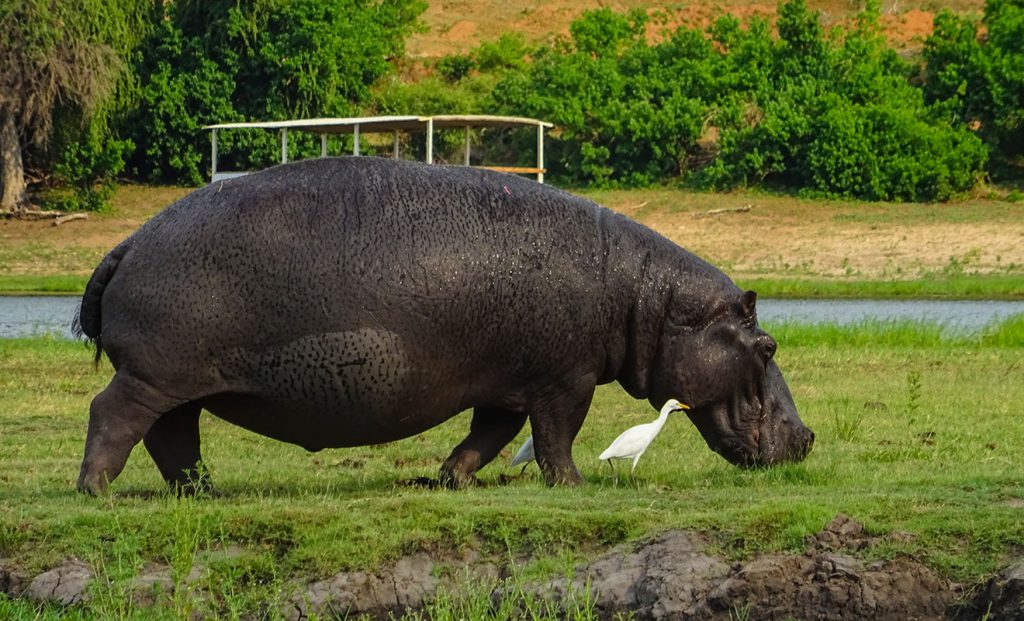
How Long Do Hippos Live in Zoos?
Hippos in zoos can live into their fifties and, in exceptional cases, their sixties. Regular access to food, veterinary care and protection from many of the dangers found in the wild can help them live long lives.
That doesn’t mean every hippo in a zoo will outlive a wild one. Captive hippos can still develop serious health problems, and their lifespan depends on their individual health and the quality of their care.
Research published in Zoo Biology examined mortality records for 404 pygmy hippos that had died in captivity between 1912 and 2014. The researchers identified cardiovascular disease, kidney problems and degenerative musculoskeletal conditions among the common causes of death in adult and older animals. You can read the study’s abstract on PubMed.
A zoo’s records also make it easier to know exactly how old an animal is. That’s one reason the most famous examples of exceptionally old hippos have lived in captivity.

The Oldest Hippos Ever Recorded
Two common hippos stand out for reaching the age of 65. Both lived in zoos, and both became much-loved residents.
Bertha, the Manila Zoo Hippo
Bertha lived at Manila Zoo in the Philippines from 1959 until her death in July 2017. She was about seven years old when she arrived, making her approximately 65 when she died.
She had spent almost her entire adult life at the zoo and became famous for her remarkable longevity. According to the Philippine Daily Inquirer, Bertha died from multiple organ failure, with zoo officials attributing her death to old age. You can read more about her life in the newspaper’s report, “Bertha lived a happy life”.
Bertha’s age was exceptional for a hippo. She lived well beyond the lifespan commonly quoted for the species.
Lu, the Florida Hippo
Lu was born at San Diego Zoo on January 26, 1960. He moved to Homosassa Springs in Florida in 1964 and remained there for more than six decades.
Lu had an unusual career before becoming a local attraction. As a young hippo, he appeared with the Ivan Tors Animal Actors troupe and featured in television shows and films, including Daktari and Cowboy in Africa.
He eventually became one of the best-known residents of Ellie Schiller Homosassa Springs Wildlife State Park. He died on June 8, 2025, at the age of 65. The Florida State Parks service published a tribute to him after his death.
Bertha and Lu both reached 65, making them two outstanding examples of hippo longevity. Their ages are remarkable, but they shouldn’t be taken as the normal lifespan of a common hippo.
How Long Do Pygmy Hippos Live?
Pygmy hippos (Choeropsis liberiensis) are the smaller, more elusive relatives of common hippos. They live in the forests and wetlands of West Africa and are endangered in the wild.
In zoos, pygmy hippos can live for around 30 to 55 years. Their lifespan in the wild is less well established, so it’s difficult to give a reliable average for wild individuals. Both Taronga Zoo and Toronto Zoo provide lifespan estimates for the species in their animal information.
Pygmy hippos also face different challenges from common hippos. They spend more time on land, are generally more solitary, and depend on forest habitats threatened by logging, agriculture and human settlement.
Their small size doesn’t make them any less interesting, and their conservation is important. A well-managed zoo can contribute to breeding programs and help maintain a population outside the wild, although protecting their natural habitat remains essential.
Want to learn more about this elusive species? Read our complete guide to the pygmy hippo.

The Life Cycle of a Hippo
A hippo’s life begins in the water or on land, depending on where the mother gives birth. From a newborn calf to an old adult, its life passes through several distinct stages.
1. Birth and the First Months
Female common hippos usually give birth to a single calf after a gestation period of about eight months. Birth can take place on land or in shallow water.
A newborn calf can weigh around 25 to 45 kg (55 to 100 lb). It can swim soon after birth, although it still depends heavily on its mother for protection and milk.
The mother and calf stay close during the early months. The calf may nurse underwater and must surface to breathe, just like an adult hippo.
The first months are a vulnerable time. Young hippos need to grow, learn to move around their habitat and stay close to their mothers while they develop.

2. Growing Up
Hippo calves are weaned at around eight months, although they may continue to stay close to their mothers for longer.
They gradually become more independent as they grow. Common hippos can take several years to reach sexual maturity, with females generally maturing earlier than males in the wild.
For males, reaching physical maturity doesn’t automatically mean they can establish a territory and breed successfully. Competition with older, dominant males can delay that stage of life.
3. Adulthood
Once mature, hippos can spend decades living around the same rivers, lakes and grazing areas.
Common hippos spend much of the day in water and usually leave it at night to feed on grass. Their lives are shaped by access to water, the availability of food and their relationships with other hippos.
Adults can reproduce for many years. The IUCN SSC Hippo Specialist Group reports that both sexes can breed into old age, with records of reproduction extending to at least 43 years in the wild and 45 years in captivity.
4. Old Age
As hippos grow older, they may develop health problems that affect their movement, feeding and general condition. In the wild, injury, competition and environmental pressures can make old age more difficult.
In zoos, keepers and veterinarians can monitor older animals more closely and adjust their care when needed. Even so, age-related illness remains a risk.
The fact that a few hippos have reached 65 shows how long they can live under the right circumstances. It doesn’t mean most hippos will reach that age.
What Affects a Hippo’s Lifespan?
Several factors influence how long a hippo lives.
- Access to water and food: Hippos need reliable water sources and suitable grazing areas. Drought and habitat loss can make survival harder.
- Injuries and fights: Common hippos can seriously injure one another, particularly during territorial disputes.
- Disease and health problems: Hippos can suffer from infections, injuries and age-related conditions.
- Human activity: Habitat destruction, hunting and conflict with people can threaten wild populations.
- Veterinary care: In zoos, routine health checks and treatment can help identify problems and support older animals.
No single factor determines how long a hippo will live. Its lifespan depends on its environment, health and the circumstances it faces throughout its life.
Frequently Asked Questions
Do hippos live longer than elephants?
It depends on the species and the individual. Common hippos typically live for around 40 to 50 years, while African elephants often live for around 50 to 70 years. Exceptional animals in both groups can live longer than these estimates.
Can a hippo live for 60 years?
Yes. Some common hippos have lived to 60 or older in captivity. Bertha and Lu both reached 65 years, making them exceptional examples of hippo longevity.
How long do baby hippos stay with their mothers?
Common hippo calves nurse for around eight months and can remain close to their mothers for longer. The exact period of dependence varies, and calves need protection while they grow and become more independent.
Do pygmy hippos live as long as common hippos?
Their lifespans overlap. Pygmy hippos can live for around 30 to 55 years in zoos, while common hippos typically live for around 40 to 50 years. Reliable lifespan estimates for wild pygmy hippos are limited.
What is the oldest hippo in the world?
Bertha, who lived at Manila Zoo, and Lu, who lived in Florida, both reached 65 years. Lu died in June 2025, and Bertha died in July 2017. They are two well-documented examples of exceptionally old common hippos.

Explore more on Hippoworlds: Pygmy hippos · Types of hippos · Hippopotamus habitat

I’ve been writing and running HippoWorlds’ content since 2019. I lived in Angola and was lucky enough to see hippos in the wild in Botswana and South Africa — I’m not a scientist, but a curious enthusiast dedicated to making this site a serious reference on the species.