

Last Updated on September 21, 2026 by Jorge Bastos
The hippopotamus is not something most people have ever thought about eating. Yet the question gets asked far more than you might expect — and the answer is considerably more complex than a simple yes or no.
Hippo meat is edible. It has been eaten in Africa for centuries. But in 2025, consuming it is almost universally illegal, frequently dangerous to human health, and directly connected to one of the biggest drivers of hippopotamus population decline on the continent.
Here is the full picture.
The Short Answer
Yes, hippo meat is technically edible and has been consumed by humans. No, you almost certainly cannot eat it legally. Hippopotamuses are protected under international wildlife law, and the hunting, trading, or consumption of hippo meat is illegal in most countries. In the few places where exceptions exist, they are tightly controlled and rarely involve the meat reaching any market.
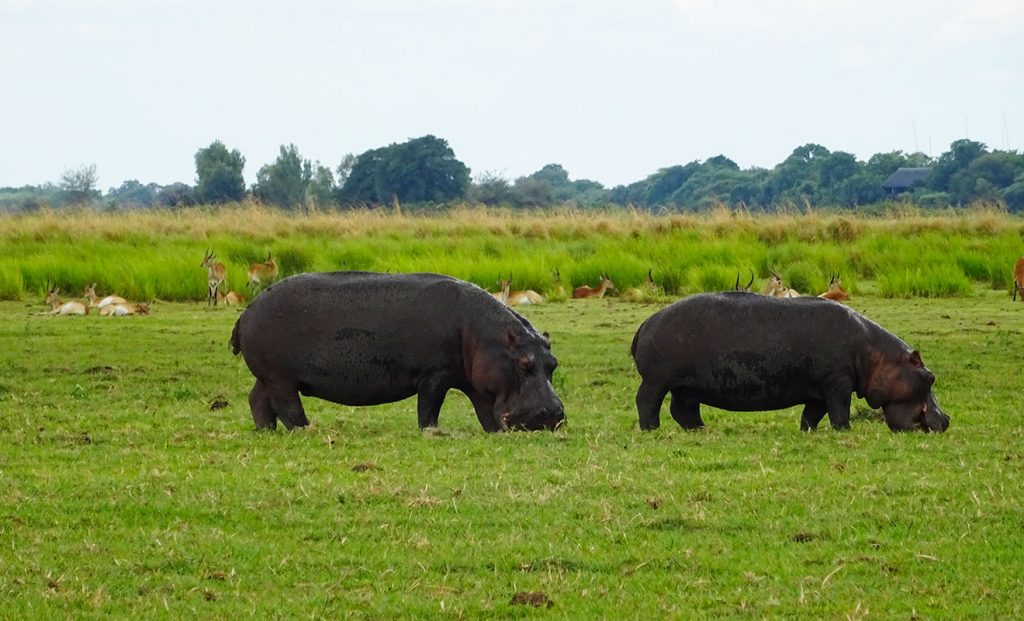
Is Hippo Meat Edible?
From a biological standpoint, yes. The hippopotamus is a large herbivorous mammal, and its meat is high in protein with a composition broadly similar to beef or pork. A single adult hippo provides an enormous quantity of meat — an adult bull can yield between 360 and 450 kg (800 to 1,000 lbs) of edible meat, making it one of the most calorie-dense game animals in Africa. This is precisely why it has been a target for poachers and bushmeat hunters: the return per animal is very high.
The fat content is notable. Hippo meat is significantly fattier than most game animals, with thick deposits particularly around the belly and flanks. This fat has historically been used both as cooking fat and in traditional medicine across parts of Central Africa.
What Does Hippo Meat Taste Like?
First-hand accounts are rare, since legal consumption has been almost impossible for decades. The descriptions that do exist come from historical records, anthropological field notes, and occasional accounts from regions where illegal bushmeat trade persists.
The most consistent descriptions characterise hippo meat as:
- Texture: Dense, coarse, and tough. The muscle fibres are thick and require long, slow cooking to become palatable. Compared to beef, hippo meat is less tender even when the animal is young.
- Flavour: Distinctly gamey, with a strong, earthy quality that most comparisons place somewhere between beef and pork — but noticeably more pungent than either. The flavour is reportedly more pronounced in older bulls.
- Fat: Unusually rich, with a waxy, yellow fat that renders slowly. Some accounts describe the fat as the most prized part, used for cooking rather than eaten directly.
- Smell: Notoriously strong, both during and after cooking. Several field accounts describe the smell as one of the most distinctive features of the meat.
There is no contemporary culinary tradition around hippo meat in the way that exists for other large game animals. It has never been refined into a cuisine — it was always a source of protein under necessity, not a delicacy.
Is It Legal to Eat Hippo Meat?
In the vast majority of countries: no.
The common hippopotamus (Hippopotamus amphibius) has been listed on CITES Appendix II since 1989, which means international trade in hippos and hippo products — including meat — is regulated and requires permits. In practice, no government issues permits for the trade of hippo meat for human consumption. There is no legal commercial market, no licensed hunting quota for meat, and no country where hippo meat appears in any regulated food system.
In Africa, where hippos actually live, the situation varies by country but is uniformly restrictive:
In most range states — Kenya, Tanzania, Uganda, Zimbabwe, Zambia, Botswana, South Africa — hippos are protected under national wildlife legislation. Hunting them without a specific government-issued permit is a serious criminal offence. Even in countries with legal trophy hunting programmes, the protocols relate to population management and not to meat consumption, and any meat from such hunts is typically distributed locally under strict conditions.
The most significant exception involves problem animal control — when hippos damage crops, destroy property, or pose direct danger to human communities, authorities may authorise their culling. In these cases, the meat is sometimes distributed to local communities. This is legal, but it is not the same as a commercial food system.
In Europe, the United States, Australia, and other non-range countries, hippo meat is simply illegal to import, sell, or buy. Attempting to bring it into any of these countries would constitute a serious wildlife trafficking offence carrying substantial criminal penalties.

Where Hippo Meat Has Been Eaten
Historical context
Hippos were eaten across sub-Saharan Africa long before any conservation legislation existed. Archaeological evidence from Neolithic sites along the Nile confirms that hippos were hunted extensively. Ancient Egyptians ate hippo meat and considered it a significant food source — pharaonic hunts were both ritual and practical.
In colonial Africa, European explorers and settlers occasionally consumed hippo meat during expeditions, particularly in the Congo Basin and East Africa, where alternatives were limited. Several 19th-century accounts describe it as acceptable fare but inferior to most other game.
The Congo Basin — bushmeat at scale
The most significant modern context for hippo meat consumption is the Democratic Republic of Congo. During the civil conflicts of the 1990s and 2000s, hippo populations in the DRC collapsed catastrophically — estimates suggest numbers fell from approximately 30,000 individuals to fewer than 3,000 in some regions, driven by mass illegal hunting for bushmeat to feed combatants and displaced civilians.
In the DRC, hippos are known locally as kiboko (meaning “hippopotamus” in Swahili) and have been considered a valuable food source. In some markets in eastern Congo, hippo meat has been sold openly despite being illegal, because enforcement capacity in conflict zones was essentially non-existent.
This pattern repeats across Central African Republic and South Sudan, where ongoing instability has made wildlife enforcement extremely difficult and hippo bushmeat continues to be consumed in some areas.
Zambia — the 2011 anthrax outbreak
One of the most rigorously documented cases of hippo meat consumption causing illness comes from Zambia. In September 2011, a peer-reviewed investigation published in the CDC’s Emerging Infectious Diseases journal linked an anthrax outbreak in the Chama district, near the South Luangwa River, to villagers butchering and eating meat from 85 hippos that had died of the disease. The outbreak caused 511 suspected human cases and 5 deaths; researchers found 84% of surveyed residents had eaten hippo meat before falling ill, and a majority said food insecurity meant they would do so again despite the known risk. The case remains one of the clearest scientific demonstrations that consuming meat from hippos that died of unknown causes carries serious, sometimes fatal, health risks.
Is Hippo Meat Safe to Eat?
Even setting aside legality, there are significant health concerns associated with consuming hippo meat, particularly in the contexts in which it typically occurs.
- Anthrax — hippos are susceptible to anthrax, particularly in drought conditions when they are forced to share increasingly small water sources. The 2011 Zambia outbreak was not an isolated incident; hippo-linked anthrax cases have also been documented in Uganda’s Queen Elizabeth National Park, where large hippo die-offs occurred in 2004/05 and 2010, and elsewhere in Africa. Hippos that die of anthrax remain infectious, and their carcasses have been the source of multiple human outbreaks.
- Parasites — like most wild game, hippos carry a range of parasites including tapeworms and various helminth species. Without veterinary inspection and proper preparation, the risk of transmission is significant.
- Zoonotic diseases — hippos can carry brucellosis and several other diseases transmissible to humans. The risk is compounded by the conditions under which hippo meat is typically hunted and processed: in remote locations, without refrigeration, by people without access to veterinary guidance.
- Spoilage — an adult hippo’s carcass is enormous. In tropical conditions without refrigeration, meat that cannot be processed and preserved within hours begins to deteriorate rapidly. Much of the meat from illegally hunted hippos is smoked in the field, a method that does not reliably eliminate pathogens.
The general assessment from wildlife health organisations is that consuming hippo meat carries meaningfully higher health risks than consuming meat from domesticated or farmed animals, due to the combination of disease exposure, lack of inspection, and challenging processing conditions.
The Ivory Connection
One factor that makes hippo hunting particularly destructive is that poachers are often motivated by more than meat alone. Hippo canine teeth are composed of ivory — specifically a form of dentine similar to elephant ivory but denser and whiter.
Hippo ivory has been traded for centuries and, under CITES Appendix II, international trade in hippo ivory (including worked teeth) is regulated but not outright banned in the way elephant ivory is. Pre-existing stock can be legally sold in some jurisdictions. This regulatory gap creates a market that incentivises poaching: a hunter who kills a hippo can potentially sell both the meat locally and the ivory teeth internationally, significantly increasing the per-animal return.
The scale of the problem is difficult to fully quantify, but one detailed study — comparing Uganda’s official export permits against import records in destination countries between 1995 and 2016 — found over 14,200 kg of hippo teeth unaccounted for, equivalent to roughly 2% of the entire continental hippo population. The dual-value proposition of meat and ivory makes hippos among the most economically attractive targets for bushmeat poachers in Central Africa. In 2022, ten African range states proposed uplisting hippos to CITES Appendix I — the strictest protection level, matching elephants — but the proposal was rejected, in part because of insufficient population data across the species’ range.

Is Hippo Meat Sold Commercially?
No. There is no legal commercial market for hippo meat anywhere in the world. You will not find it in restaurants, supermarkets, specialist game butchers, or online retailers in any country. Any transaction involving hippo meat outside of the extremely narrow legal exceptions described above constitutes wildlife trafficking.
There have been occasional reports of hippo meat appearing in illegal bushmeat markets in Central African cities, but these represent criminal activity — not a commercial food system — and they carry severe legal penalties for sellers and buyers alike.
Conservation Impact
The hunting of hippos for bushmeat is one of the primary drivers of population decline in the species’ most vulnerable range states. The common hippopotamus is currently classified as Vulnerable on the IUCN Red List, with an estimated wild population of 115,000 to 130,000 individuals — a significant decline from historical levels.
In the DRC alone, the bushmeat crisis of the 1990s–2000s eliminated an estimated 90% of the local hippo population in some areas. Recovery has been slow and remains incomplete.
Unlike elephants, which have attracted substantial international conservation attention and funding, hippos receive comparatively little focused protection. Their vulnerability to both bushmeat hunting and ivory poaching, combined with their dependence on specific aquatic habitat, makes them more exposed to human pressure than their population numbers might suggest.
Frequently Asked Questions
- Can you eat hippo meat? Hippo meat is technically edible and has been consumed in parts of Africa for centuries. In practice, eating it today is almost universally illegal under both national wildlife laws and international agreements (CITES Appendix II). It also carries significant health risks and contributes to the decline of a Vulnerable species.
- What does hippo meat taste like? Descriptions from historical records and field accounts characterise it as dense, tough, very fatty, and strongly gamey — roughly compared to a particularly rich and flavourful beef, with a noticeably more pungent quality. It requires long cooking and is not regarded as a delicacy in any culinary tradition.
- Is hippo meat legal to buy? No. There is no legal commercial market for hippo meat in any country. International trade in hippo products is regulated under CITES Appendix II, and no country issues permits for the commercial sale of hippo meat for human consumption.
- Has hippo meat ever been sold legally? Not commercially. In limited circumstances — such as government-authorised problem animal culls — hippo meat has been distributed to local communities legally. This is distinct from any commercial food system.
- Is it safe to eat hippo meat? Not reliably. Wild hippos can carry anthrax, parasites, brucellosis, and other diseases transmissible to humans. Hippo meat is typically obtained in remote conditions without veterinary inspection, and a rigorously documented 2011 outbreak in Zambia — in which 511 people fell ill and 5 died after eating meat from anthrax-infected hippos — demonstrates the real public health risks involved.
- How much meat does a hippo provide? An adult common hippopotamus can yield approximately 360 to 450 kg (800 to 1,000 lbs) of edible meat. This high yield per animal is one reason hippos have been targeted by bushmeat hunters, particularly in conflict zones where large quantities of protein are needed.
- Why is hippo ivory relevant to the bushmeat issue? Hippo canine teeth are composed of ivory, which has a separate market under CITES regulation. A hunter who kills a hippo for bushmeat can also sell the ivory, which significantly increases the per-animal financial return and thus the economic incentive to poach.
Learn more about hippos on Hippoworlds:
- hippopotamus conservation
- how dangerous are hippos to humans
- hippo teeth and bite force
- hippos in Colombia — Pablo Escobar’s legacy

I’ve been writing and running HippoWorlds’ content since 2019. I lived in Angola and was lucky enough to see hippos in the wild in Botswana and South Africa — I’m not a scientist, but a curious enthusiast dedicated to making this site a serious reference on the species.