

Ask most people to rank Africa’s smartest large mammals and the hippo rarely makes the list — that reputation tends to go to elephants, with their decades of documented problem-solving, memory, and social complexity.
The honest answer about hippo intelligence turns out to be more interesting than either “yes, they’re geniuses” or “no, they’re just big and dangerous.” It’s a story about a genuinely small brain, a near-total absence of research compared to more studied species, and at least one specific finding that suggests real cognitive sophistication in exactly the area a highly social, territorial animal would need it most.
The Honest Answer: Hippo Brains Are Small — Genuinely Small
Start with the numbers, because they’re clear and well documented. A common hippopotamus brain weighs approximately 600 grams, according to the Environmental Literacy Council — compared to an African elephant’s roughly 6,000 grams, a tenfold difference despite the two animals being in a broadly similar weight class. As a proportion of total body mass, a hippo’s brain makes up only about 0.04% of its weight, according to teaching materials from the Max Planck Institute — one of the smallest brain-to-body proportions of any large land mammal that’s been measured.
Expressed as a ratio, a hippo’s brain-to-body mass comes out to roughly 1:2,789, according to compiled comparative data — meaning the brain is a vanishingly small fraction of total body weight. For context, humans sit at roughly 1:40, dogs at 1:125, and even elephants — not exactly renowned for a high ratio, given their enormous bodies — still come in proportionally ahead of the hippo. It’s worth flagging this clearly, since a few lower-quality sources online have mischaracterised this same 1:2,789 figure as making the hippo “one of the biggest” brain-to-body ratios in the animal kingdom — that’s a direct misreading of the number. A larger ratio denominator means a smaller brain relative to body size, not a larger one.
Why Brain Size Isn’t the Whole Story
None of this means brain-to-body ratio settles the question of intelligence on its own — researchers are fairly consistent on this point. As cognitive neuroscientist Sophie Scott told Live Science, bigger bodies simply need more neural tissue just to handle basic physical control, independent of cognitive sophistication — a large animal isn’t “wasting” brain capacity on higher thought just because more of its brain mass goes toward managing its own bulk. This is part of why scientists increasingly favour the encephalization quotient (EQ) — a more refined measure comparing actual brain size to the size predicted for an animal of that body mass — over the simpler raw ratio.
A low EQ doesn’t mean an animal is incapable of complex behaviour. It does suggest that whatever cognitive specialisations a species has evolved are likely to be narrower and more specifically tuned to its ecological needs, rather than the broad, flexible problem-solving associated with genuinely large-brained animals like elephants, dolphins, or primates.
Where Hippos Show Genuine Cognitive Sophistication
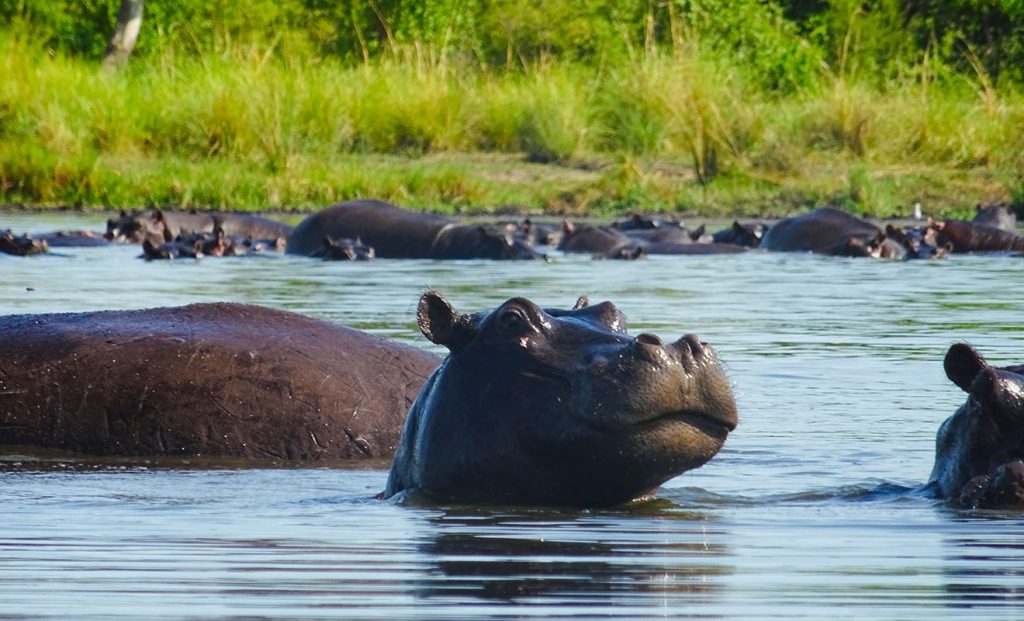
This is where the picture gets more interesting than “small brain, therefore simple.” A 2021 study conducted in Mozambique’s Maputo Special Reserve, led by bioacoustics researcher Nicolas Mathevon, found that hippos respond very differently to recorded calls depending on whether those calls come from familiar hippos or complete strangers — reacting far more aggressively to unfamiliar voices, even when those “stranger” hippos lived relatively nearby. That’s a genuinely sophisticated capability: it means hippos are very likely tracking and remembering individual vocal identities across their social world, not just reacting to generic threat cues.
This kind of individual recognition — the ability to distinguish specific known individuals from strangers by voice alone — is exactly the sort of cognitive tool you’d expect a highly territorial, socially structured animal to evolve, regardless of overall brain size. It fits the pattern covered in our hippopotamus social structure guide: hippos live in pods with real, ongoing social relationships, dominance hierarchies, and territorial boundaries that specific individuals need to track and respond to correctly, day after day, for years.
The Bigger Issue: Hippos Are Simply Understudied
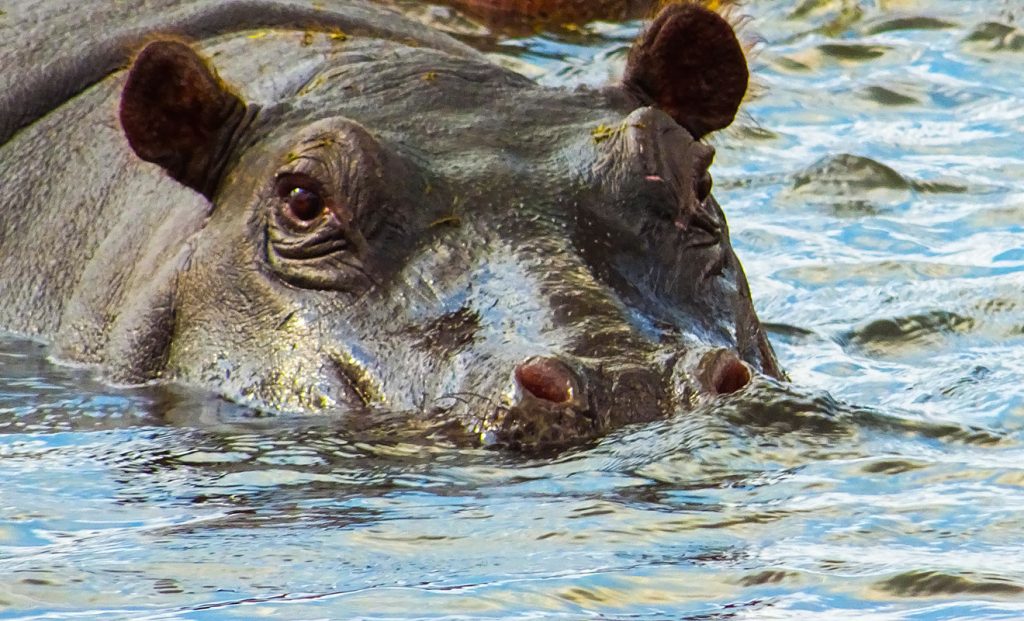
Perhaps the most honest thing to say about hippo intelligence is that scientists don’t actually know as much as they’d like to. Compared to elephants — the subject of decades of dedicated cognition research covering memory, tool use, self-recognition, and grief-like behaviour — or dolphins, primates, and even corvids, formal cognitive studies specifically on hippos remain genuinely rare. Much of that gap comes down to practical difficulty: hippos are dangerous to approach, spend most of their lives submerged and out of clear observational view, and don’t adapt well to the kind of controlled testing environments researchers use to study primate or cetacean cognition.
That absence of research is itself informative, though it cuts both ways. It means claims about hippos being “unintelligent” are, in most cases, based on very little actual evidence rather than a settled scientific consensus — the honest position is closer to “we don’t really know,” with the vocal recognition research being one of relatively few solid data points currently available.
Frequently Asked Questions
Are hippos intelligent animals?
The honest answer is that it’s genuinely under-researched. Hippos have one of the smallest brain-to-body mass ratios of any large mammal, suggesting a relatively small capacity for the kind of broad, flexible cognition seen in elephants or primates. However, research has found evidence that hippos can recognise individual members of their social group by voice alone, suggesting real cognitive sophistication in specific, socially relevant areas.
How big is a hippo’s brain?
A common hippopotamus brain weighs approximately 600 grams, compared to an African elephant’s roughly 6,000 grams — a tenfold difference despite the two species being in a broadly comparable weight class.
Do hippos have small brains for their body size?
Yes, notably so. A hippo’s brain makes up only about 0.04% of its total body weight, one of the smallest brain-to-body proportions recorded among large land mammals, with a brain-to-body ratio of roughly 1:2,789.
Can hippos recognise individual hippos?
Research suggests yes. A 2021 study in Mozambique found hippos responded more aggressively to recorded calls from unfamiliar hippos than to calls from hippos within their own social group, indicating they can likely distinguish specific individuals by voice.
Why haven’t hippos been studied as much as elephants for intelligence?
Hippos are dangerous to approach at close range, spend most of their time submerged and difficult to observe, and don’t adapt well to the controlled testing environments typically used to study animal cognition — all of which have made formal intelligence research on hippos far rarer than equivalent work on elephants, dolphins, or primates.
Explore more on Hippoworlds: what sound does a hippo make · hippopotamus social structure · hippopotamus anatomy · are hippos related to whales

I’ve been writing and running HippoWorlds’ content since 2019. I lived in Angola and was lucky enough to see hippos in the wild in Botswana and South Africa — I’m not a scientist, but a curious enthusiast dedicated to making this site a serious reference on the species.